
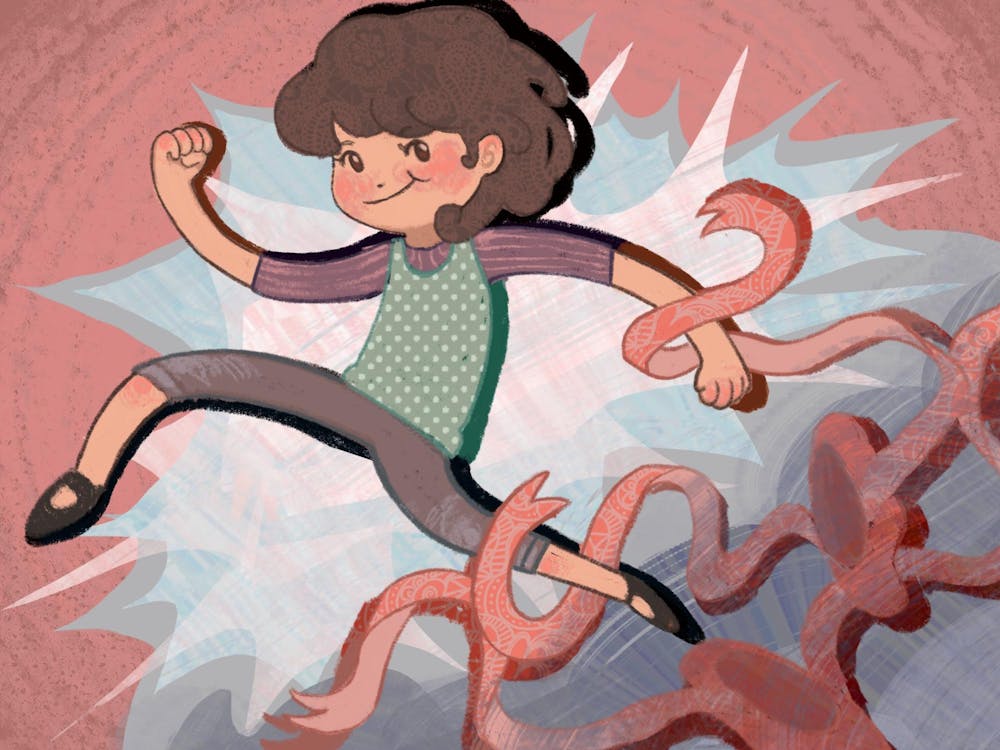
On January 28, the thought hit me. Or rather, I hit the thought, as if I’d been standing in front of it for a long time and had only just now had the bright idea to take a step forward into it: “What if I quit my ballet job?”
There were plenty of factors that brought me to the wall of “holy shit!” that stood in front of me. I’d been dancing with an injury, though not a major one: a midfoot sprain that was on the mend, despite feeling fork-tender and crunchy-boned all at once. I was working on a solo for a famous ensemble piece that I’d long pined to perform, but I wasn’t satisfied. I felt underrehearsed and understimulated, despite spending whole days at the studio, a common dancer gripe about our company’s piecemeal schedule. Yet, I found I had no desire to audition for other companies, where there would certainly be similar structural issues to those of my own. I felt the invisible shimmer of something about to shift. I just didn’t yet know what it would mean.
Ballet had been a constant for 21 years of my life, starting with creative movement classes at my local Indiana community center that evolved into structured ballet rehearsals six days a week, and spiraled outward until I arrived in St. Louis for my salaried position five years prior to that shimmer. Despite my dissatisfaction, the idea of retiring from the profession had not yet occurred to me. I did not know life without the constant pull back into the daily routine of maintenance, the anticipation of each upcoming performance, the rigor, the restraint.
I think of the world of ballet as an aquarium. The dancers are mermaids; they are only half-human, and much more special. They are mythologized and lusted after by those who live on land, who come to stare into the water and wish they could move with their grace. But, to maintain their magic, the mermaids must make sacrifices: They cannot walk, they cannot live on land.
As a mermaid, as a dancer, you live in a bubble with others like yourself, secluded from the world’s expanses. You can pay the sea witch and give up your fins and gleaming tail to gain your freedom, but there’s no going back. You can only peer in through the glass and watch with amazement as the mermaids that remain swim in spirals without you.
******
The change was in the air but not yet in my hands. I bargained with myself: “If I stay in ballet, I’ll dye my hair dark brown, but if I leave, I’m chopping it all off!” My 2025 Pinterest moodboard betrayed my preference, suggesting endless images of shaggy pixie cuts. I was sick of pulling back my hair into a tight-coiled bun; I was sick of working under a contract that didn’t allow me full control of my appearance, of my body.
The contract came in late February, goading me to sign on for next year or to take my leave quietly. I hemmed and hawed, but I sensed what I needed to choose. I am not an impulsive person, so I knew that feeling an impulse at all meant something big. When I decided to leave, my fears—of identity loss, my peers’ judgement, my boss’s disapproval—popped like huge helium balloons. For the first time in what felt like forever, I no longer needed to hold my breath.
My throat caught when I told my coworkers I would be leaving in an impromptu announcement after our daily class one Friday in March. I sniffled through a little speech of thanks. But there were no great sadnesses in my retirement. My love for the art form never faltered, but little grievances (complicated workplace power dynamics, constant physical pain, the 16-mile drive to work every day) grated at me. I think I metabolized my grievances throughout my time in the company, so by the time it was done, there was no more sadness left to burn off.
That’s not to say there weren’t many moments of happiness in my time as a professional dancer. There was plenty of joy in movement, satisfaction in executing complicated combinations of steps, and mischief shared with my fellow dancers. But the label of “ballerina” was an archetype I had to mold myself to fit. The dream I had romanticized and longed for had started to feel like a burden.
Now, “ballerina” is not my label to claim. Maybe it never was: Its formal usage is only supposed to indicate a senior female ballet dancer of the highest rank. Me, I danced in an unranked regional company confined to a strip mall-addled suburb of the city it claimed to represent. I try to hold my pride for my work in the same hand that I hold all that it did not live up to. Out of the studio and back in school, I’m free to dance when I want to and not when I’m told to, to do the steps as I see fit, to live life unconstricted. I am relieved that there is no more of it.
No more corseted costumes that dig into my ribs or scratch at my lower back. No more orders to strip off my legwarmers so the front of the room can see my body at its almost barest. No more sitting criss cross applesauce on the sweat-slick studio floor for a talking-to from the company’s administration, in which we’d be compared to a baseball team, to one big happy family, and told to behave, or else (or else, what?).
No more breathing in the sharp and acrid smoke from the fog machine in the middle of a show, even after the dancers’ union said it wasn’t allowed. No more choking on mucus running down my throat as I flit across the dry expanse of the stage.
No more hours spent rolling out my calves and hips with a lacrosse ball so I can move my body in the morning, no more lying down with legs above my heart to elevate my feet on every five-minute break. No more needles stuck hard into the undersides of my feet, piercing the leathery muscles. No more purpled toenails or ragged blisters.
No more asphyxiating anxiety in the wings. No more crashing down after a leap. No more comedown after each performance. Life is steadier now, more predictable. Life is a space of comfort. The studio, that aquarium that kept me paddling, is no longer habitable to me since I turned in my fins.
And, oh, all the things that are possible outside of the tank: the trips to the farmers’ market on Saturday mornings, the physical energy to go on a long walk at the end of the day, the ability to take time off to travel for weddings or family Thanksgivings, the interactions with people who live on solid ground. Seems to me that being fully human is worth the price.
*****
In May, a week before my final performance as a professional ballet dancer, an elderly beneficiary of the company told me, as he gestured to the stage: “Nothing else you do in your life will be as important as this, remember that.” Already, I know he is wrong.


