
My mother gestures me into the room. As I walk in, I look around—it’s vastly different from the last time I was here. I used to spend multiple days a week here, where we had our movie nights, where I had my band practices, where my parents forced me to go with my friends because my dad didn’t want guests upstairs. Now my windows are shut, my drum kit gone, the couch replaced with a hospital bed.
My mom brings me to the bedside. She places a thousand-peso bill in my late grandmother’s hand.
“Take it,” she tells me. I look back, confused. Then I look at Ama. Her hands grip the bill as if she’s still alive, as if she needs it. Hesitantly, I reach out. As I take the bill, I can’t help but notice that she looks the same. If I hadn’t seen the text from my dad at 3 a.m. that morning in 2021, I wouldn’t even know she was gone.
I look back at my mom, the thousand-peso bill now firmly in my hand.
“You need to laminate that money.” I give her a puzzled look. She continues: “You can’t ever spend that money. It’s lucky money.”
I nod and put the bill into my pocket. I step out of the room, and my cousin Andy enters after me. Outside in my garden, I walk up to my other cousin Jacob—he went in before me.
“Weird tradition,” he tells me. I chuckle in agreement.
To this day, I don’t know where I put that bill. 17 was so long ago. I don’t think I’ve used it, but I also never laminated it. I hope it’s still in my room somewhere.
…
While in an online class the day before, I see my aunts, uncles, and cousins crowding around Ama’s room downstairs. During my lunch break, I go down to see them.
“What’s going on?” I ask Jacob.
“Ama kicked us out. Doesn’t want us to see her.”
“Oh.”
…
Later that night, my dad packs my two siblings, my cousin Jessie, and me into a car. He drives us to Jessie’s house, a five-minute walk away.
“Kids, you guys are gonna stay here tonight, okay?”
My siblings don’t care. It’s a sleepover with their favorite cousin, and they can maybe even skip their online classes tomorrow. Jessie takes the lead and brings them into her house. I don’t move.
Once my siblings are gone, my dad starts talking.
“Ama thinks she might pass soon. She wants the kids out of the house because it’s apparently bad luck to be in the same house when someone dies.”
I look at him. “You don’t care about bad luck?”
He shrugs. “I don’t believe in that stuff. You know the Chinese proverb about luck?” I nod slowly, surprised. My mom’s the Chinese one, not my dad. I only ever heard it from her, and I forgot that she could tell him things too.
He pauses for a moment, then tells me: “Even if it’s real, we’ve been lucky so far. We can take a few years of bad luck.”
“I see.”
“You’re old enough to decide for yourself. If you want to avoid that, you can stay here.” He gestures to my cousin’s house. “If not, you can come back home.”
I ponder the decision for a moment.
“I’ll go home.” My dad nods and starts driving.
I think then that she will probably die tonight. In my head, for some reason, there is something noble about going home—about taking the bad luck just so I can be with Ama in her last moments. She’s been living in our house for months now, ever since her cancer diagnosis. Not once have I visited her room. That doesn’t change tonight.
…
Back when we were kids, Jacob and I used to sleep over at Ama’s place together. He was my favorite cousin and introduced me to most of the video games I’ve played.
That’s all we ever did at Ama’s house. We had our mattresses on the ground, and she’d lend us her iPad, or we’d bring our 3DSs, and we’d game until 1 a.m. while she lay on her bed watching K-dramas. Then we’d wake up at 6 a.m. and game again until Jacob got picked up. He was always picked up before me.
My immediate extended family (meaning first cousins) used to go to Ama’s house on Sundays for dinner. Slowly, people stopped showing up, and after a while, it was replaced with lunch at a restaurant, which we would pregame by praying the rosary at my grandfather’s tomb. But slowly, people stopped showing up to that too.
After a few years, only two families had dinner with Ama regularly: mine and my uncle’s family of five, but they lived in Ama’s house. Only my family visited her.
All of Ama’s grandchildren were asked to prepare a short eulogy, which would be compiled into a video that would be shown at her virtual wake and subsequent funeral. I couldn’t come up with anything, so I made a joke about how she’d let me stay up later than my mom ever did. My cousins laughed at that.
But then I heard them talk. They talked about endless shopping sprees, about Ama fighting their parents for being too strict, about Ama paying their college tuition. I didn’t have any such stories.
Weeks after Ama’s passing, I finally found the courage to approach Jacob.
“You know, back when we’d sleep over at Ama’s, I feel like we never really spent time with her. Like, ever.”
He pondered that for a moment, then responded. “Yeah, I was thinking about that. But then I remember I tried before, and she’d shoo me away and tell me to play my games, then she’d keep watching her K-dramas. That’s just how she was.”
“True,” I nodded. I believed him. But while he might have done so, I had never tried to spend time with Ama when I was there.
…
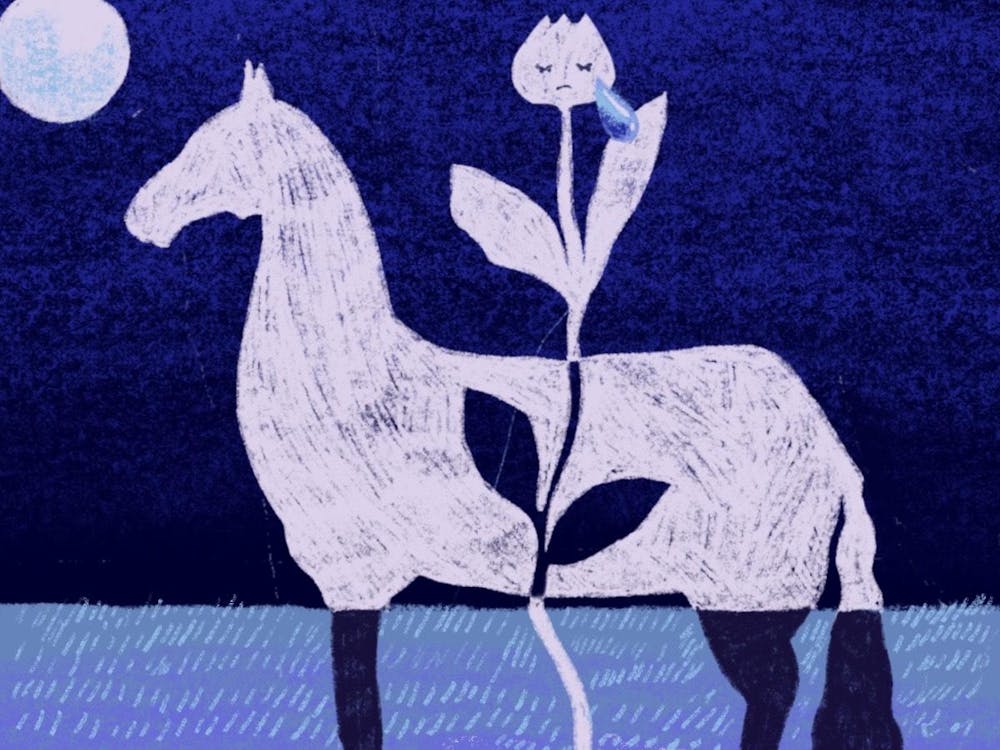
The Chinese proverb my dad mentioned, as told by my mom, goes like this:
There was a Chinese peasant. He had a horse. One day, the horse runs away. People of the village offer him condolences for his bad luck. He responds: “Good luck, bad luck, who knows?”
The next day, the horse returns with 12 more wild horses. People of the village congratulate him on his good luck. He responds: “Good luck, bad luck, who knows?”
At some point, while training one of the wild horses, the peasant’s son falls off and breaks his leg. People of the village once more offer him condolences. He responds: “Good luck, bad luck, who knows?”
One day, the emperor’s army marches into the village. They announce that a war has started, and that they are conscripting all of the young men in the village. As the peasant’s son has a broken leg, he is left alone. Hence the proverb: “Good luck, bad luck, who knows?”
…
When Andy steps out of my Ama’s room, Jacob tells me that we may need to comfort him. He looks red, teary-eyed. We sit at a table in silence.
As I’m thinking of something to say, I hear the door open.
The first person I see is my Ama’s brother. Then her sister. One by one, my extended extended family—Ama had 12 siblings—pour into my house to see her. Normally, guests outside of my immediate extended family aren’t allowed at my place—especially not while we’re still in lockdown. But we let them in anyway.
“They can’t go to her funeral,” my dad tells me later. I look at him confused, then realize.
“Oh, because they’re above 60?”
“Yeah.”
I watch them from a distance as they pay their respects. I haven’t seen them interact with one another in a while—at least a year and a half, since the lockdown started. I don’t think I remember any interactions between them while Ama was still alive. I’m sure they loved her, though.
…
I found out Ama’s cancer came back the first time she visited during the lockdown. This must have been late 2020—we had been extremely cautious up until then. I wasn’t there, but my mom recalls her saying that she had ulcers. When asked why she hadn’t told anyone, she shrugged. “Even if I did, what could we do?”
The first time Ama got cancer, she was treated in Singapore. The second time, she was stuck with us in Manila, her treatment delayed because of the lockdown, her hospital visits made risky because of the pandemic. I think that without this lockdown, she might have survived.
I always thought that it was such bad luck that this pandemic took my Ama from me. But it was even worse for her siblings—the lockdown took not just their sister, but also their ability to properly send her off.
…
There came a point when I hadn’t slept at Ama’s in a while. When she saw me again, she asked me excitedly: “When are you sleeping over again? I don’t have any company.”
…
My immediate cousins can be separated into two different batches. The older group, which I am part of, consists of 10 of us, including Andy and Jacob. The first was born in 1997, while the last was born in 2004, just a month after me. While not everyone was born back-to-back, there was a stretch of a few years where we had at least one person graduating from high school annually. This was capped off in 2022, with three of us graduating at once. After us, there were three years before the next, Jessie, was born. That gap marks the generational cutoff.
My cousins were banned from eating Spam at their houses for health reasons. They loved it, though. Whenever they’d come visit my family, the second someone mentioned Spam, they’d perk up. We fed them Spam like we were giving them drugs. No better way to entertain children than by helping them cheat their parents’ rules.
The first of my cousins to study in America left in 2015. The next did so in 2018, but he took a gap year during the pandemic. Then 2019, 2020, and so on. By 2021, while there were still eight of us in the Philippines, two were on temporary academic leave, one was set to graduate that year, and three of us the next. Of the eight, six of us were in the house the night Ama passed.
That night, while the younger batch stayed in their homes (with the exception of my siblings, who stayed at Jessie’s house), most of the older batch, alongside our parents, stayed at mine. There we were, six cousins sitting at my kitchen counter, accompanied by my dad and a few uncles, all talking about something I can’t remember now. For those few hours, we forgot why we were there. But I could tell.
It was clear to me, because so many of us had some form of school or work the next day, that all of us wanted to be there when it happened. We knew it was coming, and we knew that Ama would not let us see her, but we waited anyway.
Close to midnight, we started to get hungry. My dad got up and cooked a bowl of instant ramen, ajitama, and Spam for each of us. Simple. Nostalgic.
To this day, that was the best meal of my life.
…
It’s almost 3 a.m., the time when my dad texts me about Ama’s passing. Most of my cousins have gone home. As they leave, I feel some impending sense of dread—not that she might pass tonight, but rather that I won’t ever be able to sleep because I want to be there when she does. There is something in me, some desire for my life to be poetic, some need to feel every loss as hard as possible. I know then that if she passes tonight, I won’t feel anything—only satisfaction that I was right about her passing today and relief that the wait is over.
Some stay, though. Andy asks to sleep over, and my eldest cousin, Mia, crashes on my couch.
As Andy and I are about to get ready for bed, the clock strikes, and my dad’s text sends. We walk back down. Jacob, upon hearing the news, walks back to my place.
All of Ama’s children stayed over. My living room is cluttered with people and blankets. My mom, aunts, and uncle sit around one another, deliberating over what to write on her death certificate. Andy wants to hit something. Mia looks sad, but calm.
I don’t feel much, and it’s a relief to me when Jacob arrives, because he looks like he doesn’t feel much either. But I’ve always had this impression of him as unfeeling, or at least outwardly so. This was never something anyone said about me.
I spend the next few hours silently beating myself up. Perhaps my bad luck is that I can no longer feel anything.
…
The morning after my Ama’s passing, I wake up at 7:40 a.m., ready for my online class. I refuse to use her as an excuse to skip, knowing that I’m not even grieving. I log onto the Zoom, perfectly on time.
It’s an English class. We’re reading Ovid’s Metamorphoses, I think. I try to pay attention, but I’ve stayed up all night and haven’t paid attention to this class for at least a month. Naturally, I have no clue what’s going on.
I make it all of 10 minutes before I leave the call. I send a quick message to my teacher.
I pace around my desk for a little while, debating going back to my room.
I walk.
And walk.
And walk.
And then I stop. I lean against the wall.
I cry.


