There’s no feeling quite like returning to my hometown after being away at college. When I begin to recognize my surroundings again, when I notice the road I took to get to my high school job, when I see the familiar trees lining my block: It’s like being born again. It’s simultaneously beautiful and painful. It’s a reminder of the life I left behind and the world that keeps going even though I am no longer an active part of it.
I experienced this rebirth most recently in October, when I drove home to New Jersey for the three-day weekend. Accompanied by two of my closest friends, we entered unassuming suburbia with more excitement than I had ever felt in my 12 years of living there. It is my third year at Brown, and I love it deeply, but still: There’s no place like home.
At school, independence is second nature. I have come to relish this independence because along with it comes freedom. Yes, it is stressful to have to decide what to eat for dinner (and don’t even get me started on actually having to cook a meal and clean it up after), but it’s also exhilarating—so many choices, and the world is in your hands. This adult capability, however, seems to disappear the second I enter my hometown. When I spend a weekend at home, especially amidst a busy semester, I inevitably experience what I would (dramatically) call age regression. Eating my mother’s home-cooked meals and watching cable television, I attempt to return to my old life, when everything that felt so significant and important was actually, in hindsight, completely inconsequential. Nostalgia takes over, and I chase the ease of early adolescence, unmarked by responsibility and existential crisis.
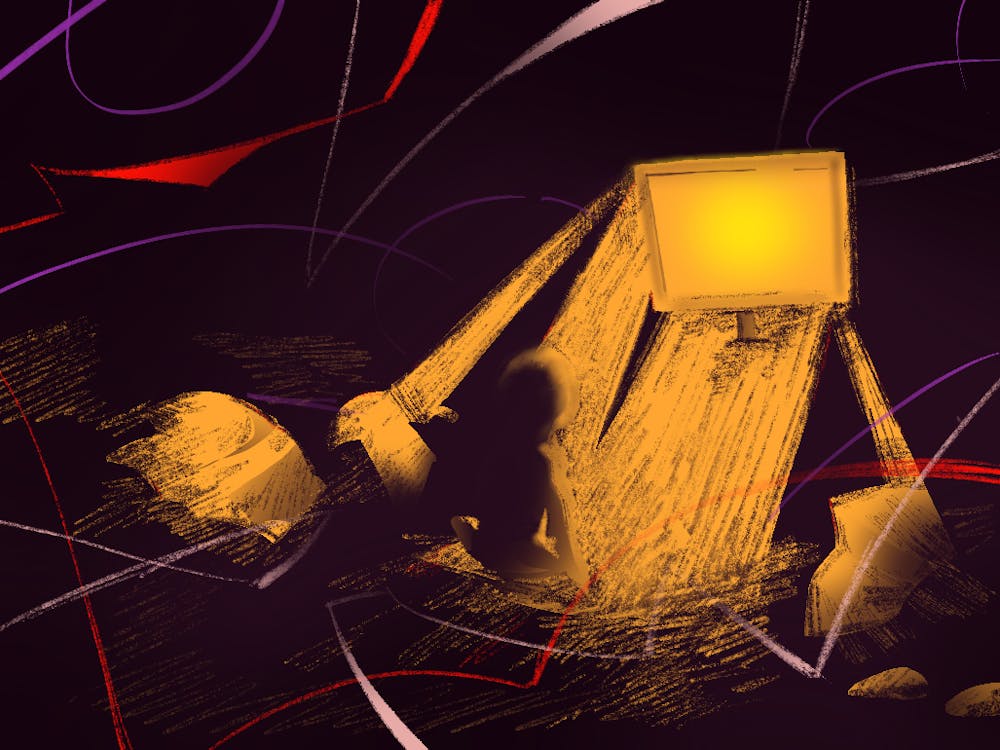
During that three-day weekend, I had a friend stay with me, and we took it upon ourselves not to catch up on our assignments, but to instead indulge in the most powerful drug of all: nostalgia. Disney Channel, Nickelodeon, old music videos, movies—all of the media that we once loved, consumed in a single weekend of couch rotting and channel surfing. For three straight days, we succumbed to the powers of memory. Among our binge list were several Disney Channel classics from our childhood, including Austin & Ally, Girl vs. Monster, and nearly every musical number from High School Musical 2. We began every sentence with, “Do you remember…” and tapped into our deepest, most specific memories. The answer was always, “Of course, I remember.” 2010's Pillow Pet commercials, Silly Bandz, Nickelodeon’s Worldwide Day of Play. We remembered everything. We laughed at poorly written jokes and bad acting, and wondered if we could’ve been child actors.
As fun as this marathon was, I couldn’t help but shake the feelings of guilt and even sadness. Perhaps it was the thought of imminent deadlines and exams that plagued my mind, or perhaps it was the sudden realization that I was trying to chase the feeling of juvenile carelessness that no longer exists. I was home and yet homesick, not for the physical place, but instead for the specific feeling of being there. It was during a far too passionate debate about the logistics of the Disney Channel crossover universe that I had a sobering thought. “We’re 20 years old,” I blurted out. It wasn’t exactly news, of course, and we laughed at our own silliness, but deep down, I knew that this moment would stick with me for a long time. No amount of television could ever make me eight years old again, when my largest concern was whether or not I’d get the voice-activated Password Journal I wanted for Christmas. And what scared me even more was the thought that one day, I’ll be just as nostalgic for the moment I am living in right now. I think the song “Cross Your Mind” by Shelly articulates this feeling perfectly:
Hard to recreate
The way I felt when I was 17
I’ll keep trying if it kills me, baby
I can keep trying, but unfortunately, there is no way to recreate the saturated colors of adolescence, no matter how many episodes of Good Luck Charlie I binge. As a society, we seem desperate to revisit the media that defined our childhoods in an attempt to return to a simpler time. In Hollywood, nostalgia is a form of currency. Production studios line up to create sequels and spinoffs, reunite old castmates, and capitalize on reminiscence. In the last two years, several revival films and shows have been released: That ’90s Show, Wizards Beyond Waverly Place, Karate Kid: Legends, Freakier Friday, I Know What You Did Last Summer. If a piece of media was successful and widely loved in its time, it likely has been or will be brought back to life. What tends to happen, unfortunately, is that the revivals don’t live up to the status of their source material. Disenchanted (2022) proved to be a disappointing sequel to the venerated Disney film Enchanted (2007), with a Rotten Tomatoes score of just 38 percent compared to the original’s 97 percent. According to its reviews, a combination of poor writing and lack of emotion within the characters made it, like so many other long-awaited sequels, pale in comparison to its antecedent.
In 2026, Netflix is slated to release Hollywood Arts, a spinoff of the beloved Nickelodeon sitcom Victorious, which ended in 2013. The story will follow Trina as she returns to her old high school, now as a substitute teacher, with original cast member Daniella Monet reprising her role. But when it comes to reviving childhood and preteen favorites, who is the target audience? Studios use nostalgia as bait, often creating reboots in hopes of attracting fans of the original film or series. They pull in former cast members, reference iconic jokes, and continue unfinished storylines in the hope of appealing to the audience’s sentimentality. The success of these spinoffs largely relies on viewership from the original fans, who are often deeply dedicated to maintaining the film or show’s original legacy. I find it interesting, then, when spinoffs are created as if their audience has been frozen in time. Wizards Beyond Waverly Place (2024), for example, is a spinoff of the fan-favorite Wizards of Waverly Place (2007). Both shows were created by Disney, and both shows are rated PG, geared towards kids and preteens. The audience of the original series grew up in the early 2000s and is likely in their 20s now. This creates a discrepancy between the show’s target audience and its actual plot, humor, and themes, which often makes it difficult for me to enjoy these revivals. Watching them feels like trying to fit into clothing that doesn’t fit anymore, or trying a snack I loved as a child and realizing that it’s disgustingly sugary. It’s harrowing to see my favorite characters grow up because it’s a reminder that I’ve grown up too. Each time I watch a spinoff or sequel of a childhood favorite, I can’t help but feel that something is missing. Perhaps it’s that I can no longer tolerate the bad acting, or the characters feel like hollowed versions of their past selves, or that I simply do not feel the “magic” anymore. Perhaps it’s me who’s lost the magic.
Hollywood continues to create spinoffs, sequels, and remakes because society loves to live in the past, and justifiably so. Who can blame us for wanting to return to a simpler time? The present is hard to live in, especially as young adults navigating a stressful and challenging world. The desire for a Victorious spinoff is actually just a desire for youth. And while there is nothing wrong with giving into nostalgia every now and then (in fact, I encourage it), there is something to be said for this obsession with bringing old media back. In reality, the naivete we look for can’t be found in a spinoff series.
This is not to say that there is no way to carry the freedom of adolescence with you in everyday life. I think that childlike wonder and curiosity have to come from within, in the attitudes you present to the world. I find that it’s best to express my inner child by staying kind and open-minded and curious. And, every once in a while, binge-watching Austin & Ally.


