This world is made of boxes.
Steel and glass stack against the horizon. Streets slice the city into grids. Inside our homes are rooms filled with cabinets, containers, screens glowing like digital cubes of light. Even our thoughts seem to have corners. We draw lines, build frames, and define boundaries everywhere. Everything holds something.
Our obsession with vessels is ancient. According to the knowledge we have today, the earliest form of containers dates as far back as 18,000 B.C. in ancient East Asia, where the first potters’ hands shaped materials not just to hold grain, but to promise that there would be something worth keeping. Across millennia, the shape and form of containers have evolved, growing to a level of intangibility, even: amphorae became jars, shelves became servers, memories became data. The Cloud, our latest Tupperware, is all at once invisible, untouchable, and infinite. Yet even this modern vessel carries the same enduring desire to preserve what may otherwise vanish.
But there’s a paradox in this geometry of control. Life seeps through cracks, in the form of breath and all that refuses to fit neatly inside a box. Still, we continue to build, believing that order might save us from the chaos of being human.
In order to hold something well—to shape the experience of holding and being held—a vessel must contain space. Such an emptiness is not absence. Designers call it negative space; we might call it rest. It can be said with certainty that this vacancy carries possibility. Yet we live in an age that fears the idea of emptiness—of quiet rooms, blank calendars, unfilled silence. We crowd our houses with furniture, our days with noise, our minds with screens. But this space is essential; without it, a home cannot invite life in.
The still moment that arrives with a cup of tea extends an invitation for us to pause and to hold something gently without the urge to own. An active awareness of the warmth meets the palm of the hand, breath rising with the steam as the cup is lifted carefully, so as to not spill even a drop. Perhaps containment is more tender than it initially seems. Perhaps it is about presence, about allowing a single moment to pour itself completely into you.
As our vessels grow lighter and more abstract with age and experience, it becomes easy to forget the weight of what they hold. The opened trunk of a moving van shows us an array of cardboard boxes, yet it is not the boxes that the movers are concerned with. Rather, these boxes are simply protectors of the carefully bubble-wrapped pieces of someone’s life. We don’t immediately notice the effort, the time, or the care put into keeping these items safe.
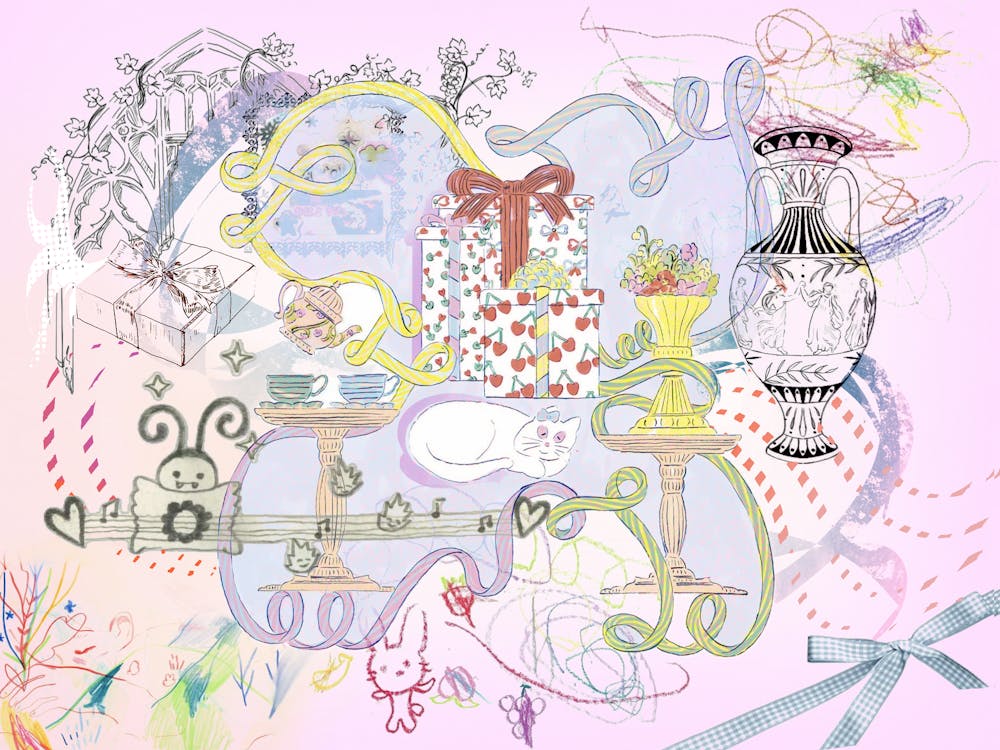
Perhaps that’s why we still love to wrap presents. Storage is not immortality—it’s another form of care. There is a certain joy in tying ribbon, in creating suspense around what is hidden. A gift box becomes a performance of hope, promising that something inside matters. The ritual becomes the message—I thought of you—and so, the vessel itself becomes part of the gift.
In the end, all vessels lead back to the first and final one: the body.
We are walking attics of emotion, carrying boxes within boxes—each labeled with care or buried in dust. Some we revisit often. Others, we seal tight. There is a sort of comfort that can be found in containment—to hold is to know a beginning and an end. The body remembers not just in the mind but in muscle, in breath, in heartbeat, through the soft boundary of skin which keeps you together, all the while letting the world in. Every sigh is a small act of release; every inhale, a gathering in.
Maybe the secret to all good design, and all good living, is learning to hold without clinging, and to contain without trapping. To learn what to release, to keep, to let breathe. To accept the fragility of containment. Boxes wear down, seams soften. Something always leaks. Sweat, tears, words, love. In those leaks, we are reminded that containment is never perfect, that the heart, too, has storage limits.
What matters most isn’t what we keep inside with the intention of forever, but the grace through which we make space for what’s coming next. The act of holding becomes an art in itself. We are vessels always in motion, constantly being filled and emptied.


