In the past five years, the anti-diabetic medication Ozempic has entered the American pop-cultural vernacular. The medication has transformed into an unofficial weight-loss drug, lauded by celebrities and the affluent as a miracle pill that staves off hunger. The Ozempic era has coincided with the cyclical return of Y2K trends, characterized by stick-thin models wearing low-rise jeans and crop tops. Gone are the days of late 2010s body positivity, when rhetoric celebrating curves dominated the culture, and the success of plus-size singers and models like Lizzo and Barbie Ferreira inspired conversations about body diversity and beauty standards. Indeed, today, it seems nearly all the former faces of the body positivity movement have had sudden significant weight loss, including Lizzo, Ferreira, “All About That Bass” singer Meghan Trainor, and many others. Even worse, many celebrities deny the use of Ozempic or other weight-loss drugs, perpetuating the age-old myth that anyone can obtain the “ideal body type” completely naturally.
Growing up amid the transition from Y2K dieting culture to the body positivity movement, I remember my own struggles with my body and how this cultural shift influenced my self-image. I recall working on a project about the body positivity movement with my friends in high school and feeling hopeful that maybe, just maybe, the next generation of kids could exist in a world where all body types are celebrated and considered uniquely beautiful. It is becoming increasingly evident to me that this is not the case, and it may indeed be true that Generation Alpha is intensely backsliding on this front.
About a year ago, I, a 21-year-old woman, began playing Roblox in the evenings to de-stress after a long day. Growing up, I loved online games—from old Minecraft Java servers and MOBAs, to MMOs like Final Fantasy or Guild Wars 2. As many of those communities have died or lost most of their player base, I found the bustling servers of Roblox fun and comforting. However, cognizant of Roblox’s primary demographic being kids between the ages of 9 and 15, I have found the chat rooms on some of the minigames to be disturbing in a way I never expected: Namely, it appears that fatphobia is in.
Truthfully, it was not very long ago that I was in that age group and had unrestricted access to the internet. I remember being called a “bitch” and being asked if I was on my period by teenage boys on Steam games if I ever dared to turn on my voice chat. Unlike Roblox, the games I played did not have chat censors. Kids swore and hurled slurs at each other. Online gaming 10 years ago was by no means family-friendly. Still, fatphobia was not as prevalent as I see it to be now, and it wasn’t “cool.” Besides, how can you be fatphobic in a video game where you don’t know what anyone looks like in real life? The very notion appears nonsensical.
Perhaps it is because Roblox has body type character customization options, or perhaps it is due to the game’s automatic chat censorship of words it deems inappropriate, but one of the principal insults employed by children on Roblox is to call someone “big” or “fat.” In fact, I have witnessed kids on Roblox self-police each other to stop swearing in the game’s voice chat feature, and insulting another player’s gender or race appears generally intolerable among Gen Alpha, as opposed to my experience in adolescent Gen Z communities. While the needle of progress, in some respects, may be shifting positively for Gen Alpha, that leaves the question of why body positivity has backslid. Jokes about binge-eating, overstuffed refrigerators, anorexia, and Ozempic generally fly without pushback or censorship in Roblox chat rooms. While directly calling someone “fat” in an insulting manner may have once been blatant bullying—or at the bare minimum a tired, uninspiring insult—today’s kids appear to be shamelessly calling each other fat with the intention to hurt.
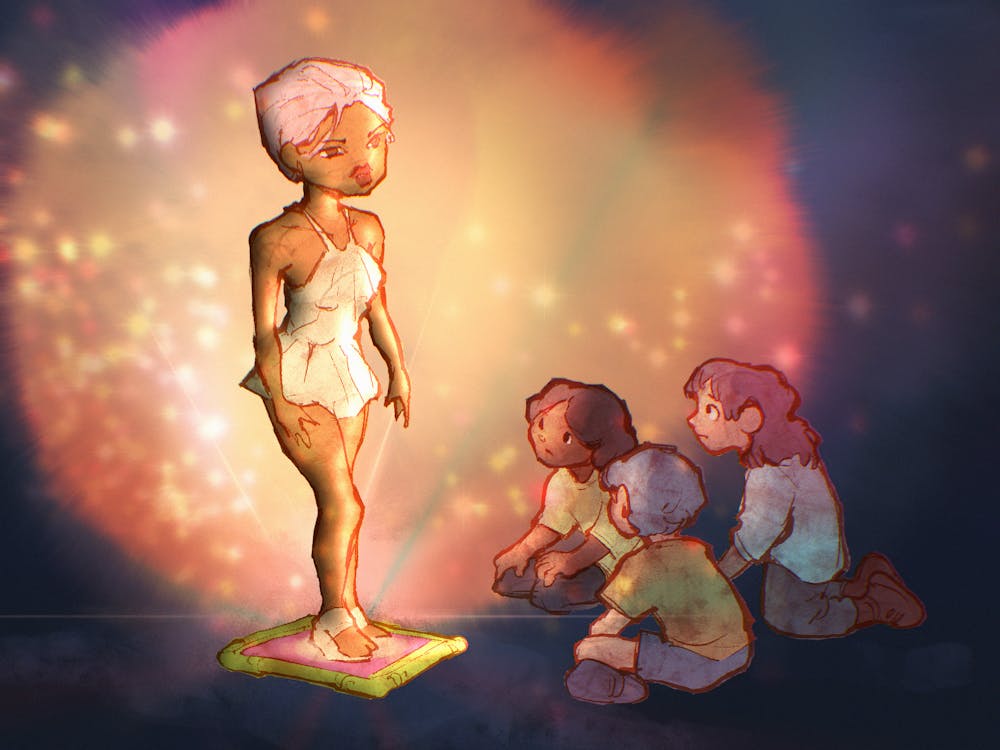
While my working hypothesis for this sudden cultural shift has been the rise of Ozempic—an account that is perhaps duly corroborated by the kids themselves mentioning the drug by name in chat exchanges—the return of Y2K aesthetics also has an effect that cannot be overstated. One of the platform’s most popular games, Dress to Impress, involves players dressing up a naked model in trendy clothes according to a set theme before having their model pose on the runway to be voted upon. While players can pick between a male and a female model, each gender only has one body type option, which is a slim Barbie-doll-like figure with an hourglass waist.
My baby cousin, who loves the game, told me she wants to be a model when she grows up and begged for a Juicy Couture tracksuit for her birthday circa the Y2K megatrend. Clearly, Roblox is influencing Gen Alpha kids profoundly, which leads me to note the fatphobia trends all the more. There is very little information yet about the connection between Ozempic culture and Gen Alpha body image; however, I cannot imagine that it will be good. Furthermore, as long as Roblox continues not to censor fatphobic rhetoric, kids are being molded in an environment where such language is socially acceptable. The resulting echo chamber effect, where hurting kids call each other “big” and “fat” online while celebrities they idolize on their TikTok algorithm claim to be losing rapid weight through mere exercise and diet, is cause for concern.
Moreover, the potential death of body positivity for Gen Alpha kids, alongside reactionary anti-DEI pushback from the culture, could be a self-defeating prophecy. Plus-size model and activist Felicity Hayward notes that this fashion season, plus-size contracted models in New York declined significantly. Additionally, she highlights a rise in online hate, stating that “abuse [she has] received online has skipped back to pre-2016 levels, when that sort of hate towards bigger bodies was kind of the norm.” If fatphobia reigns supreme in online spaces for Gen Alpha, and plus-size bodies disappear from the mainstream media altogether, there will be little space for children to learn how to feel positively towards bodies that don’t resemble a Dress to Impress model or celebrity on Ozempic. The lack of attention on the mental well-being of kids is frightening. If we as a culture are not careful, our kids will be immeasurably harmed as a result. Whether it be holding celebrities accountable for lying about drug usage, condemning hateful speech, or demanding, at the very least, reinstated body inclusivity in the media, the arc of body positivity must continue for the sake of the lives and health of young Gen Alpha kids.


