There’s no mistake that a simple kick drum can make you sway. A four-on-the-floor beat, with some hi-hat on the off-beats, makes anyone nod their head, no matter the genre. But with Fleetwood Mac, their drummer, Mick Fleetwood, adds some flare to it in the form of wind chimes. These ringing metal rods add something mysterious. A familiar glimmer. It’s something ethereal, mixed with a heavy presence that you can’t turn away from. For a reunion show on the twentieth anniversary of the widely-acclaimed album Rumours, it’s a captivating way to start their most notable song, “The Chain.”
Fleetwood Mac continues to be one of the most renowned rock groups of all time, even though they formed nearly sixty years ago. However, the Fleetwood Mac that you’re thinking of isn’t the original lineup. Formed by electric guitarist Peter Green in 1967, Fleetwood Mac started off as a blues rock group in Britain, with drummer Mick Fleetwood and bassist John McVie as the two constant members of the group from the start.
By 1974, the group’s membership had changed greatly. Peter Green had departed from the band, and even with many rotating singers and guitarists, they had no one to fill the roles permanently, despite the addition of keyboardist Christine McVie, John McVie’s wife. Then, Mick Fleetwood stumbled upon Buckingham Nicks, a folk rock duo. The pair joined Fleetwood, with Stevie Nicks taking lead vocals and Lindsey Buckingham playing guitar. This is the lineup you definitely know.
With chart-topping albums like Fleetwood Mac and Rumours, the band leaned into a pop rock sound, resulting in many timeless songs and numerous critical accolades—but this lineup cost the band its functionality. Nicks and Buckingham—their romantic relationship shattering—were now feuding with each other. John and Christine McVie divorced, Fleetwood had an affair with Nicks, and Christine McVie had an affair with the band’s lighting director. This aggression, betrayal, heartbreak, and attraction is best encapsulated by one of their biggest hits, “The Chain.” It’s the only song that credits every member of the band as a songwriter.
With lyrics that exude struggling to stay together as a band (“Chain, keep us together”); heart-wrenching vocals by singers Christine McVie, Nicks, and Buckingham; an isolated, memorable bass lick; a minimalistic, but aggressive, guitar solo; and just complete raw energy…it’s one of my favorite songs of all time.
So, how could they play it again with that same captivating energy 20 years later in their official reunion show? Well, they don’t. Their struggle is evident.
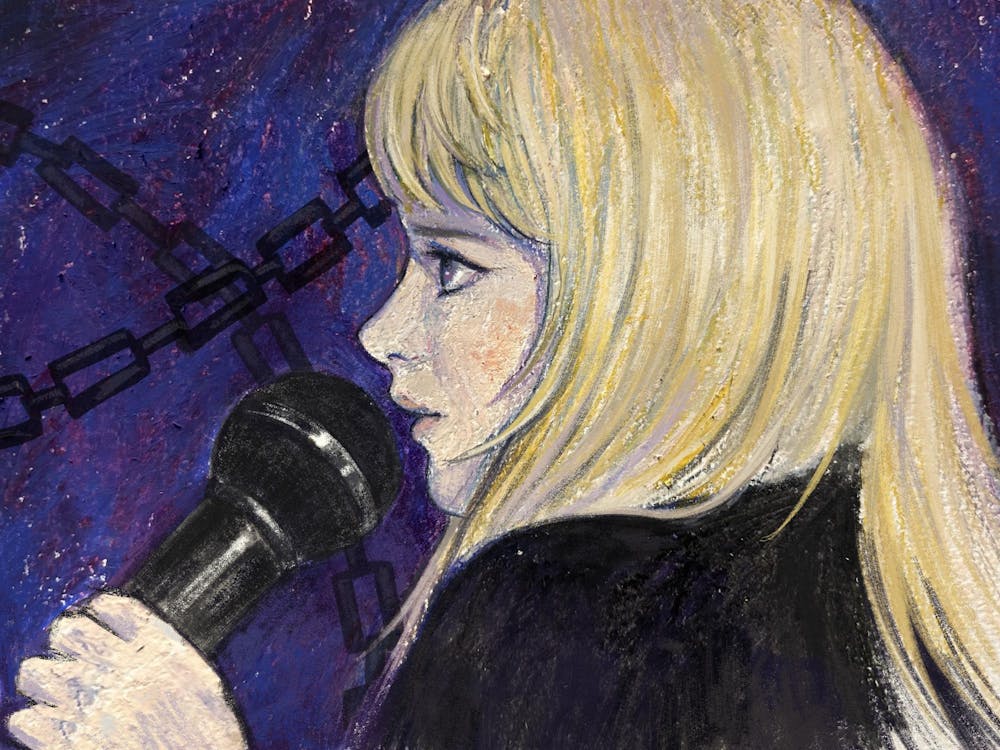
As the kick drum keeps time and wind chimes ring, the stage is dark, with the silhouettes of each member present. Lights shine behind them like the return of a great force. As they slowly fade in, you see each member clearly, with blue shades decorating a weird donut shape on stage. Seriously, I have no idea what it is, but it's behind Fleetwood for the entire set and I can’t look away from it. The members are dressed in mostly black attire. Shoutout to Fleetwood for dressing like a piano player in a cowboy movie. And Stevie Nicks for being Stevie Nicks, dressing like a witch that you don’t want to fuck with.
When Buckingham plays guitar, you notice it’s in a lower pitch than the studio recording. The song is played a full key down from usual—D minor instead of the original E minor. This change was likely made to accommodate the aged singers’ vocal ranges. It’s more distinct, but it makes the song sound…almost Western? The lower-pitched guitar is more twangy, combined with the simplistic drum beat. It’s a cool spin. And Fleetwood is already dressed for the part.
And then, the opening lyrics: “Listen to the wind blow, watch the sun rise.” Compared to the studio version, this rendition sounds more in-your-face and bold. The studio does a great job of making the vocals resonate more distantly and wholly, like a complete voice of the band singing from afar. Live, the vocals are louder, but the harmonies are a little rough. Like they got 90 percent of the job done. You know this is Fleetwood Mac performing, but there just seems to be some discomfort in playing this song live again.
And then, boom! The chorus! Buckingham takes the lead vocals, shaking the whole time. You can chill, Lindsey! It’s not like your long-term ex is staring at you with rage, singing backup vocals to a song about heartache and staying together through the pain of a tumultuous relationship.
Now’s a good time to get this out of the way: Yes, this is the same concert where Nicks sings “Silver Springs” and stares daggers at Buckingham, like everyone and their mother keeps talking about on social media. We get it. This is happening here, too! And honestly, with the way the band starts off the set with this eye contact, I feel like this song builds up to the intense staredown in the “Silver Springs” performance later in the show. Plus, I think “The Chain” is a better song. So, there you go.
As the second verse begins, there’s this weird singing thing that Nicks and Buckingham do that I can’t not mention. Nicks repeats the last phrases of some of the lines, going, “the night, the night, the night….” Buckingham, maybe in an attempt to match her, kind of just moans some of the last few phrases. After the lyrics, “Break the silence, down the dark, down the light,” Buckingham groans out some weird moan as Nicks repeats “the light, the light….” Did they plan that for the show? I hope not. And I hope they didn’t do it again for other live renditions.
The second chorus rolls around, and now Buckingham has got some pep back in his step. He’s less shaky, finally adopting the witchy stares of Nicks while singing along. Quick shoutout to Christine McVie for providing killer vocals while adding an enticing organ that uplifts the hit number. Matter of fact, everyone is doing great here instrumentally. John McVie and Fleetwood are killing it in the rhythm section, and Buckingham’s guitarwork is crazy, finger-picking good. There’s a reason why he’s regarded as one of the best guitar players of all time, with his innovative melodies and etheric guitar tone. The whole stage is immaculately set, everything looks perfect, and there’s no doubt it’s a great rendition of an amazing song. But still, it’s just a great performance, which isn’t a bad thing. It’s 99 percent of the way there. It just feels like something’s off, something’s missing.
The lights start to dim, Fleetwood plays short breaks on his tom drums, and the atmosphere changes. The snare stays steady, slowly building up tension. Fleetwood looks genuinely insane here. He looks up to the sky with eyes wide, mouth agape. He looks horrified by how great he’s playing. However, God blessed John McVie and his steady bass lines. As the drum ramps up in speed, McVie rings out those famous notes on the bass, like a growling heart ready to be unleashed. It’s almost there, like a bomb on the brink of exploding. And with a hand on the trigger is Buckingham’s guitar, feedback ringing…ringing…ringing…and finally exploding into that iconic solo.
It’s perfect. This isn’t the 1977 version of the song that represents the harsh environment of the band’s dynamics. This is nostalgic. Are the band members still feuding with each other 20 years later? They cleaned up their acts, for sure, with fewer drugs in their systems and new marriages. But if you want to make a song like “The Chain” stand out, you have to tap into that source again. Just like how Nicks was staring at Buckingham as if it was 1977, the roar of this guitar solo suddenly snaps the band back together. They’re in sync, tight to the rhythm, and the fights, breakups, and breakdowns of their infamous history are laid bare. That’s how you hold the chain together.


