TW: r*pe, sexual harrassment
Dear A,
It was the spring of 2025. You, me, and P were at Gigs on the Green, jumping up and down to the Stowaways’ cover of “Good Luck Babe.” The worst spring of my life was reaching its end, and in a few weeks, I would be headed to Nepal to research the thesis I had been planning since my sophomore year. By the time I would return to Brown, my rapist would have graduated. As I looked at you and P, I felt, for the first time in months, cautiously optimistic.
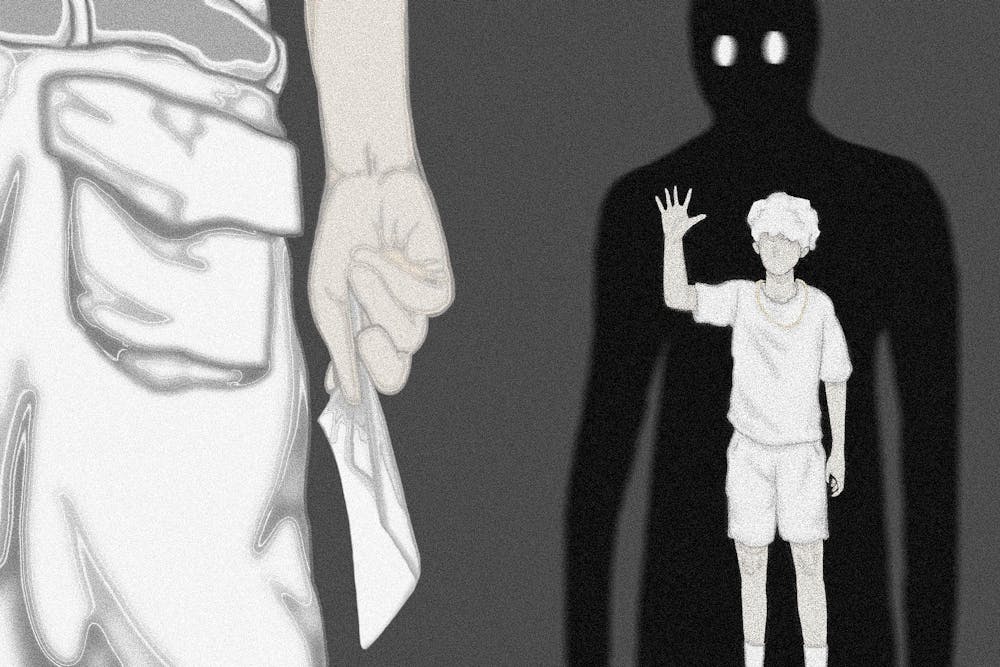
When most people look at you, they see a tall, curly-haired young man with a flashy gold chain and a charming, toothy smile. But when I look at you, I see an earnest, slightly awkward fifteen-year-old with his life ahead of him. In Normal People, Connell says to Marianne, “You’re the kind of person, people either love you or hate you.” She responds, “Well, you don’t hate me,” to which he says, “No, I’m immune to you, in a way. Because I knew you in school.” It’s the same with you and me, minus the star-crossed romance. To me, you’ll always be A who I did high school debate with.
I remember noticing you around campus when I first arrived at our high school purely because of your height. I had attended an all-girls K-8 school, so I was not used to having classmates as tall as you. I didn’t really get to know you, though, until we were both at that debate tournament in Sacramento in 2022, when you were a sophomore and I was a freshman. Do you remember? I was immediately struck by how kind you were to this student you hardly knew, giving me advice about public speaking and high school parties and all those things that seemed so important to us then.
Over the course of many debate tournaments, you became a brother to this only child. In Nepali, we call those who are older brothers to us, whether literally or metaphorically, “dai.” For example: Ed Sheeran dai, Zohran Mamdani dai, Dean Rashid Zia dai. As time wore on, I started to think of you as A dai. I changed your contact name to “A dai,” accordingly.
I loved going to high school with you. We would always get lunch a few times a semester, sitting together outside on the astroturf with our plates of tofu (ours was a ridiculous hippie high school that most Brown students don’t believe is real when I try to describe it to them). You asked me to manage your campaign for student government, and I was flattered. Even though you lost, it was a success from my perspective, as “campaign meetings” were a lovely pretense to gossip about our classmates.
Then COVID happened and you graduated and we lost touch. You had been such a fixture of my high school life that the idea of keeping in touch never occurred to me. One day, during the spring of my senior year, a stupid moment at a debate convention (see: a kid trying to waterboard himself to prove that torture shouldn’t be illegal) made me laugh out loud in disbelief. I remember turning to the seat next to me to say something snarky to you, only to realize you weren’t there. You were at Cornell by then, and I missed you.
A year later, I was across the country in Providence, experiencing the epic highs and lows of being 18 and intelligent and impulsive and emotional and tired. In other words, I was a first-year who lived in James-Mead. One night, I was walking up Thayer toward CVS when suddenly I saw you whiz by on a bicycle. You didn’t see me. Immediately, I texted you: “Do you go to Brown???????”
You responded the next day, saying yes, you had transferred, and that the two of us should get dinner sometime. So we did, at the Ratty. I ate a sandwich and stared in awe at the bearded man across from me. Who was this old guy, and what had he done with A dai?
At one point, you asked if I was seeing anyone. I hesitated to tell you about my boyfriend—you were family to me, and it felt vulgar to tell you about my romantic and sexual life. I managed to choke out an affirmative response, and you congratulated me, giving me one of those earnest smiles that had made me trust you when I was 14.
We didn’t get dinner that often at Brown. We were both busy people. Besides, you were A dai—you weren’t going anywhere. Just when I thought I’d lost you, fate had brought you to Brown. How lucky were we?
Running into you on campus was always a pleasure. Once, you called me an alien like Yves Tumor, and I wrote a poem about that comment on the pleasure of being known. Another time, I was dressed like Zendaya/Tashi in Challengers for Halloween, and you said it didn’t suit me, that I looked better goth. The compliment meant the world, as multiple friends had said the opposite, that I looked better when dressed normal, and that I should try it more often. Again, you made me feel known.
I remember another time when I was dressed in these scary boots, and you called out from your bike, “What happened to the old Indigo?” You were referring, of course, to high school Indigo, who mostly wore ankle-length sun dresses and didn’t like to curse.
I yelled back, “I took her to a rock, and I killed her with my own hands!” Several heads turned toward us, concerned, but we didn’t care because we were laughing.
Then came the spring of 2025, that awful spring. Every day was hell, but life went on—I went to class, wrote my essays, grabbed lunch at the Ratty with friends. During one such meetup, my friend M showed me some texts you sent her. You were inviting her to cook dinner at your apartment, but your tone was pushy. I thought too highly of you to think anything of it and interpreted the messages as a poor attempt at expressing romantic interest. A dai wasn’t creepy. Awkward, maybe, but so was I.
Even though it was a horrible, no-good spring, I still did my best to have a lovely birthday. I invited everyone I love to Wick Pub, and, of course, you were there. You only stayed an hour, as it was your first stop of the night. After you left, someone asked me if I had invited you.
I laughed at the strange question. “Yes, he’s a friend from high school,” I said.
“Really?” She replied. “You guys sounded like two siblings bickering.”
And so we were.
The next time we hung out was at Gigs with P. I had just found out that you had a crush on P, something you accidentally confessed to me on 4/20. I had been surprised, as I had always assumed you were one of the few straight alumni of our hippie high school. After the 4/20 revelation, I invited P to Gigs with us and tried to set the two of you up by subtly taking a long time in the bathroom or just vanishing for lengthy periods.
After the Stowaways set ended, the three of us went out for drinks. You confessed that someone at Cornell had accused you of doing something sexually inappropriate, and that you had been socially ostracized because of the accusation. You spoke about it as if you had apologized, atoned, repented, reflected. I loved you, so I didn’t ask you to explain in detail the nature of the accusation. I assumed it must have been a comment made in poor taste. Since coming to Brown, you had started calling everyone “baby,” which I found hilarious, but I could see how it would make others uncomfortable. It was probably something like that, blown out of proportion.
Because you had just shared a secret, I shouted one back over the noise of the bar. I told you about my rape, my Title IX case, and how I would have left Brown by now if not for L. You gave me a side hug, and I felt reassured by the appropriateness of the gesture. It was brief, a little awkward, and very chaste. In other words, a perfect hug to give a person after they’ve told you about their rape. I told you that I appreciated you, and I left the bar smiling, trailing behind you and P, hoping that you would kiss.
Summer came and went—my time in Nepal was more beautiful than I could have ever imagined. After returning to the U.S., I moved into an apartment in Fox Point, where, on a humid September night, I received a text informing me that you had raped someone at Cornell.
It suddenly all made sense—your sudden transfer to Brown, your drunk confession, your texts to M. How could I not have seen it earlier? Shouldn’t being raped mean I can spot a rapist? I remember dropping my phone and dry retching over my carpet. I eventually called P to tell them about you, about what you were. P, in particular, had a right to know since they’d hooked up with you after our night out (it was in the foyer of Steinert of all places, but levity feels inappropriate at this point in my letter to you). P was devastated, and so was I.
I saw you a few times that autumn. You would wave at me from across the green, stop your bike to talk to me outside the Lindemann, make eye contact with me in the VDub. I’d always turn sharply in the other direction whenever I saw you, no matter how much it disrupted my plans for the day or route through campus. It would have been too painful to talk to you—you knew what happened to me, and I knew what you had done.
Of course, A, you know that I believe firmly in restorative justice, to the point that I insisted on giving that to my own rapist. Many people in my life protested, viewing my actions as lenient and misguided rather than principled and empathetic. You deserve the same, but I also deserve the right to not speak to you for as long as it takes me to figure out what I can even say. This is not a choice I make lightly. After I found out what happened, and I would see you from across the street, I didn’t see a rapist—I still saw that 15-year-old from San Francisco. Your contact name is still A dai, even though I’ve blocked you. I won’t change it.
Over winter break, P texted me to let me know that you’d released a Substack manifesto. Obviously, I read it, desperately scanning each line to see if I could find A dai anywhere. He was nowhere to be found. Instead, I found the crazed ramblings of a monster who admits to the world that the only time he ever felt human was when he was raping another person. When I read that, I knew that I didn’t know you anymore.
The worst part about this, A, is that this is exactly the kind of betrayal you would have given me advice about how to navigate. I can see myself telling you about it and you saying something ridiculous to add much-needed levity to the situation. That was the A I knew.
In your manifesto, you write about being human in a way that corrupts the sanctity of shared humanity. So let me tell you about a time I felt human. It was when we were in that bar with P, and I told you what happened to me, and you listened in the way that only an old friend can. For a moment, the care and love that I felt radiating from you eclipsed the horror of my rape, and I knew that I was going to heal, with time, through conversations like that.
You have everything you need to repair the mess you’ve made, A dai. I certainly hope you try.
Goodbye, good luck,
Indigo
Indigo Mudbhary is a University news senior staff writer covering student government. In her free time, she enjoys running around Providence and finding new routes.


