Although Zach Cregger’s Weapons (2025) is marketed as a horror film, this classification only partially reflects the film’s broader ambitions. While the film employs the genre’s familiar aesthetics, its central concern is the gradual and corrosive breakdown of civic life in contemporary America.
Cregger reinterprets horror conventions to align with the genre’s recent emphasis on social commentary, constructing a political fable centered on a town that unravels following the disappearance of 17 children. Initial shock and grief rapidly curdle into accusation, conspiracy, and paranoia, mirroring everything from QAnon-style mythmaking to the kind of localized conflicts that grow out of deep community distrust.
In the tradition of recent films such as Get Out, Us, Midsommar, The Babadook, and It Follows, Weapons employs horror to examine a distinctly contemporary form of social anxiety. Cregger depicts a generation formed by disorder rather than agency, influenced by events like 9/11, active-shooter drills, digital echo chambers, and institutions that increasingly fail to provide protection or meaning.
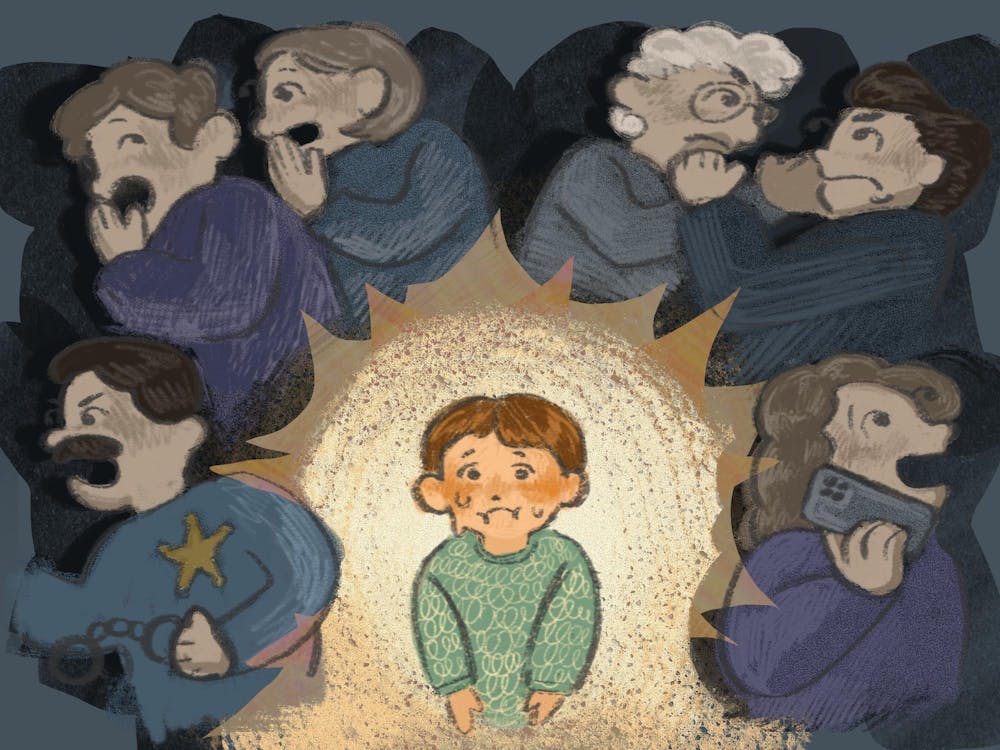
Similar to how Get Out interrogates systemic racism and Midsommar transforms grief and patriarchal manipulation into ritualized catharsis, Weapons addresses other anxieties that characterize Generation Z. To youth growing up with the spectre of mass shootings and witnessing the erosion of institutional credibility, the concept of safety appears unattainable. In Weapons, horror is manifested through the film’s stark depictions of abandonment and eroded support systems: schools unable to safeguard students, adults who are physically present yet emotionally disengaged, and institutions like the police that fail to intervene during critical moments.
The sense of dread arises not from a specific threat, but rather from the gradual realization that individuals need to confront catastrophe in isolation.
For Gen Z, Weapons feels less like fiction and more like an unvarnished reflection of daily life. As adults withdraw, the younger generation is left to face the consequences of a fractured society. We’ve come of age in a constant state of national crisis, where school shootings are processed through nihilistic memes and TikTok video essays. Friendships form and radicalization takes root side by side on the same digital platforms. Disaster becomes routine; every tragedy and every threat grows increasingly abstract, just another post to swipe away.
Cregger’s decision to withhold clear motives for the violence intensifies Weapons’s pervasive mysteries. At the outset, the villainous Aunt Gladys seems driven by a desperate, almost primal desire for longevity. While this motive is accessible to viewers, it does not fully account for the subsequent horror. In the movie, the horror materializes when Aunt Gladys employs dark ritual magic to gain control over the children. The film reveals her use of occult symbols, chants, and ritual objects to lure the children and imprison them in her basement, where she feeds on their youthful souls to prevent her own aging.
However, the director deliberately withholds her backstory, offering only fragments and never fully disclosing her origins or identity. Ultimately, her actions appear as less a coherent plan than manifestations of a larger, inscrutable force. She arrives at the family’s home claiming illness and seeking assistance. Once inside, she employs ritual magic to immobilize the parents, thereby seizing control of the household. Her influence subsequently expands: She uses this dark magic to ensnare the children, and any townspeople who become suspicious meet a sudden and uncanny end when she snaps a charmed twig.
Where does her dark magic come from? Why does she want to live longer? Is she a human or a demon? This ambiguity positions her as an embodiment of the film’s central mystery and shifts control over fate from the human protagonists to an uncontrollable external force.
Weapons is unsettling in its recognition that civic collapse seldom manifests as spectacle. Instead, it emerges through the gradual erosion of individual agency. The film spotlights parents who avoid difficult conversations and comply with authorities far beyond their understanding. This act of surrender is portrayed as consequential rather than neutral. The story frames it as a pervasive harm, a form of quiet violence that leaves lasting effects.
Aunt Gladys is depicted as a quietly formidable outsider who exploits the community’s deliberate blindness. She is an opportunist who benefits from the collective refusal to acknowledge reality. Her presence suggests that she occupies the moral void that others in the community choose to ignore. The authorities, trapped in a state of inertia, deflect scrutiny toward a blameless teacher instead—a diversionary maneuver emblematic of a society adept at displacing culpability rather than interrogating its own complicity.
The film refrains from overt policy polemics, yet its critique is unmistakable. It depicts adults who raise concern too late while evading accountability, mirroring the conduct of contemporary leaders (particularly those on the political right) in relation to gun violence. These individuals publicly lament exigencies that are within their capacity to address, yet remain largely inactive. Although the official rhetoric is replete with the language of protection, the lived reality is marked by systemic neglect.
The film makes this tension palpable through surreal imagery, particularly in a dream sequence where an assault rifle hovers above one of the child victim’s houses. The weapon is neither fired nor touched; it remains suspended, representing a persistent threat and underscoring that protective rhetoric often conceals a willingness to accept harm for political advantage. In this context, the gun functions as a metaphor for both the weaponization of children and the threat posed to children, especially in adult political discourse.
In real-world contemporary discourse, the political right frequently emphasizes children's vulnerability as a rhetorical strategy, presenting themselves as protectors. However, they often disregard or impede initiatives aimed at mitigating the significant risks that firearms present to children.
The townspeople are not portrayed as villains, but rather as casualties of civic fatigue. Neighbors exchange polite nods as rumors circulate regarding the missing children. These concerns are mentioned only briefly in public spaces before daily routines resume. Politeness functions as a barrier to discomfort. By avoiding conflict, the community allows Gladys to persist without opposition.
Weapons resonates with Gen Z because it dismantles the myth of adult competence. This theme is particularly impactful for young people whose formative years are marked by political paralysis. They observe national leaders issuing warnings about existential threats while legislative bodies remain inactive. School officials incorporate active shooter drills as routine elements of mandatory safety curricula. Politicians pledge to regulate social media, yet harmful content continues to proliferate. Institutional accountability is consistently deflected, resulting in persistent inaction.
Cregger’s most striking accomplishment lies in his consistent refusal to grant redemption to the adult characters, who fail to demonstrate any collective act of courage. Instead, the burden of redemption is imposed upon the children, who have been left powerless and are ultimately compelled to hold Aunt Gladys accountable through a brutal act of violence.
The narrative’s conclusion embodies a stark acceptance of loss, underscoring the horror experienced by a generation disconnected from notions of fate or agency. This creative choice, while potentially unsatisfying for audiences seeking catharsis, aligns with the pervasive sense of unease characterizing contemporary American society. The film's final message is clear: A nation that ignores its own problems ultimately loses any sense of its future.


