Like every other teenage girl in the country, I was absolutely obsessed with Animal Crossing: New Horizons (ACNH) during the pandemic. I was actually a little late to the game—I got my first Nintendo Switch in late 2020, a few months after ACNH was released, and I had never played Animal Crossing (or really any video game) before. But once I got hooked, it was over for my screentime—something about the simplicity and direction of the life I led on my island appealed to me as a deeply bored teenager in quarantine. I’d spend all of my waking hours fishing, decorating my in-game house, selling turnips, and trying to max out my character’s wardrobe from Able Sisters. Even when school started up again during my junior year, I’d play ACNH during my Zoom classes and college information sessions (likely a large part of why I can no longer pay attention to virtual lectures). During a time when I was isolated from just about everyone but my family, I found comfort in my daily interactions with the villagers on my island.
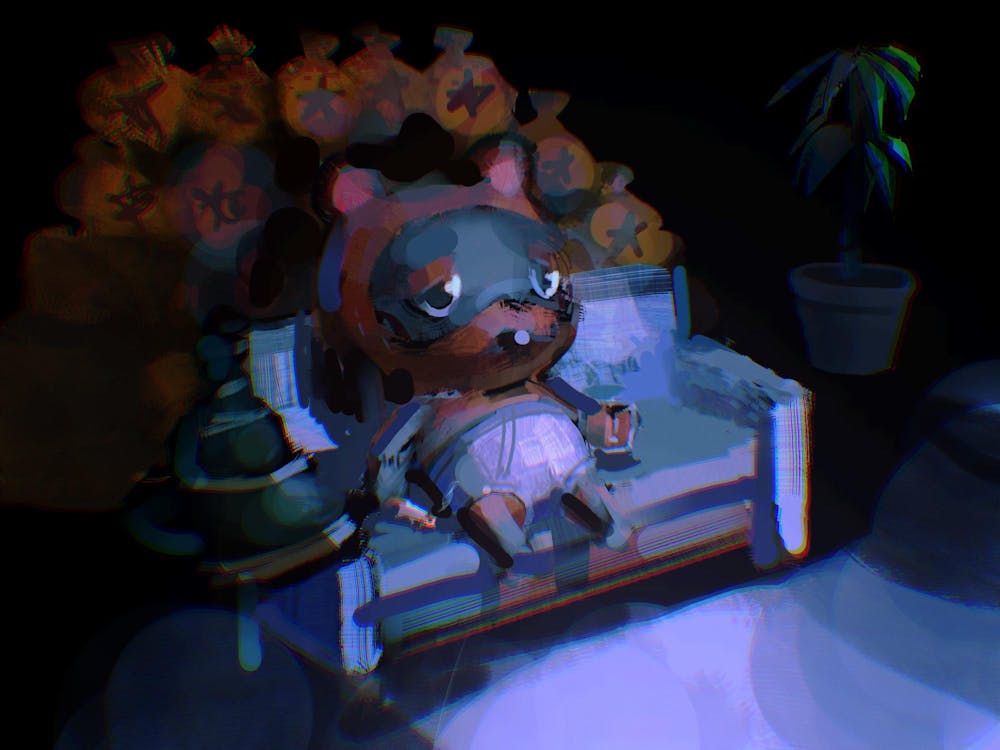
The villagers. Any Animal Crossing: New Horizons player will know how contentious the discourse around villagers was during the heyday of the ACNH hype—videos of players hitting “ugly” villagers with nets, villager tier lists and rankings based on nothing but appearance, popular villagers being sold for real money on eBay. In particular, the newly released villager Raymond—a gray cat with heterochromia and glasses—sparked a frenzy so crazy that people started cyberbullying real people on Twitter for refusing to sell him to them. In a way, this was the core of the ACNH experience—not decorating your island with furniture, but rather with the cutest NPCs, the objective ranking of which was determined by a council of chronically online players on social media.
Some background on how choosing villagers works in ACNH, for the uninitiated: There are about 400 villagers in the game, only distinct from each other in appearance and dialogue presets. You start off with two villagers (your “starters”) and you have no control over the specific characters you get (unless, like a great many ACNH players, you keep restarting the game from scratch until you get starters that you deem cute enough to get past the first scene). As your island grows, you get to invite more villagers to your island. You get more choice here, as you can choose who to invite by repeatedly visiting remote islands to meet villagers, but if you’re looking for a specific villager, your odds are abysmal. This itself spawned a black market in which people sold tickets to fly to these islands, which were often acquired through repeatedly completing mundane tasks such as “hit three rocks” and “chop three trees.” But, as the only way you can guarantee a specific villager is by visiting another player’s island where that villager is moving out, a typical day spent on an Animal Crossing forum would consist of a flood of user posts about selling their animal neighbors.
I stayed offline during the first few weeks I played the game, largely unaware of the toxic wastelands that were Twitter and Reddit. My starters were the gray monkey Shari and the blue bear cub Kody, and for my new villagers, I took the first options I got (the blue rhino Hornsby and the strawberry rhino Merengue). I felt an attachment to my starters—they were with me through the unceremonious early days when we lived in tents in the middle of weed-infested wilderness, and built the island with me brick by brick. Shari loved to sing along to whatever song I decided to play on the radio, even when I only had one song. Kody would always talk to me about his abs and his workouts, which I found strangely endearing. Hornsby loved visiting the museum and mispronouncing the names of all the dinosaurs.
But then, I learned from a friend that there were 400 villagers out there that I could meet. I was curious to see what the options were, so I typed “animal crossing villagers” into Google. Here, I finally waded headfirst into the online Animal Crossing community by stumbling across my first villager tier list, where I was devastated to find that my OGs, Shari and Kody, were both bottom-tier. This discovery impacted me greatly—I found entire Reddit threads trashing Shari by saying her hands were stained with pee—and I naturally started gravitating toward more popular villagers as my island grew. I would check tier lists and Reddit every time I met a new candidate to live on my island, and I would only invite them if they were A-tier or above. When Shari and Kody eventually asked to move out, I let them—after all, this meant more spots for the good villagers.
Within a few weeks of this discovery, my island became unrecognizable. The landscape was now carefully curated: Neatly arranged brick buildings replaced the tents we used to live in, and bridges and staircases connected all the different parts of the island. I could almost imagine I lived in a city. The villagers, too, were meticulously selected to conform to the cuteness standard of online strangers. My island had finally been rated five stars due to the arrangement of buildings and decorations; my villager selection would probably earn me a non-trivial amount of real money in the villager black market. But underneath this pristine veneer of perfection, I felt nothing. I felt nothing for these villagers; nothing like the way I felt about Shari when she gave me medicine after my first wasp bite and sang along to my first KK Slider record. The only thing these new villagers brought me was their appearance and their place in the tier list, as if the only value they had was as status symbols.
Without realizing, I’d gotten sucked into the strange world of prestige and status in the Animal Crossing community. Players did not actually care about connecting with their villagers; they only cared about how they made them look in the eyes of other players and the aesthetics they brought to their island. Owning popular villagers was a way of claiming cultural capital among ACNH players, and players spent hours of their time (and dollars of their real money) curating their island for clout. My island now looked exactly the same as thousands of others on Switches across the globe, my villagers consisting of the fashionable likes of Dom, Marina, Zucker, Fauna, and Whitney. My game of relaxation and mid-pandemic connection had turned into one of social posturing and grinding.
It was my love for my other, less popular villagers that finally made me realize what had happened to me. One of my favorite villagers on my island was Stella, an adorable magenta sheep with a permanent sleepy smile. She was cute, sure, and no one hated her, but she never made the lists of “dreamies”—people’s dream villagers—either. I found myself constantly wanting to advocate on her behalf on Reddit and argue about how underrated she was to justify why I was keeping her on my island alongside the greats like Marina and Dom, and somewhere along the way, I realized: Why did I need other people’s permission to have my own preferences?
This realization sent me reevaluating various aspects of my real life as well. Social prestige had been such an integral part of my life that I’d become unconscious of how it influenced my decisions—colleges, jobs, and even friends and potential romantic partners often had a prestige tag attached to them. As a (particularly impressionable) junior in high school, college applications and personal relationships were an especially salient part of my life, and I ended up delegating much of my thinking about them to other people. I aspired to attend Harvard or MIT because those were the schools everyone told me were the best and where everyone else wanted to go. I tried forcing myself to enjoy my STEM classes because these were the “better” majors that made more money and were more respected. I spent hours poring over pictures of people I might have wanted to date, wondering if they were conventionally attractive enough for me to justify liking them, and I was never brave enough to tell anyone else out of fear that they would make fun of my taste.
Growing up surrounded by this culture of status-seeking, I’d lost track of the fact that experiences and relationships are more than decorations on a digital island, but real, beautiful things I can appreciate without the permission of others. I started to realize that Harvard and MIT were not the best for me, and started intentionally targeting a more niche class of schools. I started thinking harder about what classes I actually enjoyed, and once I got to Brown, I promptly gave up on science once I shopped my first chemistry class. I stopped giving as much of a shit about what other people thought of the people I dated, because I realized that the only attraction that mattered was my own. Some of these decisions have baffled the people around me, but over time, I’ve come to be less bothered by that, and I’ve started to claim my life as my own.
I now play Animal Crossing in peace with the villagers I want, not giving a single thought to any tier list. I’ve kicked out some of the popular villagers that were only there for window dressing, but I’ve kept a few that I felt a stronger connection to. My island is now a mix of popular and underrated villagers, but what they all have in common is that I genuinely want them to be there—and it has made my time with Animal Crossing enjoyable again.


