“E se ibi ti e ti bere, ese ibi ti e ba de, a dupe ore re, e se ibi te mu wa lo.”
This Yoruba gospel hymn has filled my ears since childhood, reminding me to be consumed with gratitude and anticipation. Translated, this song means, “I give thanks for where we began, I give thanks for where we have come, and I give thanks for where we are yet to go.”
Yet
1. In addition, in a continuing or repeating sequence; further, furthermore, moreover.
2. Still; even (used to emphasize increase or repetition)
Synonyms: so far, further, additionally
Further. Further. Further.
There is always further to go, there is always next.
At the age of 11, I planned out my entire life. I was always a forward-thinking child, restless with sitting in the present. After seeing a presentation about a local magnet high school in my community, I decided it was time to solidify my future. That evening, in the comfort of my room, I chose my middle and high school, solidified my career plans, and envisioned my future to come. There was no time to waste at 11—there was only further to go. There were only the many things I had yet to do.
I decided that I would apply to the pre-IB middle school, also known as the International Baccalaureate Middle Years Program. Then, for high school, I would attend the Legal Studies Academy at First Colonial High, which had a model courtroom which I had seen in their presentation. The mahogany wood made an impression on my young mind. Then, after high school, I would go to a good university and eventually become a lawyer!
Now, at 21, when I share with friends my thoughts at 11 years old, they are shocked by my younger self’s devotion to planning. But in reality, my mind ran a thousand miles a minute—it always has. To be in my mind is to be on a sugar rush at an amusement park. It is chaotic but mostly fun—at times, you go on a ride and it makes you nauseous, but you recover quickly and get on the next roller coaster.
Overplanning
1. To plan excessively or in more detail than necessary
Synonyms: over-organizing, over-particular
Since I can remember, I’ve had a plan for what is next. Overplanning has become my comfort zone. It cocoons my mind, which is often chaotic and ever-racing. I have learned to dwell and thrive in this fast-paced environment, but throughout my years at Brown, I began to notice that with my eyes forever fixed on the future, I was struggling to sit in the present. With a schedule filled to the brim, racing from one thing to the next, I did not have time to simply be. Ashley Janssen, in her article “Why Overplanning is a Trap…” suggests that overplanning is a symptom of perfectionism. She describes overplanning as a “desire to control the outcomes.” Control.
Control
1. To exercise restraining or directing influence over
2. To have power over
Synonyms: constrain, govern, regulate
Being the daughter of Nigerian migrants, there has been an unspoken expectation that I needed to succeed in all things, and at 11 years old, there were few things I had complete agency over. But in the one place I had complete control, my academics, I found my strength. I found joy in micromanaging my future. I felt the ultimate agency. Eleven-year-old me came up with a wonderful plan that became reality as I worked to fulfill my pre-written life map. I attended the pre-selected middle and high school, went to a good college, and am now working to be a lawyer. In fact, I have spent my entire education post-elementary school preparing for a career in law. Overplanning, control, and always thinking of what is yet to come have guided me for as long as I can remember, but as I reflect on the endings that accompany my senior year, I fear that I might have missed the present.
In Emily Dickinson’s poem “Forever is Composed of Now (690),” she presents the importance of being in the moment. When I hear forever, I think of what is yet to come, yet to be realized, I think of a future I need to get control of, get ahead of, so that I can do it well. But Dickinson notes that “Forever is composed of now/ tis not a different time…/from this experience Here.” As an English concentrator, I spent nearly a semester dissecting Dickinson’s work, and in analyzing this poem, I am reminded of here. Here is the now, the present, and forever. In fact, the word “here” is capitalized in the poem, which draws additional emphasis to the word.
Ese ibi ti e ba de
The middle of the Yoruba gospel song that I love so dearly is Ese ibi ti e ba de, which translates to “thank you for where we have come.” I have always failed to remember the middle of this song, similarly to my approach on life, I dwelled on the ending, on what came next.
As a senior on the brink of new beginnings, I have decided to focus on here. And while yet granted me agency when I needed it most, I now want to embrace the future’s unknown and allow it to meet me. I want to be in the moment, even if I have not prepared extensively for it. I have learned, and hope to continue learning, that sometimes the unknown present and future are just as fulfilling. With graduation drawing near, I am ready to dive headfirst into new beginnings. Instead of looking further and further and further ahead, I want to redirect my energy further and further and further to the present.
“E se ibi ti e ti bere, ese ibi ti e ba de, a dupe ore re, e se ibi te mu wa lo.”
When I sing and recognize this song in its entirety, I am transported on a full circle journey of where I once was, where I am now, and the future that I will release control of. In sitting with this song, I am reminded of the wide-eyed and jubilant first-year I once was, enthralled by the Ratty’s endless options. In sitting with this song, I am filled with bittersweet glee that I will soon be wearing a cap and gown, a symbol of an ending. Sitting with this song, I feel confident that I can let go of the comfort of overplanning and control, and finally find comfort that I am prepared for the unknown to come.
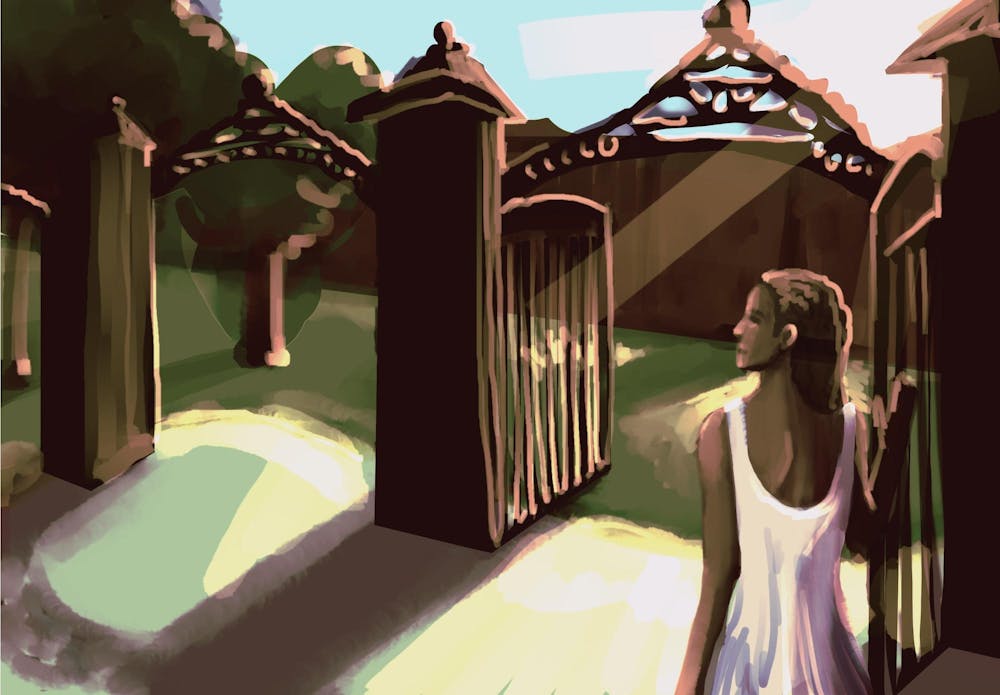
So, as I walk down College Hill one last time, I will soak in the feeling of passing through the Van Wickle gates and let the world ahead of me meet me where I am. All the while, I will be filled not with an overwhelming desire to control, but an all-consuming sense of gratitude and patience to receive what is yet to come.


