
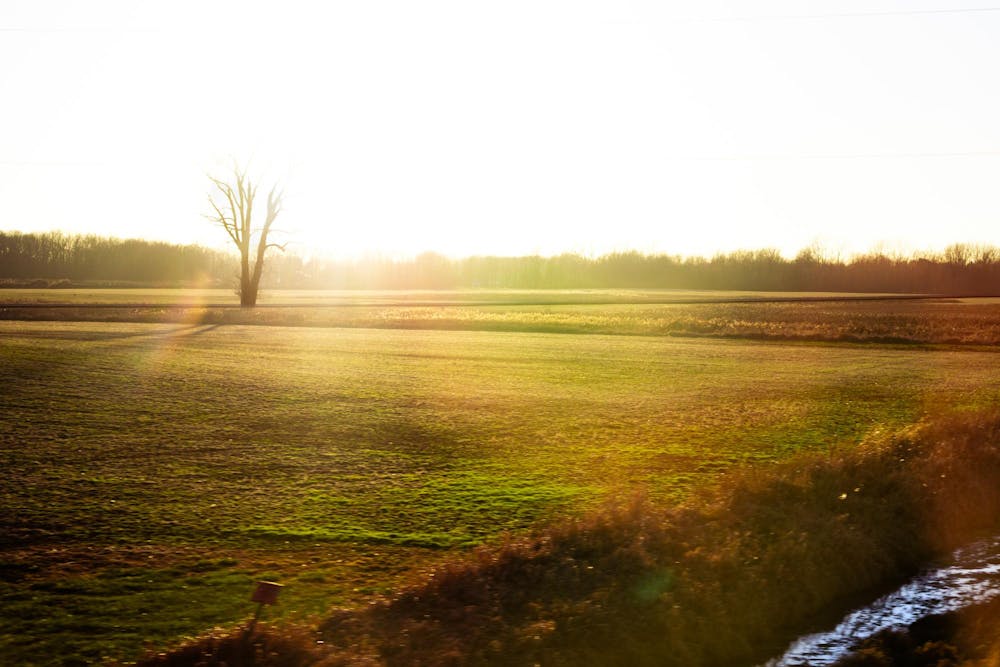
Halfway through my first semester at Brown, one of my closest friends on campus told me she loved the person I was becoming. She said I seemed more “Brown” and sophisticated, or less “Maine” than when I first arrived. What she meant as a compliment felt instead like a quiet blow to my sense of self, revealing an undercurrent of condescension towards my rural roots. This moment underscored a limited understanding, pervasive at Brown, of not only my own upbringing, but also of thousands of rural communities across the country. It made me realize that Brown’s cosmopolitan culture, for all its sophistication, still has much to learn from the values that define rural America.
About 6% of the class of 2029 comes from rural areas, compared to over 80% from urban and suburban areas. Cosmopolitan backgrounds seem to coincide with a lack of understanding of our country’s rural communities. Oftentimes, rural America is seen through one of two lenses. Rural communities are either romanticized for their quaintness, connection to nature and authenticity, or they are denigrated for being “backwards,” uneducated or intolerant. These narratives are not only harmful, but they also ignore the vibrancy and resilience abundant in communities across the country. Rural communities are so much more than the caricatures they are painted as in the media.
Stepping onto College Hill as a first-year student, endless opportunities awaited me. An abundance of new people with diverse passions and backgrounds provided much to learn from. I had lived my entire life in the same house in a town of 4,000, attending public school alongside the same people each year. At Brown, meeting students who had grown up in multiple countries made me realize how much I had overestimated the ubiquity of my own experience. I understood that this diversity provides so much strength for the University and its students’ experiences. But I was taken aback by just how dominant the international and cosmopolitan influence was on student culture — to the point that it diminished the lived experience that I held so closely.
Growing up in Maine, the most rural state in the country, I saw the strengths of rural living in full color. Exploration of our staggering mountains and austere coastlines coupled with a deep understanding of natural ecology provides Mainers with foundational views of preservation and nature’s harshest elements. In towns like Millinocket and Machias, which find themselves hours from the nearest city, resourcefulness and community interconnection are religions of necessity. Ways of life are formed around a rural pragmatism that inspires us to do the most with what we have. Wood stoves and piled logs, necessary to last through the winter, are omnipresent, and shovels sit ready to be raised for the first snow. Life is characterized by different standards for success, with connection — to the land, natural environment and your neighbor — prized over all else.
Among Brown students, these lessons may feel trivial: Food is abundant, we are detached from our waste and all essential needs are met. We never need to shovel a walkway on a snowy morning or ensure that the fireplace is sufficiently stocked so the pipes won’t freeze overnight. When we neglect these lessons, we fail to appreciate so much of what makes us human: understanding our natural surroundings through exploration, building supportive communities and surviving in the face of obstacles.
From experiencing Maine’s mill towns and coastal villages and canvassing for political candidates across the state, I have felt the strength and support that thrives in these rural communities. The knowledge systems that proliferate across these remote landscapes might not be able to secure an investment banking internship or provide you with sharp critiques of literature to dole out at a dinner party, but they do teach you how to live a richer life. My exploration has inspired a sense of commitment to the ocean and trees that surrounds me and the communities that envelop me — one that has inspired me to lead a more purposeful life.
I certainly understand that those with an urban or suburban upbringing can hold those same values. But I push those who may paint rural communities in broad strokes to truly understand the strength, vibrance and nuance that exists across this country. The place-based attitudes in areas like rural New Mexico, Appalachia and northern Minnesota must not be reduced to single stories — instead, they should be appreciated and learned from.
Returning home this past summer reinforced a sense of gratitude in me for the environment I grew up in. It also taught me a lesson: Connection to my roots and appreciation of my new community at Brown are not mutually exclusive. I am able to be unapologetically “Maine” without diminishing any lessons I will learn in my lectures or relationships I cultivate with my peers. Rural environments are not just places to vacation or watch warily through TV screens. They are living and breathing communities that exude wisdom on how to live a more intentional life. Condescension and shallow understanding give us nothing — but thoughtful engagement, rooted in a willingness to learn from rural communities, can transform how we live.
Tommy Leggat-Barr ’28 can be reached at thomas_leggat-barr@brown.edu. Please send responses to this column to letters@browndailyherald.com and other opinions to opinions@browndailyherald.com.


