On Wednesday, the Brown community enthusiastically praised the University’s rejection of the Trump administration’s compact.
The stipulations laid out in the “Compact for Educational Excellence in Higher Education,” which was sent to Brown and eight other universities on Oct. 1, had been fueling rising tensions both on and off College Hill.
For the past couple of weeks, students, faculty and alums urged President Christina Paxson P’19 P’MD’20 to reject the compact over concerns that it would limit academic freedom, hinder hiring decisions and restrict admissions, among others.
Brown’s rejection of the White House’s proposal elicited a strong sense of pride among students, faculty and alums who spoke with The Herald.
‘Very nervous’: Afraid of agreeing to the compact
“We have been very nervous,” said Jen Corn ’94 P’26, a volunteer with the alum group Brown Stand Strong. “The July agreement between Brown and the Trump administration was very disheartening, and so it made us very nervous about how Brown’s leadership … (was) going to respond to this compact.”
Axel Brito ’26 was also “pleasantly surprised,” as he didn’t expect the University to oppose the Trump administration after choosing to negotiate a deal with them just months earlier.
“I’m quite glad they’re actually putting up a fight now, and we’ll see what happens,” he said. “As an academic institution, we should be allowed to have our freedom of speech, as well as be able to have a safe environment for people from all backgrounds.”
After learning about the compact, Zoe Weissman ’28 was nervous about the University’s response because “voluntarily agreeing” to the government’s demands in July “implies a sense of complacency,” she told The Herald.
So when Weissman found out about the University’s rejection in an interview with The Herald, she was “very surprised, but also relieved,” she said.
Because Brown “claims to be defending educational freedom” and the right to express individual beliefs on campus, Weissman believed that rejecting the compact would be the “only possible solution” to preserve the University’s values.
‘The only ethical decision’: A sense of pride in rejecting the compact
For Abraham Carrillo-Galindo ’28, the University’s rejection of the compact “was definitely one of those moments where I felt proud to come to this school,” he added.
Carrillo-Galindo hopes Brown can “keep that ball rolling” and continue “standing up” to the Trump administration to protect academic freedom.
Emily Farmer ’28 said the decision was “essential to the protection of free speech” on college campuses, safeguarding the ability of students, faculty and staff to “express their political opinions.”
If signed, the compact would have forced the University to change or abolish “institutional units that purposefully punish, belittle and even spark violence against conservative ideas,” the compact reads.
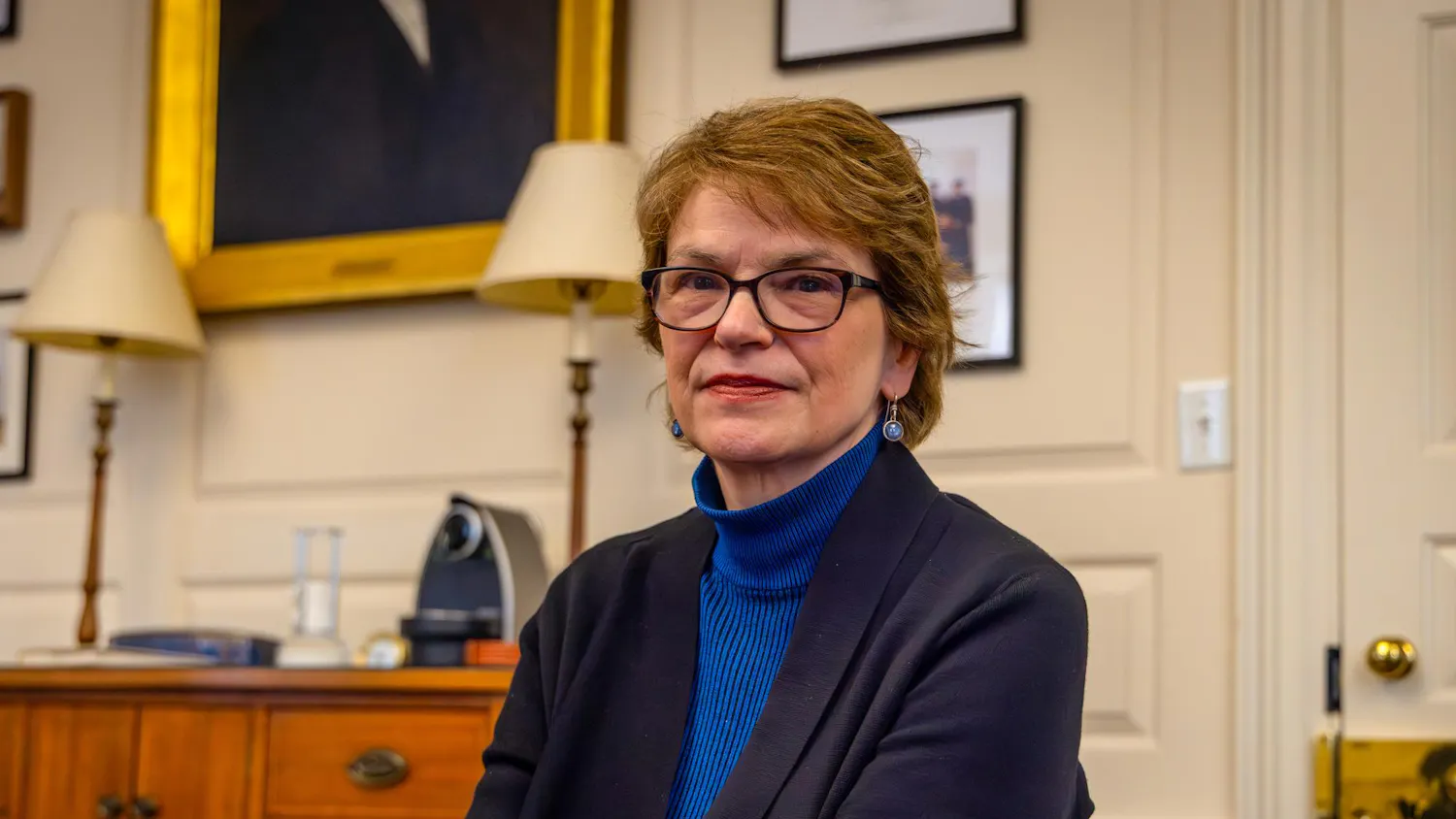
In her letter, Paxson expressed concern that the compact’s provisions would “restrict academic freedom and undermine the autonomy of Brown’s governance, critically compromising our ability to fulfill our mission,” she wrote.
Professor of Political Science Corey Brettschneider was “proud to be a member of the Brown faculty and to see our institution reject the offer and stand firmly for academic freedom,” he wrote in an email to The Herald.
The compact, he believed, would have forced the University to “trade academic freedom” for a financial edge.
Like Brettschneider, Timmons Roberts, a professor of environmental studies, sociology and environment and society, also expressed pride in the University’s response. Roberts called the compact “unconstitutional” for “demanding the abridgment of our freedom of speech in exchange for unclear benefits.”
Andy van Dam, professor of computer science and technology and education, wrote in an email to The Herald that he approved of the decision, adding that he believed “the case for rejection” of the compact was “compellingly argued” in Paxson’s letter.
He added that Brown’s resolution with the federal government over the summer “clearly shows we’re not having a knee-jerk reaction to government concerns and demands.”
For Thangam Ravindranathan, professor of French and Francophone studies and treasurer of Brown’s American Association of University Professors chapter, the decision indicates that Brown “cannot in any circumstances be made to subordinate our larger mission to a partisan ideological agenda imposed by the government.”
Sarah Thomas, chair of the Department of Hispanic Studies and a member of Brown AAUP’s executive board, was “very relieved” by the decision.
She believes that the compact would have “catastrophically compromised the University's foundational commitment to academic freedom.”
‘We’re over the moon’: Activists see this as a win for grassroots advocacy
In interviews with The Herald, the leaders of activist groups and Brown’s graduate student labor union characterized Paxson’s decision as an unequivocal victory for their movements.
“We’re over the moon that (Paxson) rejected this compact,” said Simon Aron ’28, a co-founder of Brown Rise Up. The group was behind the Oct. 9 rally calling on Paxson to reject the compact.
In a letter to Trump administration officials, Paxson wrote that her “decision to decline participation in the Compact aligns with the views of the vast majority of Brown stakeholders.”
“We were hopeful that by asking for that feedback, it meant that she was going to listen to it,” Corn said. “I think her response today shows that she did.”
For Michael Ziegler GS, executive director of the union encompassing many Brown student workers and employees, Paxson’s letter to Trump administration officials rejecting the compact was “reflective of the thousands of messages that we helped to have sent to President Paxson” during a coordinated campaign designed to put public pressure on University Hall.
Hours before Paxson announced Brown’s rejection of the compact, Daniel Souweine ’01 — an organizer with Brown Stand Strong — personally delivered a petition opposing the compact and signed by 2,000 alums to Paxson’s chief of staff.
“I was really happy to see that the president listened to her community,” Souweine said, describing the news as “a moment for celebration.”
“Student organizing and student pressure works,” Aron said. “We have to keep it up.”
‘A long fight ahead’: Retaliation looms large
Brian Lander, an associate professor of history and environment and society and the secretary of Brown AAUP, wrote in an email to The Herald that he was “delighted” to learn about the decision, but expressed concern about any actions that the federal government may take in response to Paxson’s rejection.
“There is still a long fight ahead, but I hope Brown will continue to be a leader in saying ‘no’ to executive overreach and refusing to compromise our principles,” Thomas wrote.
Despite the immediate celebration, “we also know that this is not going to be the end of attacks from the Trump administration on higher education and on Brown,” Corn said. “We stand ready to keep fighting … for everything that we love about Brown.”

Roma Shah is a section editor covering University Hall & Higher Education and Admissions & Financial Aid. She's a sophomore from Morgan Hill, CA studying neuroscience. In her free time, she can be found doing puzzles, hiking or curled up with a book.

Ethan Schenker is a university news editor covering staff and student labor. He is from Bethesda, MD, and plans to study International and Public Affairs and Economics. In his free time, he enjoys playing piano and clicking on New York Times notifications.

Samah Hamid is a university news editor covering faculty and career & alumni. She is from Sharon, Massachusetts and plans to concentrate in Biology. In her free time, you can find her taking a nap, reading, or baking a sweet treat.