
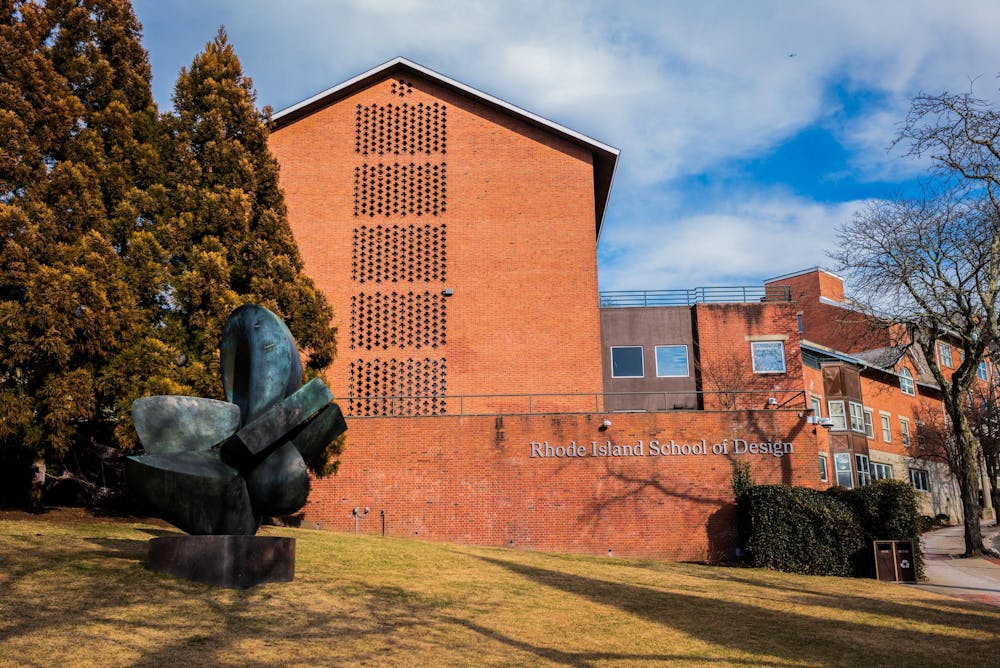
For the first time in nearly 30 years, students enrolled at the Rhode Island School of Design have a new academic department to explore.
This fall, RISD launched the Computation, Technology and Culture Department, which houses a new undergraduate degree program in art and computation, as well as a new program in sound. Beyond the two new majors, the department also hosts the Computation, Technology and Culture undergraduate concentration, or minor, which was first established in 2017.
The CTC department “treats computation as a medium for art and design,” said Department Head Clement Valla, a RISD professor whose work centers on the intersection of humans and computers.
“A bunch of our students might be in media, digital media, communication, digital journalism, online storytelling, those kinds of businesses,” added Valla, who himself studied digital and media when he was a graduate student at RISD. “It’s a very open and flexible department.”
Students pursuing both majors are required to take one core CTC studio course in every semester between sophomore and senior year, and complete a final degree project before graduation.
Students majoring in art and computation study computational art through a historical, theoretical and methodological lens during their sophomore year, before taking on coding and programming in their junior year. Those studying sound spend their sophomore year practicing programming and spatial audio, later moving into composing and performing during their junior year.
Ethan Wei, a sophomore at RISD, is part of the first cohort of students majoring in art and computation. Initially hoping to choose a major that aligned with his interests in user interface and experience, Wei was first attracted to RISD’s industrial design program.
But upon learning about the new department, Wei chatted with Valla and felt the vision for the art and computation program better matched what he wanted in his curriculum.
“This is really a department that connects to the modern technology more and the modern world more,” said Wei, who is also a student representative for his major. “I think as technology develops, designers should develop with the technology.”
With rapid advancements in artificial intelligence, the CTC department also plans to explore the ways designers can leverage AI, Valla said.
CTC students engage with AI in many forms not only to “examine it critically, but also to imagine ways in which there would be different futures for AI,” he added.
Nathan Petree ’28, a Brown-RISD Dual Degree student majoring in sound in the CTC department, said it was “really good” to be part of a department that pushes boundaries. He added that the new department “is all about pure experimentation and play.”
Petree is currently taking CTC course SOUND 2002: “Sonic Mapping: Narratives, Soundscapes and Archives,” which explores the role of sound in areas such as storytelling and creative expression. He said the class has expanded his perspective on what is considered sound and music.
“The sound of the birds outside, the trees or the noise in the air can be music too,” Petree said.
He also explained that sound is often interpreted by people with many different backgrounds, which can bring varied perspectives.
“You have people very involved in technology … and then you have people that are psychologists or artists,” Petree said. “Sound is kind of like connecting every one of us.”
Petree was previously majoring in film, animation and video, but “the film major didn’t quite fit for me or align with my interests,” he said. “When I heard about the sound major coming out, I felt like … I would be greatly missing out if I wasn’t a part of that.”


