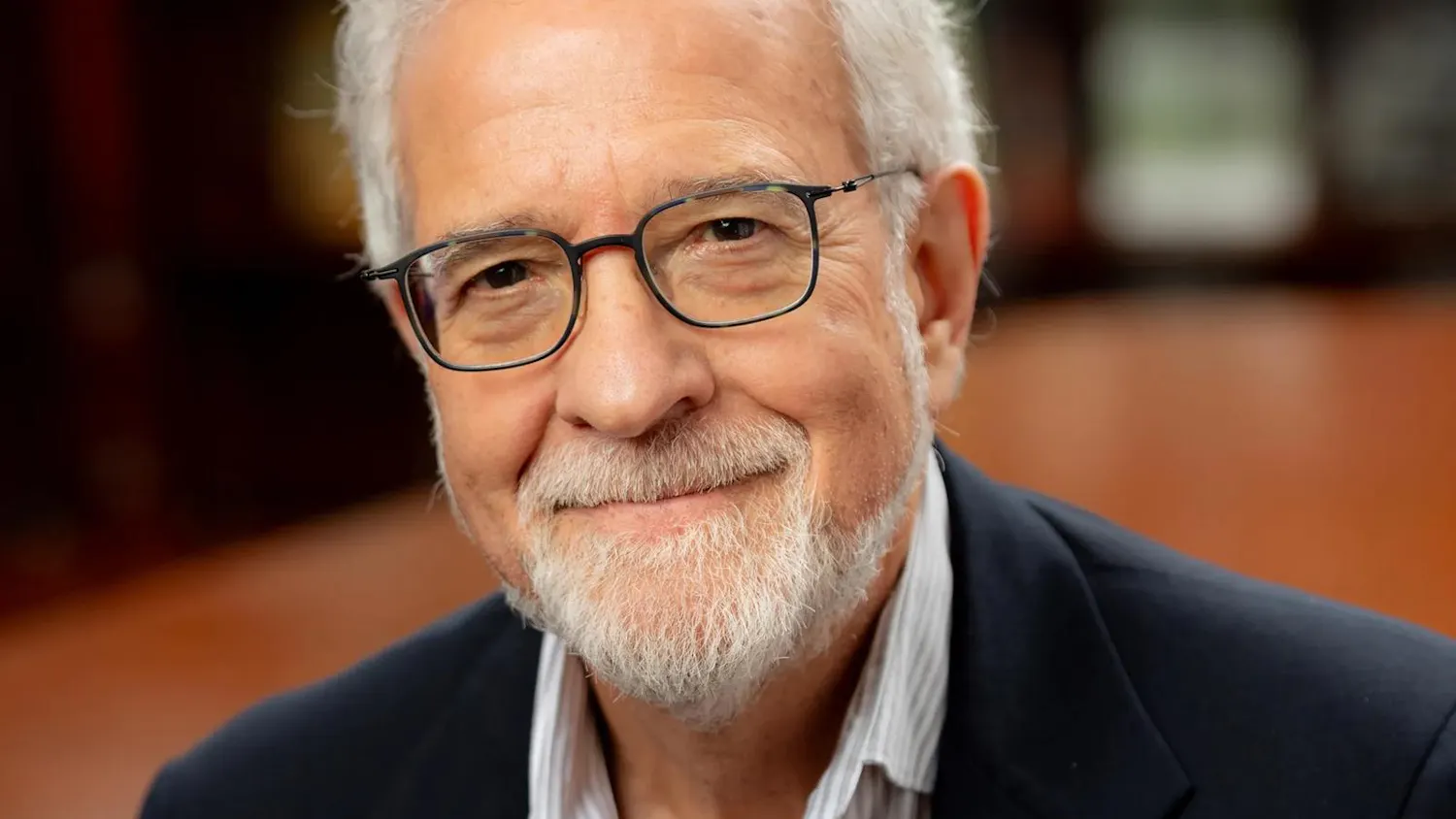
Previously considered by scholars to be unconnected, the histories of the Amazon and Andes regions in South America have significant parallels, according to Eduardo Góes Neves, a professor of archaeology at the University of São Paulo.
During a virtual lecture hosted by the Center for Global Antiquity on Wednesday, Neves explained how the Amazon and Andes regions in South America should be analyzed as much more interconnected than previously considered.
In his talk, Neves called for a “global, holistic” approach to studying “these different areas of the continents that have been separated by scholarship for more than 100 years.”
In his opening remarks, event organizer and Associate Professor of Anthropology and Archaeology and the Ancient World Parker VanValkenburgh described Neves as “one of the world’s foremost experts in Amazonian archeology.”
In the lecture, Neves demonstrated the links between the two regions, which are vastly different ecologically, by discussing the synchronous development of complex geological and structural landscapes in the first millennia.
For example, he pointed to his own field research in the Amazon, in which he found highly fertile dark soils that suggest long-term land use by Indigenous people going back more than 5,000 years. He explained that this signals the emergence of stable, sedentary populations in the region, where people could have been depositing organic garbage that resulted in these dark topsoils, starting around 700 CE.
In parallel, starting around 500 and 600 CE, Neves said, there were “large expansionist states across the Andes,” specifically pointing to the Tiwanaku in Bolivia and the Wari in Peru.
This evidence suggests that political and social systems were evolving at the same time in both regions, Neves said. “For that reason, I think that we can treat South America, maybe, as a continental system, as a working hypothesis.”
In his lecture, Neves also called out the erroneous perception that the Amazon was “an area without people, without history.” According to Neves, this notion has perpetuated harmful narratives that it was up for colonization.
“We have plenty of evidence today that there were many people living in the Amazon,” Neves said. “Eight to 10 million people were settling the Amazon at the time of the arrival of the Europeans in 1492.”
Neves also discussed the potential of “a network of paths and roads connecting those settlements” before 1492.
“For me, the most interesting part of Neves’s presentation related to the evidence for networks of roads that ran through the forest, connecting communities to one another,” wrote event attendee Andrew Scherer, the director of the Joukowsky Institute for Archaeology and the Ancient World and a professor of anthropology, archaeology and the ancient world. He added that Neves is “one of the world’s leading scholars on the archaeology of Amazonia.”
“Throughout much of the 20th century, the conventional assumption was that the Amazon was only ever occupied by small groups of foragers and horticulturalists who only ever lived in small, remote villages,” Scherer wrote.
“Thanks to pioneering research by Neves and others, we now understand the history of Amazonia to be much (more) complex and its precolonial societies more varied than previously assumed,” he added.
Associate Professor of History and Environment and Society Brian Lander, who attended the talk, met Neves when he was a student in the professor’s South American archaeology class at Harvard.
“One of the main points that (Neves is) trying to make is that for a long time, archeologists considered the Andes to be the real center of civilization and the Amazon to somehow be a sort of secondary location,” but new technologies are allowing archaeologists to reassess this assumption, Lander said.
Lander added that the lecture offered “lots of big ideas to think with.”

Ivy Huang is a University News and Science & Research editor from New York City. Concentrating in English, she has a passion for literature and American history. Her favorite authors include Marilynne Robinson, Vladimir Nabokov, and Toni Morrison. Outside of writing, she enjoys playing basketball, watching documentaries, and beating her high score on Subway Surfers.