Throughout the month of February, many students on campus organized and attended events to celebrate Black History Month. From the Black Appreciation Dinner to the concert hosted by the Black Student Union, student leaders emphasized the importance of community celebration.
The Black Appreciation Dinner is an annual event historically hosted by the League of United Black Women with help from the Brown Center for Students of Color that “emphasizes how connected (the) community can be,” said Willow Stewart ’26, co-president of the League of United Black Women. This year, Black Men United also helped organize the approximately 200-person event.
For Isaiah Mars ’26, president and founder of Black Men United, attending the Black Appreciation Dinner during his freshman year was a “transformative” experience, he said.
At “dinners like that, that’s where you meet a lot of people who believe in you when you might not believe in yourself, and who can provide community for you where you couldn't have found that community elsewhere,” he added.
This year, the dinner’s theme was “Renaissance Unfolding,” referring to “famous Renaissance periods within black history” like the Harlem Renaissance,” Stewart said. She added that it centered around “finding joy in community” and how “joy can come through resistance,” Stewart said.
The meal — which included Caribbean, African and southern cuisines — came from local, Black-owned businesses, according to Stewart. The dinner featured student performances and speeches, a keynote alum speaker and a video celebrating graduating seniors. There was also a voting-based awards ceremony held to spotlighted different student leaders in the community.
Mars said the dinner was “a really heartwarming night,” adding that the event highlighted “so many diverse voices.”
This year, the United League of Black Women also collaborated with the BSU to send 20 students to Yale’s annual Black Solidarity Conference, which took place from Feb. 5 to Feb. 7. At the conference, students connected with peers from across the country and attended talks by notable figures such as Angie Thomas, the bestselling author of “The Hate U Give,” and Ibram X. Kendi, the award-winning author of “How to Be an Antiracist.”
“It was really cool to hear from figures you look up to or follow in that sort of way,” Stewart said.
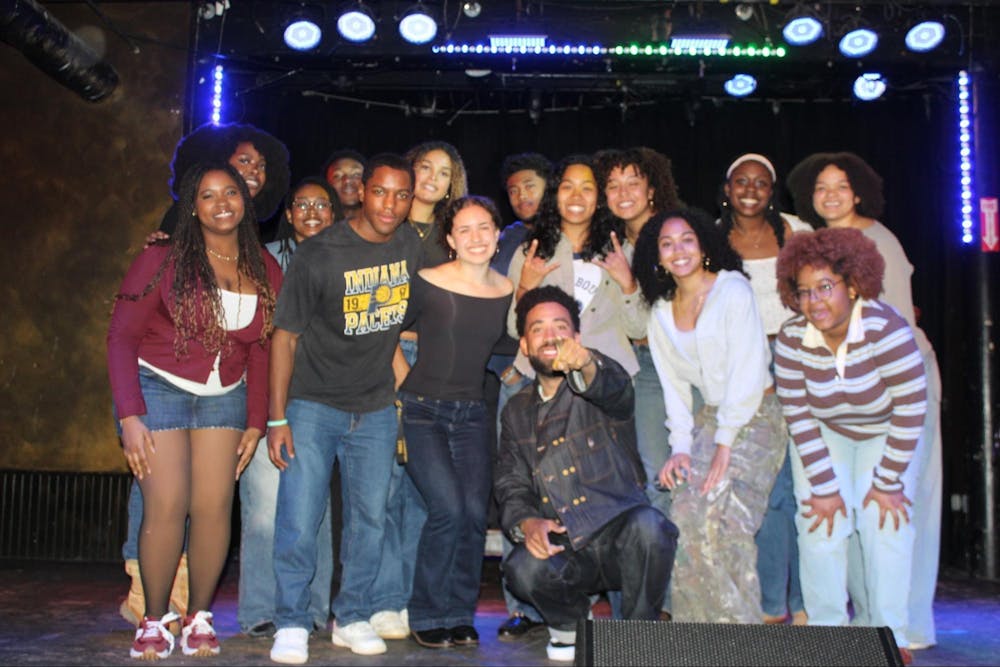
On Feb. 26, the BSU hosted its annual Black History Month Concert, which featured a performance from American rapper KYLE and music from a student DJ. The concert aimed to “support and highlight Black community through music and culture,” said BSU President Olivia Baptiste ’26. She called the concert “a shining example” of music bringing community together, “specifically the Black community,” she added.
According to Baptiste, the BSU has also helped spread awareness of events from various student groups, including recruitment events for Harambee House, a residential community for Black students on campus.
The house’s recruitment period lines up with Black History Month, according to Harambee House Co-President Madison Duff ’27.
Harambee is “always hosting events” — such as a Harambee history teach-in this month — throughout the year, Duff said. “For us, every month is Black History Month,” she added.
On Feb. 28, the African Students’ Association hosted its annual culture show, which aims to celebrate African culture through musical performances, food and fashion.
This year, the show’s theme was “Akoma, the heart of the people,” emphasizing community and unity, said AfriSA President Valerie Nyarko ’27.
Nyarko thought the event was “amazing” and “so high-energy” and ended Black History Month “on a high note,” she said.
“Exploring the African diaspora is important,” Nyarko said. “Going back to those roots was very important in showcasing how rich the culture is.”
The night before the show, AfriSA also hosted an AfroJam party at Platforms Dance Club. Similar to the culture show, the event aimed to provide a space where students could be their “true, authentic” selves with people they trust and “have a great time,” Nyarko said.
Student leaders emphasized the value of student-driven and community-based programming during Black History Month.
“What’s beautiful about student-led initiatives is that they actually amplify the voices of students, and they actually represent the diversity of students,” Mars said. “It really does show how much care and how much passion there is in the community. It gives a lot of autonomy for students to grow as individuals,” he added.
Stewart said that she was initially worried people might be “disillusioned and uninterested” in the events, adding that Black culture is no longer celebrated in the same ways as a decade or so earlier.
But these worries did not come to fruition, according to Stewart. Even amid “everything politically,” her groups were still able to carry out successful events with high attendance and “hear from other people how much they enjoyed this year.”
“There’s a lot of pain and trauma within history of being anyone in the African diaspora,” Baptiste said. “So this month is to highlight voices that aren’t as talked about throughout the rest of the year, and just to celebrate past, present and future Black life.”
Rachel Wicker is a senior staff writer covering affinity and identity. She is from Athens, Georgia and plans on concentrating in English on the nonfiction track and International and Public Affairs. Outside of writing, she enjoys reading books of any genre and doing yoga.