This is the first installment in a series of Science & Research articles addressing widely held beliefs and myths.
As the snow melts on College Hill this weekend, some students might put on their leprechaun hats and head out to celebrate St. Patrick’s Day. But with a chill lingering in the air, those who choose to drink alcohol should still make sure to grab a coat, Brown experts say.
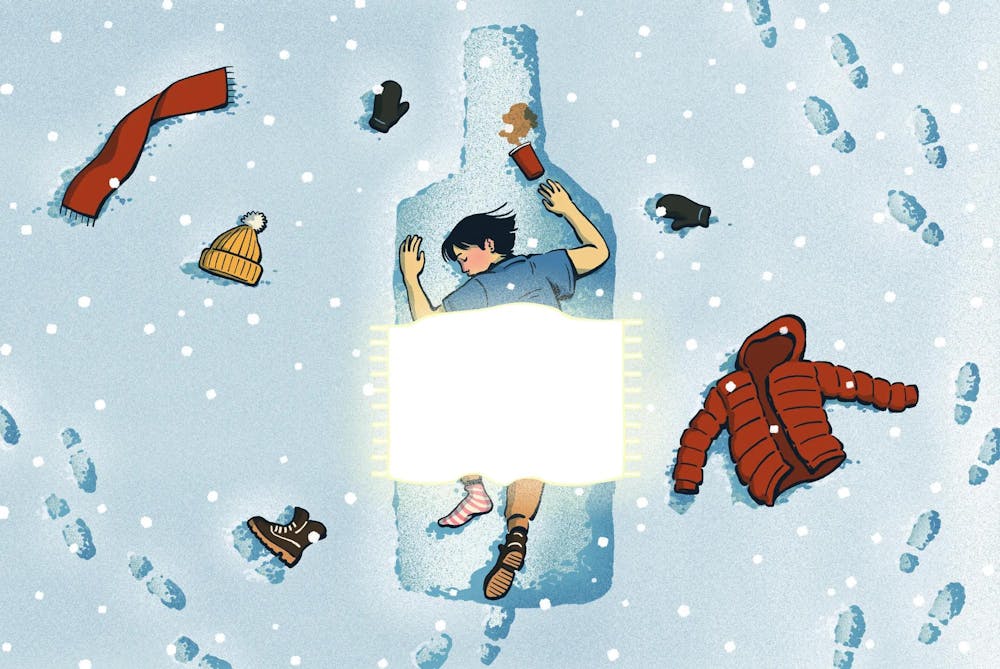
The “alcohol blanket” is a phenomenon where people under the influence of alcohol feel warmer despite cold temperatures, according to Christopher Kahler, professor of behavioral and social sciences and director of the Center for Alcohol and Addiction Studies.
But the alcohol blanket is “a double-edged sword,” said Kate Carey, director and professor of behavioral and social sciences.
The perception of the alcohol blanket “comes from the effect of alcohol’s ability to dilate your peripheral blood vessels,” which can even occur at low blood alcohol concentrations, she said. These dilated vessels pump more blood to the surface of the body, which makes the skin feel warmer. But as the blood moves outwards, the body’s core temperature drops.
“Blood is losing its heat from (the) core, so as it’s circulating back through the body, it’s cooler than it was when it started,” Carey said.
Alcohol also affects the brainstem, which regulates heart rate, breathing and body temperature. Consuming alcohol impedes the body’s ability to physiologically control temperature, according to Carey. A person under the influence of alcohol may not perceive this temperature drop, putting them at risk for hypothermia, she added.
Kahler explained that the perception of warmth can cause the drinker to believe that they are not cold.
According to the Centers for Disease Control and Prevention, there was an average of 302 alcohol-related deaths by hypothermia in 2020-2021 across the United States.
“Drinking alcohol is a social activity for most people,” Carey said. When someone sees others wearing clothing that might be inappropriate for the weather while going out, they may be motivated to wear something similar, she explained.
According to Kahler, in social settings, people may be “more likely to overdrink because you see what other people are drinking.”
Colin Bavibidila ’26 said that, in his experience with the alcohol blanket, it feels more like being numb than feeling warm. “You don’t even register the cold necessarily,” he said. “It’s just like the absence of any feeling at all.”
“I definitely think (alcohol) plays a part in you ignoring the cold and definitely warming you up a little bit,” Bavibidila said.
Naomi LeDell ’26 believes that “when you’re drunk, you care less about” the cold, but she always brings a jacket just in case. “I’d rather be warm,” she added.
While Selena Yuan ’27 thinks that alcohol can “warm up your body a bit,” she believes that the alcohol blanket occurs because “you’re probably just not as aware of your surroundings.”
Kahler said that having a plan for one’s drinking, tracking their consumption and knowing how long one has been drinking are all “really important.” People under the influence should also consider how long they will be out in the cold and where they will be walking, he added.
So when heading out this weekend, students should consider keeping a jacket in tow.
Angel Lopez is a senior staff writer covering Science and Research. He’s a first-year student from Tyler, Texas and planning to study neuroscience and literary arts. In his free time, you can find him playing ping pong, listening to music, or reading.