Over three months after the Dec. 13 shooting, Ava Rodriguez ’29 still does not feel like the University has provided suitable resources for students like herself. Rodriguez was in Barus and Holley 166 when the shooting took place.
According to a Student Support Services email sent specifically to students in close proximity to the shooting, CAPS offers “brief and intermittent individual psychological treatment,” which was not the long-term help that Rodriguez said she was looking for. Instead, she has been meeting with an outside therapist offering free services since winter break.
The day after the shooting, the student body was also sent an email offering 24/7 crisis support from CAPS, among other resources.
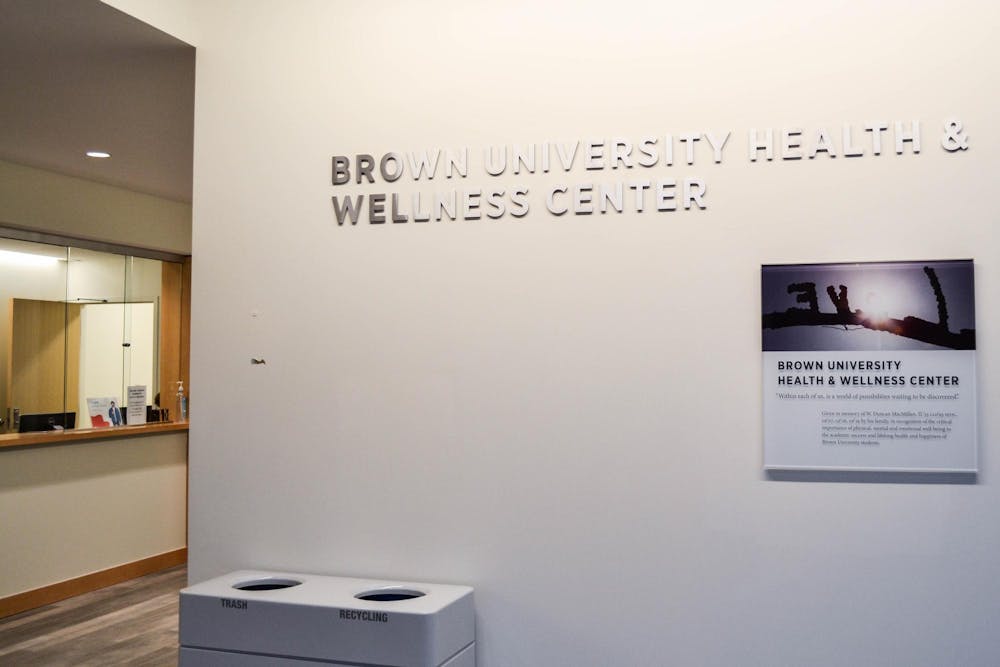
Since returning to campus, River Gilbert ’29 has met with CAPS once following their triage and intake appointment, they told The Herald. Students must first partake in a 30-minute triage appointment where they briefly discuss their circumstances with a CAPS counselor. The counselor will then provide recommendations, which can include “care at CAPS, referral to on-campus supports or a referral to an off-campus mental health professional.”
Gilbert noted that they have experienced more difficulty finding a CAPS appointment that works with their schedule this semester, which they believe may be due to a higher demand for appointments. “They’re very clearly more booked than they were last semester,” they said.
“I’m disappointed in CAPS because they promise you’ll be able to access resources for mental health whenever you need them,” Gilbert added.
This semester, Gilbert said it has been “really scary sometimes” due to the insufficient availability of psychological support resources. If “you or your friends need help … there’s literally nowhere to go, unless you want to wait a week and a half to get into CAPS,” they said.
Director of CAPS Bryant Ford wrote in an email to The Herald that the team has been putting effort into meeting the “heightened needs of our community” this semester.
Ford wrote that CAPS has “moved beyond individual, one-on-one psychotherapy as the primary model of care” and has instead “embraced a diversified approach, providing a range of clinical and non-clinical options.”
Clinical care options this semester include same-day urgent care, the 24/7 CAPS on-demand line and daily drop-in sessions, which require no wait times, according to Ford. CAPS is also offering support groups and other events “to foster spaces for healing and community-building,” Ford wrote.
The University has also expanded access to their partnership with Timely Care, which offers students up to 20 sessions of free virtual therapy, he added.
“It goes without saying that this has been a tremendously challenging moment for our campus, and one that has demanded an approach that offers a range of resources,” Ford wrote.
Over winter break, Gilbert said they tried meeting with a TimelyCare counselor and “hung up within five minutes” because the counselor had “clearly not read anything about (their) file or even (their) profile information.”
“We are sorry to hear a student felt dismissed or unheard,” TimelyCare’s Executive Director of Mental Health Services Jerry Walker wrote in an email to The Herald regarding this experience. “That is not the experience we want any student to have.”
According to Walker, 536 students have completed counseling appointments with TimelyCare since Dec. 13 and, as a collective, they have rated session quality a 4.97 out of five and counselors a 4.98. If a student rates a session or provider a three or lower, “we immediately investigate,” he wrote.
“While not every counseling experience will be perfect for every student, the evidence supports that most Brown students are receiving high-quality care,” Walker added.
Walker explained that the introductory, “get-to-know-you” phases of typical counseling sessions are “a core part of good clinical practice, so the counselor and student can build a shared understanding and determine the best path forward together.”
Rodriguez told The Herald that she had hoped students in close proximity to the incident would receive specialized support from the University. But she said this has not been the case for herself and others she knows.
On Feb. 6, Rodriguez reached out to SSS to request the formation of a support group for the students in Barus and Holley 166 during the shooting. “I am not alone in saying that students who were in the room that day have been disappointed by the lack of targeted support we’ve received,” she wrote in the email.
After not receiving a response, Rodriguez went to meet with SSS in-person on Feb. 18 and they “basically told (her) the email … got lost,” she said. After a meeting was scheduled and later canceled because of the snowstorm, she was able to briefly meet with a dean almost a month after her initial email request.
Rodriguez noted that during the meeting, the dean was “very dismissive of (her) issues.” She added that if she were to go to the Ever True Support Group, “no one else is going to feel comfortable sharing their feelings because they’ll be comparing their experiences” to hers, which is a reason why she wanted an additional support group.
SSS did not directly respond to The Herald’s request for comment regarding this interaction.
“We’re struggling, and Brown is not doing anything,” Rodriguez said.
In an email to The Herald, Senior Associate Dean and Director of SSS Lisa Loar wrote that the University initiated a support group “open to any student impacted by the events of Dec. 13” within CAPS as part of the Brown Ever True initiative. In a separate email to The Herald, she also wrote that the University reached out to all the students who were in the room during the shooting “to the best of (their) knowledge.”
“We take seriously the feedback we receive across all of our departments in Campus Life, and we are always considering how to make resources most helpful to students,” Loar wrote.
SSS recently added four new student support deans who are working in short-term roles to allow for “individualized monitoring for students seeking support,” according to Loar. The interim deans will begin this outreach this week, she added.
“Any student wishing to connect will have access to a same or next business-day appointment with a student support dean to help them navigate and get directly connected to the support and resources available at Brown,” Loar wrote.
Chris Barney ’29 said he believes the issue is that “there’s not enough CAPS faculty to take on the amount of students that need (support) right now.” But he added that he doesn’t “necessarily think that’s Brown’s fault.”
“No one expected any of that to happen,” he said. “It’s not something that you plan ahead for.”
While Barney noted that the University may be hesitant to host large, campus-wide events, he said that it would be nice to have more opportunities for community healing.
“The most important resource is just going to be us, as a community, bonding together and coming together and continuing to lift each other up,” he added.

Zarina Hamilton is a university news editor covering activism and affinity & identity. She is sophomore from near Baltimore, Maryland and is studying mechanical engineering. In her free time, you can find her reading, journaling, or doing the NYT mini crossword.