In the weeks following the suicide of a fellow Brown student, I've been thinking about the sense of community we share on campus.
Community - as I like to define it - is something like the opposite of isolation: it means social contact, communication, and connectedness. It makes students feel welcome, or at least gives them a feeling of belonging to a larger network of peers. If we want to ensure that no student feels isolated or withdrawn from this place (and I hope we all want to ensure this), then we need to examine closely the community we have created here at Brown.
Brown is a small school, but only relatively. While a larger university or state school might have upwards of 30,000 undergraduate students, and a small liberal arts college might enroll 1,500, Brown is home to just over 5,500 undergrads. Our campus has distinct social centers, but our home is by no means a small, enclosed space. There is a chance, then, that if I set out from Charlesfield Street, I could walk to Meeting Street without encountering a single face I recognize.
I admit, more often than not, this isolated walk from one end of campus to the other does not occur; I usually see one or a few friends or acquaintances along my way. But it hurts when I do travel across campus without seeing anyone I recognize; it hurts because I often feel that the people who pass me are indifferent strangers, not peers with whom I may one day share a class, or a meal. I've noticed that we walk with our heads down, and we don't smile at others. What results is a sense of isolation.
I've been told this has something to do with so-called New England stoicis. Out in the Midwest, strangers like to acknowledge one another, but here on the Eastern Seaboard, we're a bit more cautious with our smiles.
Try to count every Brown student you've met - your best friends, past acquaintances, that kid you met once at a party. For the sake of argument here, even count your "friends" made on thefacebook.com. You might surprise yourself with how many you can muster. But if you subtract that number from around 5,701 - the number of full-time students enrolled at Brown - what you are left with is a four-digit number. That's thousands of your schoolmates whom you have never met.
It is about time we start getting to know each other, and there are a few ways we can make it happen. For one, the University needs to play a part in creating a community of inclusion that transcends farther than its emphasis on first year units. We all needed a unit our first year - a group of people with whom we could share, commiserate and laugh. But the truth is, we keep needing some sort of stable community interaction well into our second, third and fourth years here. In addition to focusing on an imposed framework that reaches the first-year population, Brown should concentrate on making sure all students feel welcome and connected. There should be more emphasis on school-wide events: an open afternoon game on the Main Green, perhaps, or a weekend social gathering as an alternative to cliquish parties that can often be exclusive and isolating.
But the University can only play a small role in creating a greater sense of community on this campus. The burden is on us all, if we're willing to accept it. If you're still reading, and you haven't disregarded my words as sentimental mush, then I trust you're with me on this. Try, then, to meet one new person today. Introduce yourself to the person you have sat beside all semester but have never gotten to know. Or maybe start small: As you hustle down Thayer Street, smiling at a stranger would be great.
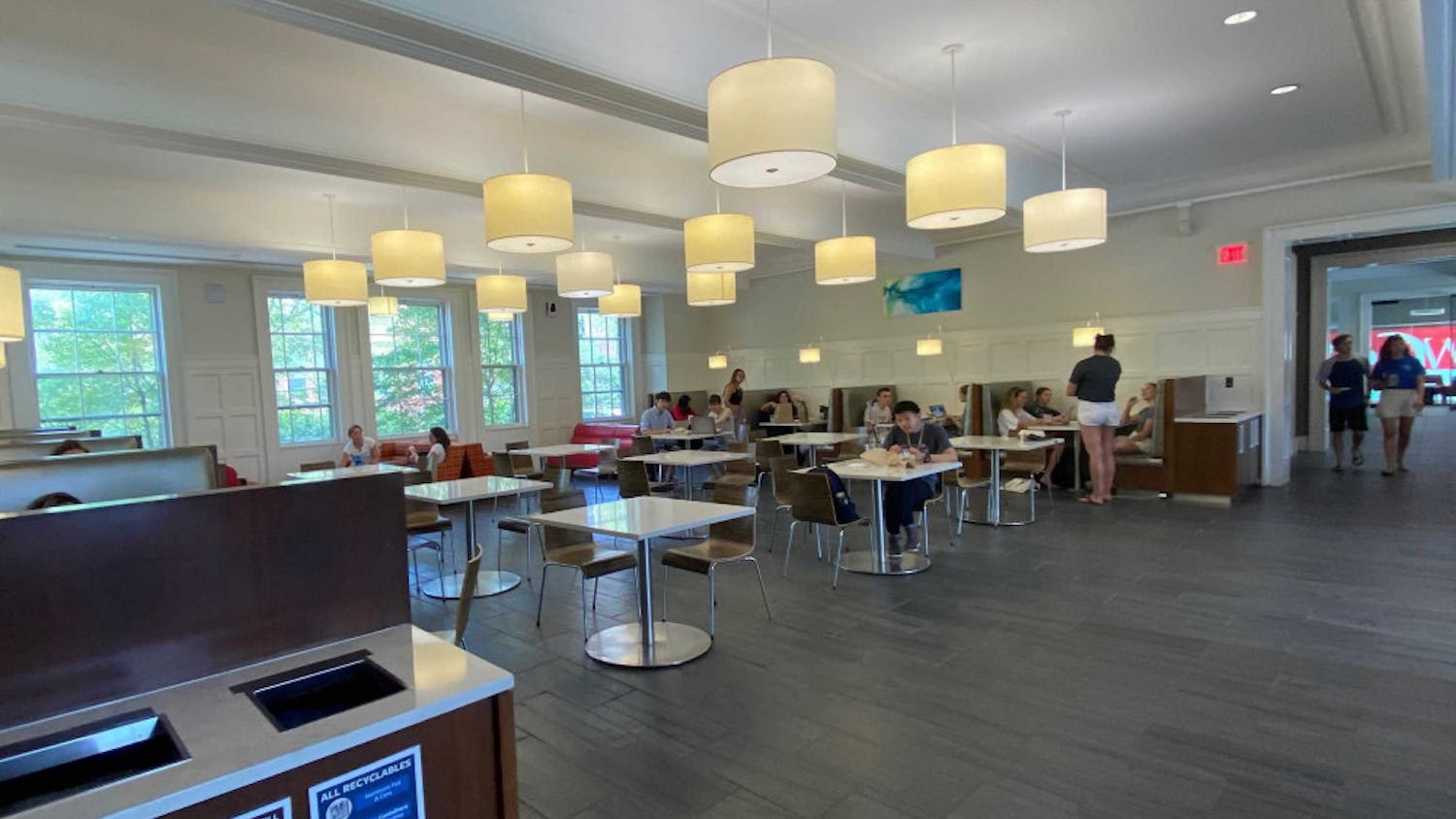
And one final note to the student I once saw eating breakfast alone at the Ratty, with the homemade sign that read "Stranger-Friendly Table." Well, I didn't get the chance to sit down next to you that morning, but if I see you again, I'll be sure to stop and say hi. And then we won't be strangers anymore.
Joshua Lerner '07 saw her face, and now he's a believer.