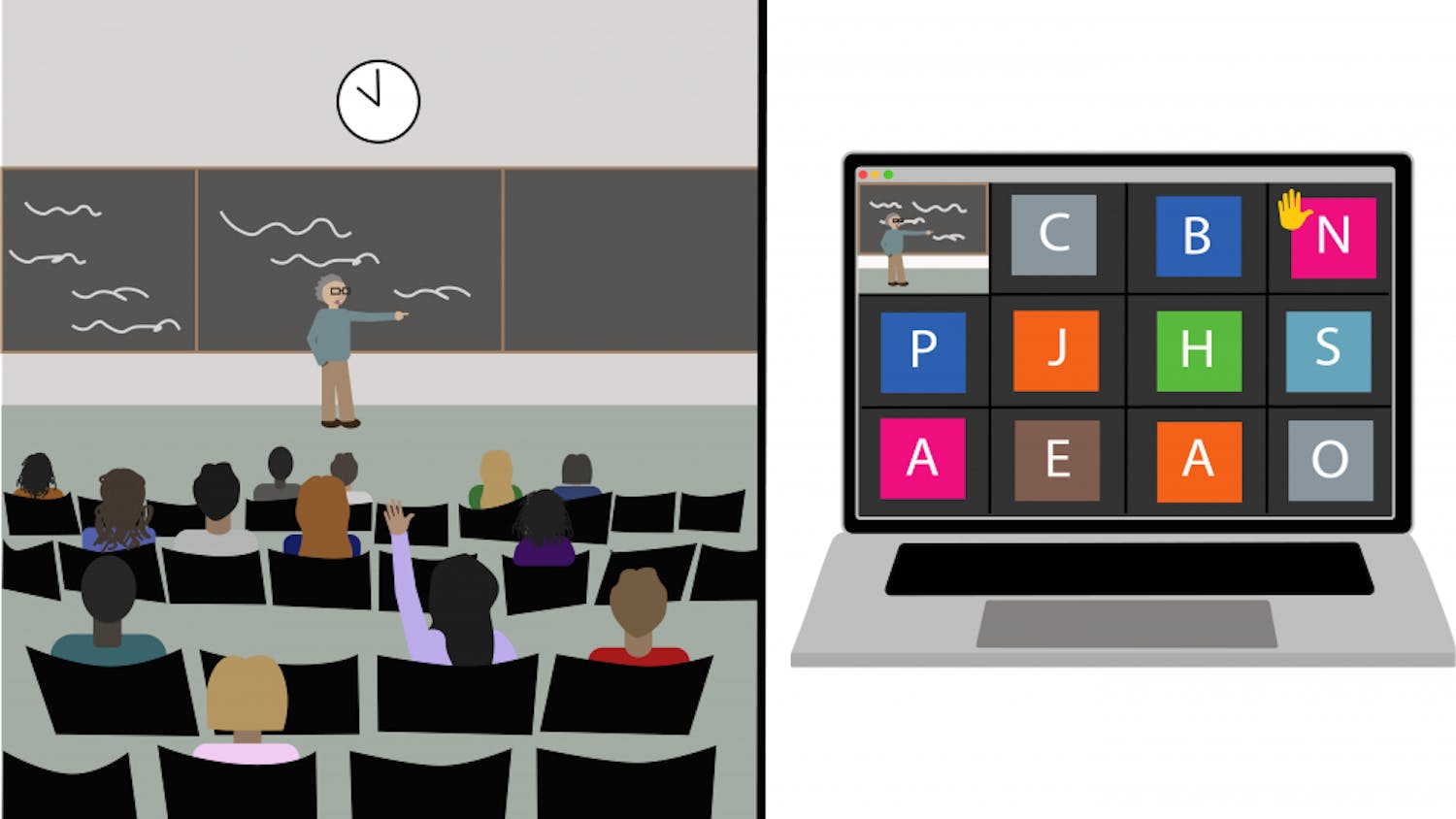
In an attempt to secure a spot in visual art classes - highly coveted courses which are commonly viewed as among the toughest to get into - several first-years have taken an unusual step: filing as visual arts concentrators a full year before they are required to.
Of the 92 visual arts concentrators, four are currently first-years. In all other departments, only three first-years have filed concentrations.
Associate Professor of Art Leslie Bostrom, who chairs the Department of Visual Art, said inadequate classroom space and constrained faculty availability have limited the number and size of the department's offerings. Bostrom said she doesn't blame students who decide to file as concentrators to get into a class, but she did say the tactic "is kind of cheating."
One first-year, who said he filed a visual art concentration just to have the chance to enroll in one of the department's courses, offered a similar take on the registration strategy.
"It's definitely cheating the system," said the first-year, who asked not to be named. "They should really just make more art classes."
"If you're not a concentrator you have no chance unless you're a second semester senior and there's an open spot," the student said.
Another first-year who filed as a visual art concentrator voiced similar complaints.
"There is essentially no other way you can get into (visual art) classes and be guaranteed a spot," said the first-year, who also asked to remain anonymous. "Art is one of my main interests but it's not my only interest," the student said. "I didn't file the (visual art) concentration because I wanted to be a (visual art) concentrator but because I wanted to get into classes."
Associate Professor of Visual Art Marlene Malik, who currently teaches VA 10: "Studio Foundation" and VA 142: "Sculpture II (Installation)," said first-years filing as visual art concentrators are rare.
Bostrom also said the practice of disingenuously filing a concentration in visual art and then dropping it later is not widespread. "I think that it's more of an urban legend than it is a reality," she said.
Registration numbers seem to confirm Bostrom's view.
Visual art concentrators currently make up 2.4 percent of all declared concentrations. In 2005, dropped visual art concentrations constituted 3.4 percent of all concentrations dropped, according to figures provided by Associate Registrar of Registration Services Lisa Mather. That number was 4.3 percent in 2004 and 2.1 percent in 2003.
"There does not seem to be a disproportionate number of visual arts concentrators dropping their concentrations," Mather wrote in an e-mail to The Herald.
Bostrom said students typically fail to finish the concentration because of "things that don't have anything to do with trying to get into classes," such as taking time off from Brown.
A lack of space and faculty are at the root of the department's resource limitations.
"It's a space problem. We are really kind of filled to the gills in (List Art Center) in terms of classroom space," she said.
"It's a problem that we're constantly trying to solve, but basically we need more faculty," Malik said.
"The University has slowly increased our adjunct budget so we can offer more classes," said Bostrom, adding that the department was one of the first to get a new faculty member during the faculty expansion efforts initiated by President Ruth Simmons. "We have been trying to relieve the pressure little by little and the University has been helpful," Bostrom said.
One way the department has attempted to meet demand is by adding more VA 10 sections. "If somebody wants to get into a VA 10 class, they can get in. It's the upper level classes that are harder," Malik said.
Some students agreed, although they reported securing a spot in VA 10 still requires some perseverance.
Rebecca Lebowitz '09, who is currently enrolled in VA 10, said of the course's lottery process, "It came to the point where they had to draw names from a hat and draw names to be put on a waiting list." She said sections occurring at inconvenient times - such as the evening - are easier to get into.
One of the first-year visual art concentrators was able to get into VA 10 last semester only after attempting to gain a spot through the VA 10 lottery and shopping five of the course's sections. Finally, the student was accepted by a professor after showing up to one VA 10 section for a week and a half. "They would have lotteries for, like, 30 people for two spots," the student said.
Another first-year who did not file a visual art concentration said she could understand why one might choose to file to increase the chance of getting into a class.
"I devoted a decent amount of time to visiting an art professor because I wanted to be in their class and eventually it began to interfere with the classes I was already taking," said the student, who also asked not to be identified. She was unable to get into the class but said, "I feel if I had been a concentrator I would have had a much easier time getting into the class and the professor would have taken me more seriously."