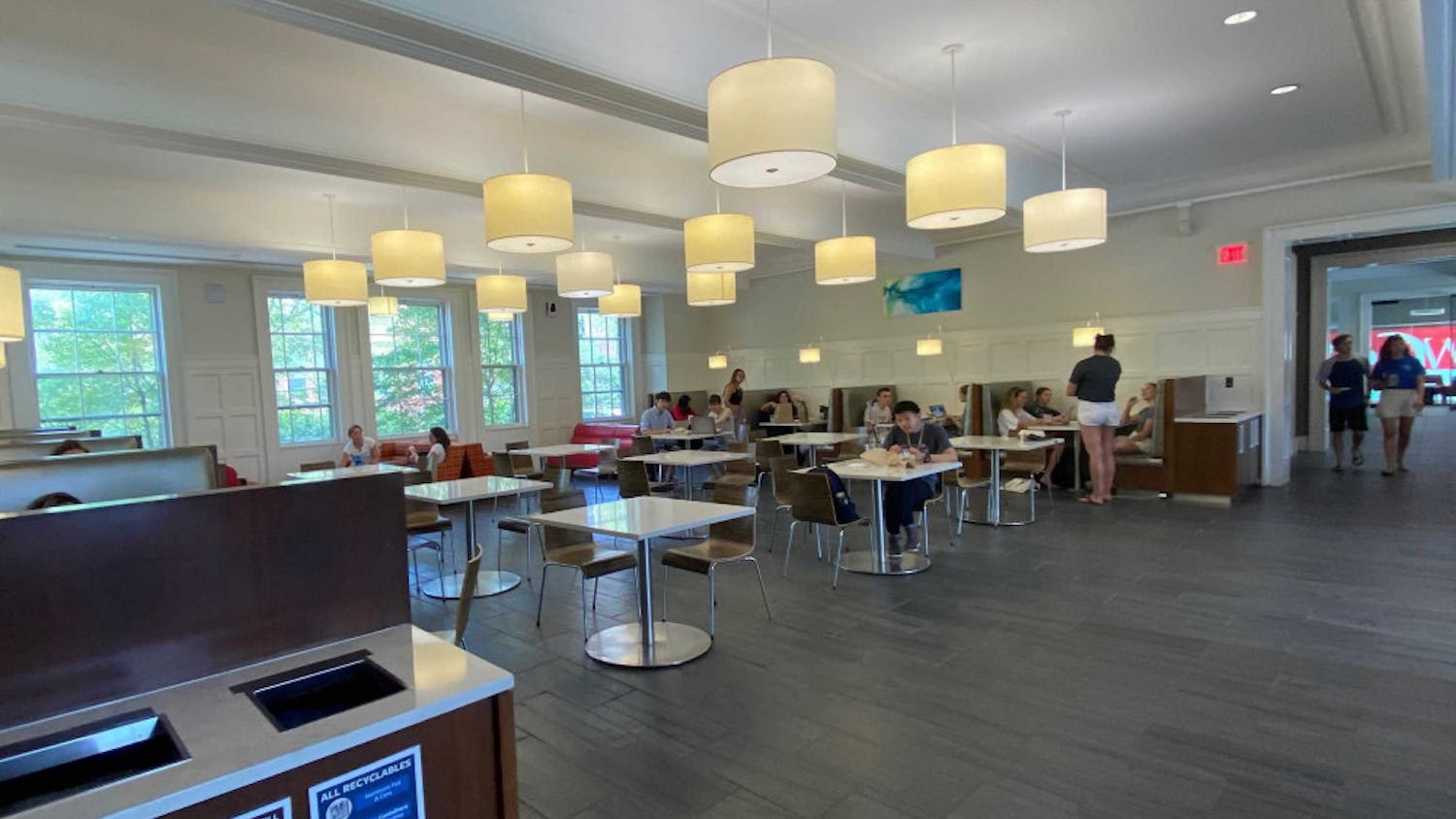
Current A Day On College Hill attendees belong to the most competitive class Brown has ever seen. But next year's College Hill visiters may not be able to say the same about themselves.
According to a recent study by the Western Interstate Commission for Higher Education, the rapid expansion of high school graduates that began in the early 1990s will end this year, beginning a period of decline that will continue until 2015.
The report, titled "Knocking at the College Door," found that in addition to fewer applicants, admissions officers could expect to see a shift in the racial composition of their applicant pools. The report predicts that between now and 2015, the gap between the number of white high school graduates and minority high school graduates will shrink, with the number of Hispanic graduates increasing by 54 percent and the number of white graduates decreasing by 11 percent.
These changes can mainly be attributed to the disparity in birthrates among different ethnic populations in the United States, said WICHE Senior Research Analyst Brian Prescott. In 1990, there were 1.25 million more births to white women than to women of all other races, but in 2004 that gap had already decreased to 514,000, Prescott said.
As for the volume of future college applicants, "If the class of 2008 is the peak, the class of 2015 will be the trough," he said.
But this decline doesn't spell easy admissions to the Ivy League for future high school graduates, said Ivy Educational Services Founder Nicole Oringer. Her New Jersey-based company handles both SAT prep and college counseling for high school juniors and seniors. After the high school class of 2009, elite institutions will see a very slow decline in the volume of applicants, but "it's still going to be very competitive," she said.
But Oringer said smaller, lesser-known institutions might see bigger changes. She expressed concern for schools whose endowments might not be able to withstand the blow of reduced enrollment and increased demand for financial aid, citing Antioch College, which suspended operations in 2007 due to dwindling enrollment.
Though all colleges and universities around the country are wary of the imminent decline in the number of high school graduates, highly visible top-tier schools like Brown have less to worry about, said Kenyon College Director of Admissions Greg Buckles. He explained that the challenge for small, liberal arts colleges like Kenyon will be to promote awareness in the South and Southwest, where the population of Hispanic high school graduates is growing most rapidly.
Schools in those regions have seen large booms in their applicant pools in recent years, said Royce Mussman, assistant dean of admission at Occidental College in Los Angeles. Occidental received a record number of applications, he said - 10 percent more than last year. Mussman added that while Occidental is not anticipating a decline in applicants in the near future, the college is not expecting further growth either.
Asked whether the increased number of Hispanic graduates in the area would affect how Occidental weighed minority status in evaluating applicants, Mussman said, "I don't think we're there yet. I don't think that's going to happen for a while."
Admissions officers at Carleton College in Minnesota also said they did not expect to be affected greatly by the changing demographics.
"I wouldn't expect anything to fluctuate more than 5 percent," said Carleton College Admissions Counselor Hans Peterson, referring to both applicant volume and racial composition. He explained that Carleton's unique location and small size make it less volatile to fluctuations than other schools.
Other schools are less optimistic about where these trends will leave them. Robert McGann, director of admissions at the University of New Hampshire, said his school is anticipating and preparing for a reduced volume of applicants in the future.
McGann added that UNH emphasizes diversity in its student body and looks forward to the increased number of minority applicants. But he expressed concern about potential strains on the university's budget, as minority students traditionally require more financial aid.
UNH, a public university, only receives 14 percent of its funding from the state and therefore charges its students a tuition rate that is relatively high compared to other public institutions - $9,400 per year for in-state students, and $23,000 per year for those from out of state. With 70 percent of UNH's student body already on financial aid, McGann said the future will involve a "competition for limited resources."
UNH is already beginning a campaign to raise the university's visibility in an attempt to compensate for reduced enrollment, McGann said.