Last week, the Rhode Island State Planning Council approved the State Transportation Improvement Plan, which contains a slate of proposed state transportation projects set to break ground in the next 10 years.
The State Planning Council passed the STIP with a 19-1 vote, and the plan is now awaiting approval from Gov. Dan McKee and the federal government.
In late June, a draft version of the plan was released for public comment. Over the next month, the Rhode Island Division of Statewide Planning held virtual and in-person hearings. In total, community members left 243 comments on the proposed STIP.
Some Rhode Island residents, environmental advocates and government officials expressed concern that the STIP falls short on crucial climate goals for Rhode Island, including a shortage of bicycle and pedestrian infrastructure projects.
Rhode Island Attorney General Peter Neronha P’19 P’22 was among those who submitted a comment in response to the proposal.
“As currently drafted, the STIP fails to take a forward-looking approach to achieving the State’s long-term goals and falls far short of meaningfully furthering compliance with the Act on Climate,” Neronha wrote in his comment, referencing a 2021 law that mandated emissions reductions in the state.
According to Neronha, “transportation accounts for nearly 40% of Rhode Island’s greenhouse gas emissions.” In his comment letter, he provided a list of recommendations for the STIP to adopt, including measures to reduce emissions and promote public transportation.
Despite the lengthy discussion process that the State Planning Council and its Transportation Advisory Committee underwent over the summer, some remain dissatisfied with the STIP.
“The final plan did not include any of the Office’s recommendations,” Timothy Rondeau, director of communications at the Office of the Attorney General, wrote in an email to The Herald.
But according to Karen Greco, the director of public affairs for the Rhode Island Department of Administration, “the STIP contains many projects that fall into the category of climate-forward transportation,” including those directly requested by Rhode Island residents. One example is the Mount Hope Bay Greenway in Tiverton, which directly connects Tiverton to Fall River bus, ferry and commuter rail services.
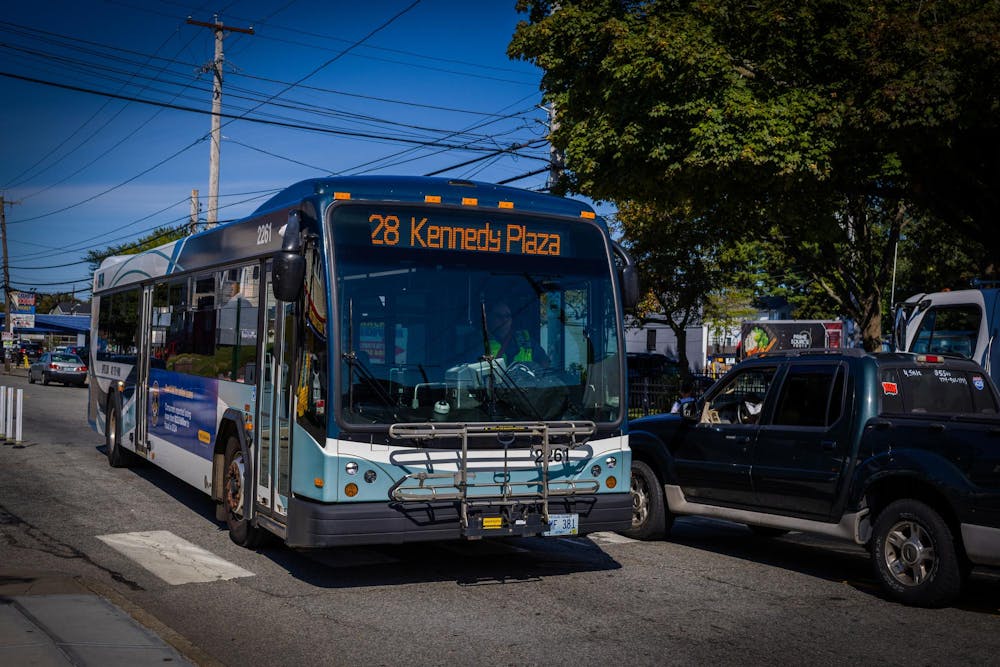
But the STIP only allocates 8% of spending to bicycle and pedestrian transportation modes, and 4% to transit, compared to the 76% of spending allocated to roads and bridges.
Bari Freeman, the executive director of Bike Newport and a member of the Transportation Advisory Committee, expressed concern that “the focus in Rhode Island is very much on motor vehicles.”
“There’s definitely not enough (bike policies) in the STIP,” Freeman said. A lot of local residents “would like to ride bicycles and walk,” she said, but due to the state’s lack of infrastructure, people don’t feel “comfortable and protected.”
If more people felt safe riding their bikes, “we’d significantly improve the health of our environment, the health of our people and (significantly reduce) the emissions that are associated with transportation,” she added.
Scott Wolf, the executive director of Grow Smart R.I., was the only person to vote against the proposed STIP at the Sept. 11 meeting.
“We don’t think (the STIP) provides adequate funding for expanded bike and ped infrastructure, nor for public transit capital expenditure,” Wolf told The Herald ahead of the vote.
“Given federal priorities and restrictions, the STIP has limited flexibility,” Greco said, adding that “if the state doesn’t meet federal requirements, the state risks being unable to obligate federal transportation funding.”
Despite the constraints of this federal funding process, state agencies have already taken steps to mitigate climate concerns raised in response to the STIP.
Evan LaCross, a Rhode Island Department of Environmental Management spokesperson, noted recent developments by other state bodies. The RI Executive Climate Change Coordinating Council approved their fiscal year 2026 budget, which will help fund “the process of analyzing the greenhouse gas impacts of the projects in the STIP.”
“Establishing a clear process to ensure that emissions are considered by the state agencies involved in developing the STIP is an important part of the state’s overall climate initiatives,” he said.

Pavani Durbhakula is a Metro editor. She is a sophomore from DC and is studying IAPA and Public Health. In her free time, she enjoys baking, reading and searching for new coffee shops.