In the last school year, Rhode Island public schools saw a decrease in chronic absenteeism rates for the third year in a row, amid new statewide programming aimed at bolstering attendance.
Chronic absenteeism — or a student missing about 18 school days or more each year — in the state dropped 2.6 percentage points to 22.1% during the 2024-25 school year, compared to the 24.7% that Rhode Island saw the year prior.
The Providence Public School District’s chronic absenteeism rate — 29.3% — remained higher than the state’s figures, but also saw a 6.9 percentage-point decrease in chronic absenteeism between the 2023-24 and the 2024-25 school years, one of the steepest declines in the state.
The decrease was “statistically, almost impossible,” said Carina Pinto de Chacon, chief of family and community engagement at the PPSD.
In the 2021-22 school year, the PPSD had a chronic absenteeism rate of 57.1%. During the COVID-19 pandemic, chronic absenteeism rates increased nationwide. Statewide, chronic absenteeism is still worse than it was before the pandemic. But the latest PPSD chronic absenteeism rate is the lowest since the 2019-20 school year.
“We’re proud that Providence Public Schools have experienced some of the steepest declines in chronic absenteeism,” wrote Gov. Dan McKee’s Press Secretary Olivia DaRocha in an email to The Herald. She credited “enhanced student monitoring, family and community engagement and other intervention strategies” for the successes.
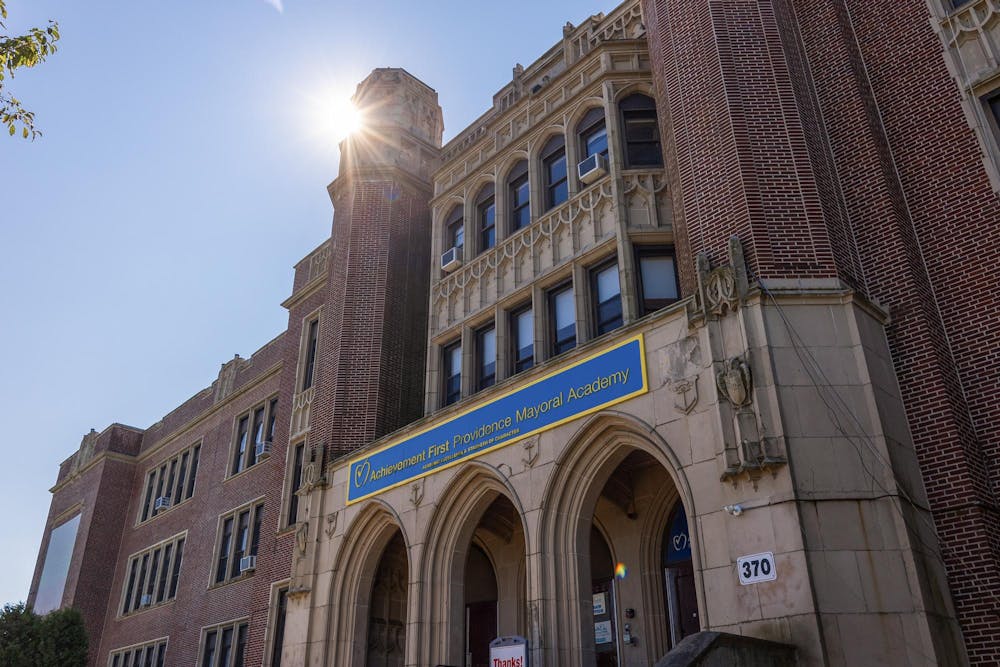
Two Providence charter schools, Achievement First Providence Mayoral Academy and Achievement First Promesa Academy, saw some of the largest decreases in absenteeism, with rates for each falling to around 20%, according to data from the Rhode Island Department of Education.
Getting students to attend school requires fostering a sense of community, said Tom McDermott, Rhode Island executive director for Achievement First, which operates Achievement First Public Charter Schools in the state.
“I just think the sense of belonging for students is really what’s at the heart of it. And that takes an enormous amount of effort day in and day out from really talented and dedicated staff,” he said.
He was especially proud of closing attendance gaps linked to social and environmental barriers, noting that there is a less-than-one-percent difference in chronic absenteeism rates among Achievement First’s general student population and students who have special needs and multilingual learners.
The PPSD has implemented an attendance “hero” campaign to encourage students to come to school by working with families to “provide support and address barriers that might affect attendance,” to DaRocha wrote.
Pinto de Chacon, who has helped lead the campaign, said the program aims to provide “excellent instruction, (in) every classroom, every day.”
“But the reality is that excellent instruction only matters if students are present,” she noted.
The program team has worked to ensure consistent messaging across schools, especially for families who have children attending schools located in different buildings, said Bryan Keith Nordon, director of attendance at the PPSD. Every school has an attendance team in place to oversee absences and connect with families when concerns arise, he added.
For Marc Catone, executive director of student supports at the PPSD, chronic absenteeism is “just a statistic,” and what it really points to is a student’s deeper need for support.
“When we started this initiative our big thing was, ‘get to the why,’” Catone said. “That was really the framework that we pushed with every one of our schools.”
The “why” can span anything from food insecurity to a lack of available clothing, he added.
When students are chronically absent, their classmates who do regularly attend school are negatively impacted, Nordon said. Teachers, for instance, may have to review previous material for students who missed class, creating repetition for those who were already in attendance.
“When you can get back on track and you can get kids in school, achievement is going to go up,” Catone said.
With chronic absenteeism on the decline, Providence and state leaders believe their methods are working. “We’re seeing encouraging progress in Providence, and we are committed to building on it with the support of families, students, educators and local leaders,” DaRocha wrote.
Rebecca Goodman is a university news senior staff writer covering career and alumni. She is a junior from Cambridge, MA, studying English. Outside of writing, you can find her at the Avon or in the basement of the Rock.