
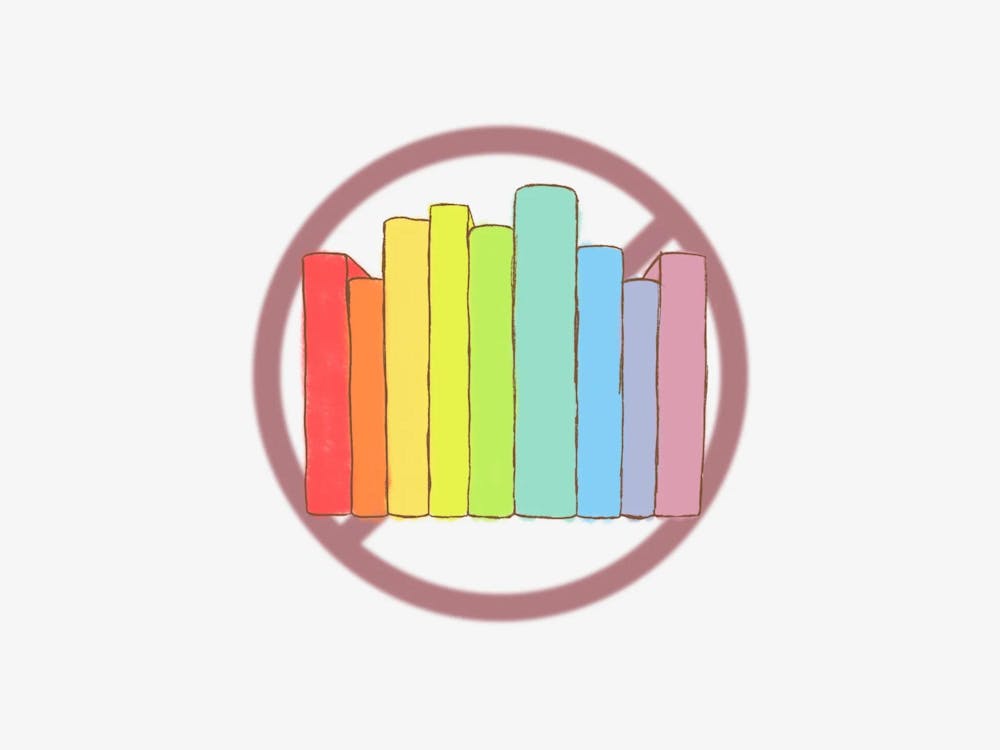
For a while, gay people were all I knew. I have two gay dads and have lived in Miami Beach, Florida my whole life. Queer representation was a crucial part of my upbringing. My parents have countless gay and lesbian friends who are some of my greatest role models. But not all children have the opportunity to see gay representation in their lives. This is where books can play an essential role. About 4,500 books have been banned in Florida, many because they mention the LGBTQ+ community or families like mine. For many American children, media representation is the first point of exposure to the LGBTQ+ community and can teach kids that members of the LGBTQ+ community are not rare exceptions, but part of everyday life. At a time when lawmakers in conservative states are erasing LGBTQ+ representation from schools and libraries, those in more diverse and inclusive environments — like the Brown community — have both the privilege and responsibility to fight against censorship and ensure that children’s literature reflects the real world.
In justifying the restrictions, many Republican lawmakers insist that they have a responsibility to shield children from inappropriate content. The First Amendment prohibits the removal of books from school libraries solely because public institutions disagree with their content. School board members are, however, allowed to remove books they consider “pervasively vulgar” or “educationally unsuitable.” This is where the lines get murky: Book banning is essentially up to the boards’ discretion, subjecting children to politically motivated censorship.
In 2022, Florida Gov. Ron Desantis signed the “Parental Rights in Education” bill, which has become known by its moniker, the “Don’t Say Gay” bill. The controversial bill prohibits classroom instruction that is not aligned with state standards on “sexual orientation or gender identity” in kindergarten through third grade. This law has since been expanded to include all years up to 12th grade. Beyond third grade, topics discussed are determined by “state standards.” Under this law, the children’s book “And Tango Makes Three” was banned because it shares a true story of two male penguins who raised a chick together in the Central Park Zoo. This is a story of an unconventional family, just like mine. Multiple school boards decided the book was not age or developmentally appropriate.
Lawmakers who insist LGBTQ+ stories are scandalous are out of touch. Banning books limits children’s understanding of society, leaving them unprepared to respectfully and empathetically interact with identities that differ from their own. Children benefit from honest and authentic representation of the world around them. When young adults read about a character who has a similar experience to them, it can validate their identity and help them feel empowered. Even if the young adult is not part of the LGBTQ+ community, reading about diverse characters demonstrates how diverse identities can coexist in an undeniably diverse world, encouraging a more tolerant society. To erase LGBTQ+ people from books is to deny reality itself — a battle even the fiercest politicians cannot win. These diverse identities will exist whether or not politicians censor them. Book bans targeting LGBTQ+ representation are not protective. They are just exclusionary. Not educating students on the diversity of our country is a disservice to the very children whom these policies claim to protect.
When I was in kindergarten, my classmates learned that I had two dads, and it did not scare anyone. Did some kids have questions? Naturally. But after answering about two awkward questions stemming from innocent curiosity — like “Were you adopted?” or “Did your mom die?” — no one seemed to care. Exposure encourages acceptance.
But book bans don’t just harm the general community. They also advance homophobic ideas, making the lives of young gay students that much harder. By limiting the conversations students and educators have about queer identities, it insinuates that those identities and experiences are shameful and wrong. LGBTQ+ teenagers are already more likely to suffer from mental health issues. Promoting the notion that gay people are “inappropriate” and “vulgar” exacerbates hateful stereotypes that contribute to the already long history of homophobia in our country.
Our campus is an ideological bubble — a 2025 Herald poll found that 38% of students do not identify as straight. Even though Brown is generally diverse and accepting doesn’t mean we can ignore these attacks on queer identities. This censorship is not just about books. Kids are being denied the opportunity to understand themselves and others. We have the opportunity to call out the harmful propaganda being spread across states not too far from Rhode Island. There are various ways to make an impact — advocacy work comes in all shapes and sizes including writing to spread awareness, protesting censorial injustices, producing art, testifying before legislative bodies or even volunteering with queer youth. Having conversations about the injustices occurring in other communities fosters awareness, a monumental step in encouraging inclusivity across the nation.
Brown’s values of inclusion mean little if they stay hidden behind the Van Wickle Gates. If we are serious about protecting free inquiry, respect and understanding, then it is our responsibility as community members to protect the ideals — not solely for our benefit, but for future generations who will inherit the stories and truths we fight to preserve.
Beatriz Lindemann ’29 can be reached at beatriz_lindemann@brown.edu. Please send responses to this column to letters@browndailyherald.com and other opinions to opinions@browndailyherald.com.

Bea Lindemann is a staff columnist and a member of the Editorial Page Board. She is from Miami Beach, FL and plans on concentrating in Political Science.


