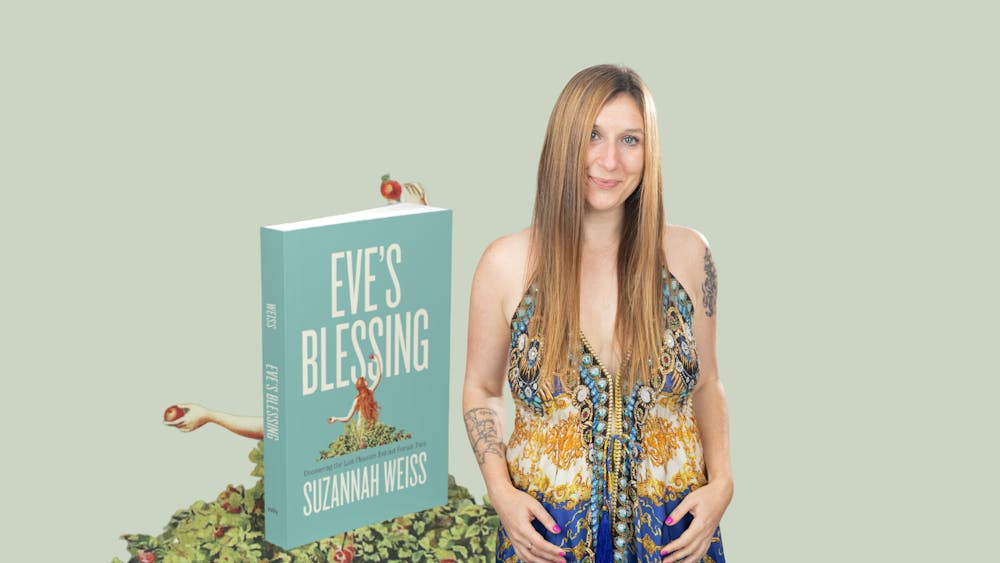
In her upcoming book, “Eve’s Blessing: Uncovering the Lost Pleasure Behind Female Pain,” journalist, sex educator and former Herald arts & culture editor Suzannah Weiss ’13 traces how women’s pain has been historically normalized while their pleasure has been treated as taboo.
The book — set to be released in the United States on Sept. 15 — weaves together cultural analysis, biblical reinterpretation and interviews to create a larger story about women’s health and experiences, Weiss explained in an interview with The Herald.
The idea grew out of Weiss’s first book “Subjectified,” which explores sexual empowerment and the “orgasm gap” — the sociological phenomenon in which males and females experience orgasms at different rates.
“Subjectified” included a chapter about the normalization of what Weiss calls “female pleasurelessness.” But she soon realized there was so much to the topic that it could be made into its own book.
As Weiss was developing her second book, a conversation with her agent reminded her that it is not just women’s pleasurelessness that gets normalized. Women’s pain, Weiss realized, is often subjected to similar treatment.
To connect these themes in the book, Weiss turned to the Bible. While reading Maya Dusenbery’s book “Doing Harm,” she came across a reference to the curse on Eve, the Genesis passage often interpreted as sentencing all women to a painful childbirth. But Weiss believes its interpretation is more ambiguous than is commonly believed.
“‘Thou shalt give birth in sorrow’ really meant something more like, ‘You will give birth anxiously, or you will have children fearfully,’” Weiss explained. To her, this wasn’t a divine curse so much as “God warning Eve what was to come because of the world that she lived in.”
This reinterpretation shaped the structure of “Eve’s Blessing.” One chapter, for instance, focuses on how patriarchal systems shape modern hospitals into spaces that expect and accept women’s suffering. Weiss connects this logic back to the rise of agriculture and the tracing of paternal lineage.
“Essentially, men saw women as property,” she explained. “So I see this curse as a metaphor for all these things in society that are messing up women’s health.”
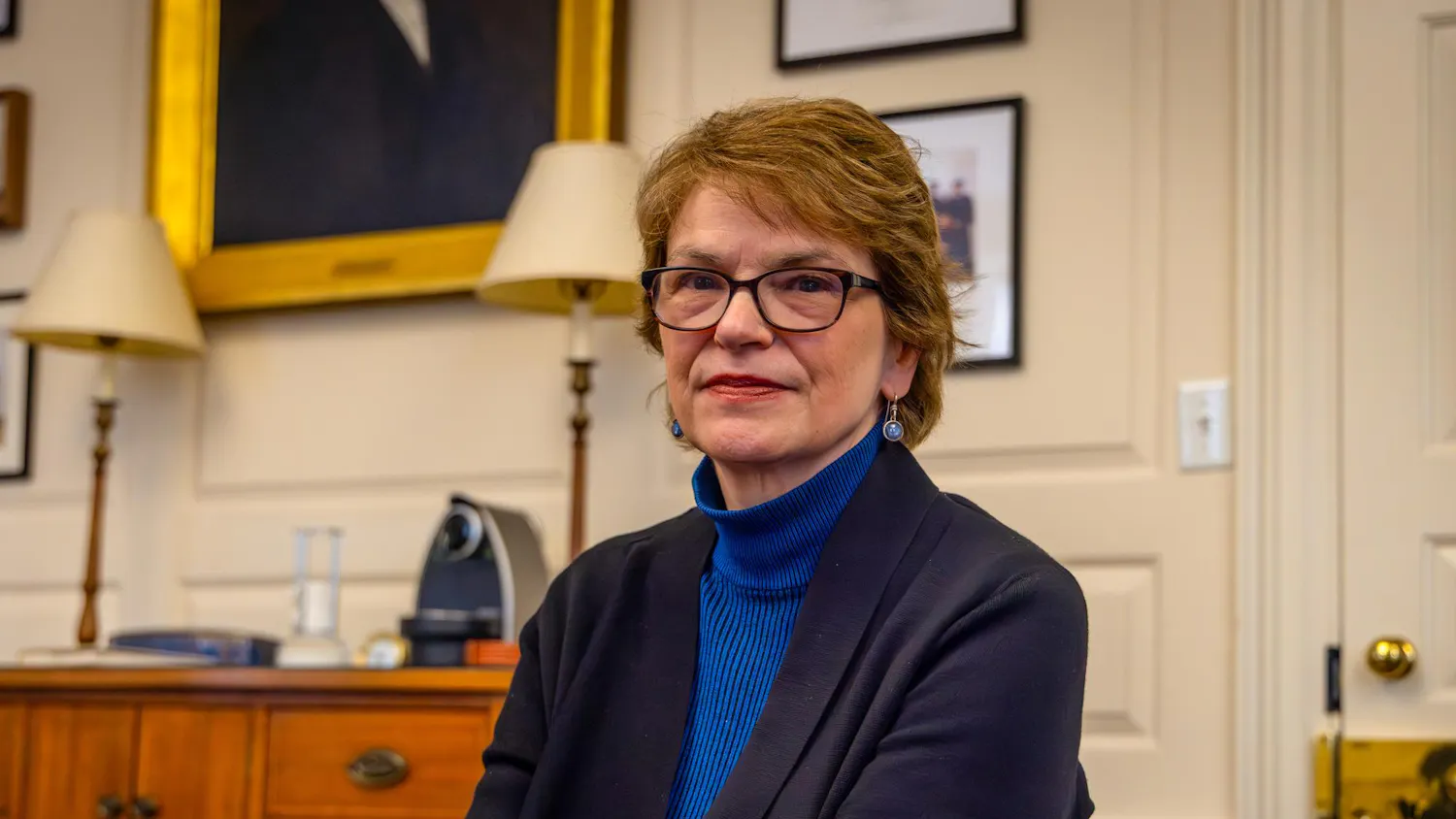
These patterns are longstanding, wrote Associate Teaching Professor of Gender and Sexuality Studies Denise Davis MA’97 PhD’11 in an email to The Herald. “There’s a ton of evidence out there showing how pain experienced by women, and especially women of color and Black women, is misread, disregarded or otherwise not taken seriously,” Davis wrote.
According to Davis, there are multiple reasons for this trend.
The testimonies of women of color are “somehow invalidated, because non-white people are generally disbelieved,” she wrote, adding that “the pain that women describe hasn’t been studied or experienced by researchers and clinicians in a historically male-dominated field.”
Christian tradition, Davis wrote, “sanctifies women in pain, women starving themselves (and) women who deny their sexuality” — a phenomenon that she noted is often seen through the iconography of suffering saints.
Davis also wrote that psychologist Sigmund Freud’s Madonna-Whore complex “shockingly still holds up.” The complex divides women into two categories — one of purity and one of promiscuity — and is widely considered to be a deeply misogynistic concept.
To push against the societal narrative that women should just endure pain, “Eve’s Blessing” spotlights women who refuse to accept pain as inevitable. And while Weiss’s book draws on interviews with patients, activists and health professionals, the themes present throughout these interviews resonate far beyond the book’s pages.
Tara Langdale-Schmidt, founder of women’s health company VuVatech, spoke to The Herald about her own experience with undiagnosed pelvic pain and the stigma surrounding it.
“I kept going to the doctor and saying that (my pelvis) hurt, and no one helped me,” she recalled. “They didn’t even give me a diagnosis.” When she finally discovered the term “vulvodynia” online, she had to bring it up with her OB-GYN herself.
For Langdale-Schmidt, real change begins with open conversation. “The more we share, the more we’re going to get help and help others,” she said. “We just have to be our own advocates.”
Those same ideas echo throughout “Eve’s Blessing,” in which Weiss notes that silence around women’s pain has been reinforced for generations.
“It’s taboo to talk about sex or to talk about periods,” Weiss told The Herald, emphasizing how inadequate sex education and stigma within families often keeps women from seeking help.
Doctors must “do a better job listening to women” and accept that “they may not know everything,” Weiss said.
The book’s release arrives at a moment of renewed political battles over sex education and reproductive rights.
Weiss views online communities as essential to keeping conversations alive despite censorship and pushback from institutions and the government. Much of her knowledge of sexual empowerment, she said, was “learned on the internet.”
With her upcoming release, Weiss also hopes to expand the scope of responsibility in reproductive debates. “Men need to take more ownership over their own bodies,” she said, pointing to condoms and vasectomies as two underutilized methods.
Ultimately, Weiss wants to shift the cultural script away from endurance and toward possibility.
“I dislike womanhood being defined by how much pain we can take,” she said. “Womanhood should be defined by our amazing capacity for pleasure.”
Correction: A previous version of the article incorrectly stated Tara Langdale-Schmidt's affiliation with Suzannah Weiss. The article has also been updated to better reflect Weiss's interpretation of Genesis.

Summer Shi is a senior staff writer and illustrator for the Brown Daily Herald. She is from Dublin, California and is currently studying design engineering and philosophy.