Though Rhode Island’s summer crowds may have left their vacation homes for the season, many will return next year to find a significantly higher property tax waiting for them.
A new surcharge on second homes valued at or exceeding $1 million will take effect July 1, 2026. The Non-Owner Occupied Property Tax will apply to all residences occupied by their owner or long-term renter for less than 183 days per year, and will issue an additional charge of $2.50 for every $500 in property value above the first $1 million.
For example, for a property valued at $1.5 million, the annual tax would now be $2,500, while for a property assessed at $3 million, the annual tax rate would be $10,000.
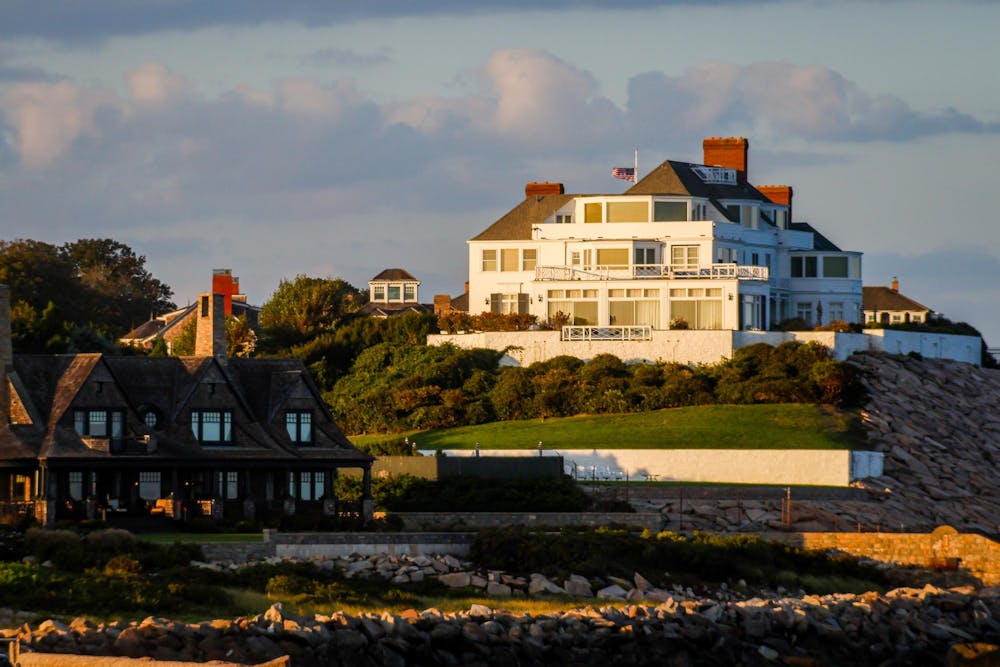
The bill has been nicknamed the “Taylor Swift Tax” on social media. While Swift has no relation to the tax, the pop star owns a $17.75 million mansion in Westerly and would have to pay an additional $136,000 in taxes starting next year.
According to a report from RIHousing, in 2022, approximately 70% of homes in Westerly were used for “seasonal, recreational or occasional use” — over double the state’s average that year.
In 2024, nearly one in four residential transactions involved buyers from other states, according to the Real Estate Institute of Rhode Island. For luxury homes valued at $1 million and more, that share jumped to nearly two in five people. Many buyers come from Boston, New York or Connecticut, according to the report.
“Out-of-state buyers often arrive with broader search areas and higher purchasing power,” according to the organization. With so many buyers competing for a limited amount of properties, this “raises the frequency of multiple offers and pushes median and top-tier prices upward,” the report reads.
In Westerly, the median home price is $525,000, according to Redfin, a real estate brokerage company. This is on the lower scale for popular second home destinations in Rhode Island.
In Newport, a coastal town known for its Gilded Age mansions, the median home price is about $854,000. While in Jamestown, homes sell for a median price of nearly $1.6 million.
Chris Whitten, the president of Rhode Island Association of Realtors, has been a realtor in the state for nearly two decades. In an interview with The Herald, he said that the “Taylor Swift Tax” is going to be “detrimental” to those who own homes in Rhode Island and potential new buyers.
Whitten has heard stories of other realtors’ clients removing Rhode Island from their lists of potential vacation home locations after hearing about the tax, he said.
“We’re seeing (this) quite drastically across the board,” said Whitten. “Why would you want to invest in a second home here in Rhode Island when you know you’re going to be paying a lot more taxes?”
Gordon King, who has been a real estate agent in Newport for decades, also shared similar concerns about what the new tax means for Rhode Island’s second home market.
Talking about the tax is now part of each conversation King has with a new client, he said. At the same time, he predicts the tax — though likely to have short-term impacts — is unlikely to generate long-term effects on the real estate landscape in areas like Newport.
“If you want to be here, you’re going to have to pay an extraordinary house price for the house anyway,” he said, adding that the tax “is just another cost” associated with purchasing a vacation home.
This isn’t the first time the “Taylor Swift Tax” has been proposed. In 2015, then-Rhode Island Gov. Gina Raimondo proposed a version of this bill that faced heavy opposition and ultimately did not pass.
King suggested that the tax has gained more traction this time around because of a stronger market and higher demand, explaining that the charge was seen as “regressive” back when it was proposed in 2015.
“Today, inventory is low, demand is high,” he said. “The state has all sorts of revenue and budget problems, and it’s easy for politicians to tax the people that don’t actually vote here.”
The tax has potential impacts for owners who open their second homes in Rhode Island for short-term rentals on sites like Airbnb, which collected approximately $8.2 million in sales across Rhode Island last year.
“We believe in fair and balanced laws that meet the needs of local communities while also protecting the ability of Rhode Islanders to share their homes,” wrote an Airbnb spokesperson in an email to The Herald.
Short-term rental hosts on sites like Airbnb have the freedom to adjust their pricing in response to a variety of factors, including new regulations, tourism demand and increased taxes or costs.
On social media several people were in support of the “Taylor Swift Tax,” with sentiments of “tax the rich” and “every state should do this” floating around in comment sections.
“Working (Rhode Islanders) can’t afford a place to live, and I will stand on the side of regular people until I’m six feet underground,” State Senator Meghan Kallman PhD’16 (D-Pawtucket, Providence) wrote on Facebook, in favor of the tax.
“Tourism is working,” Whitten said. Vacation home buyers “are coming to Rhode Island. They’re falling in love with it, and want to buy a second home here to vacation with their family.”
But Whitten added that with these new taxes, tourism dollars may be driven out of the state.
“Let’s not find ways to prevent them from choosing us,” he added.
Clarification: This article has been updated to more accurately reflect the Airbnb's spokesperson's statements.

Sanai Rashid lives in Long Island, New York. As an English and Economics concentrator, she is passionate about storytelling and how numbers and data create narratives in ways words alone cannot. When she is not writing, you can find her trying new pizza places in Providence or buying another whale stuffed animal.