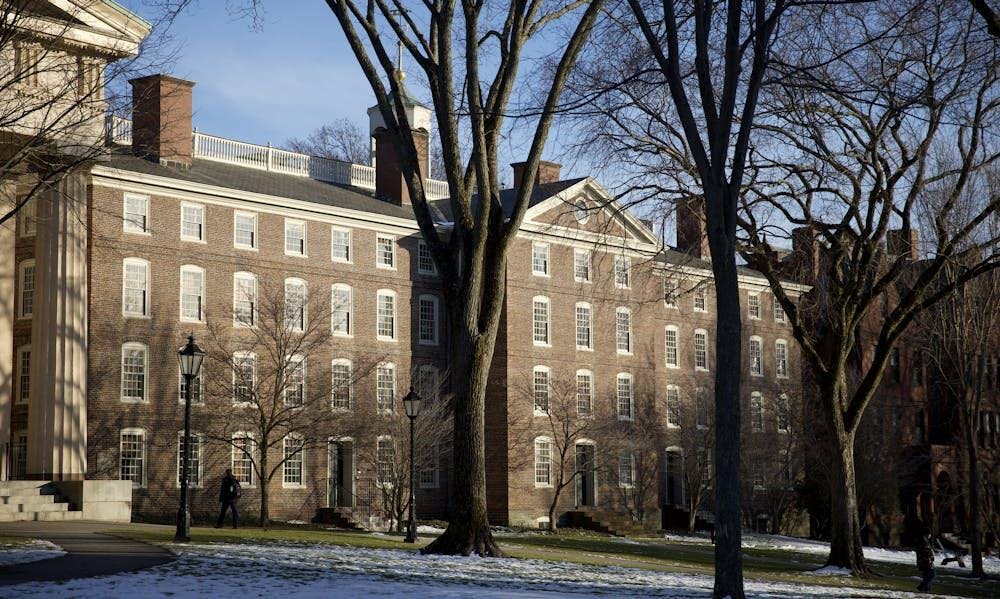
Brown produced the second-highest number of Fulbright scholars in the nation for the 2025-26 academic year, remaining in the top three nationally for the tenth consecutive year, according to data released from the U.S. Department of State on Tuesday.
Brown’s 41 scholarship winners, including current graduate students and recent alumni, were awarded funding to teach or conduct research across 160 countries. According to the University’s press release, 37 of the 41 scholarship offers were accepted.
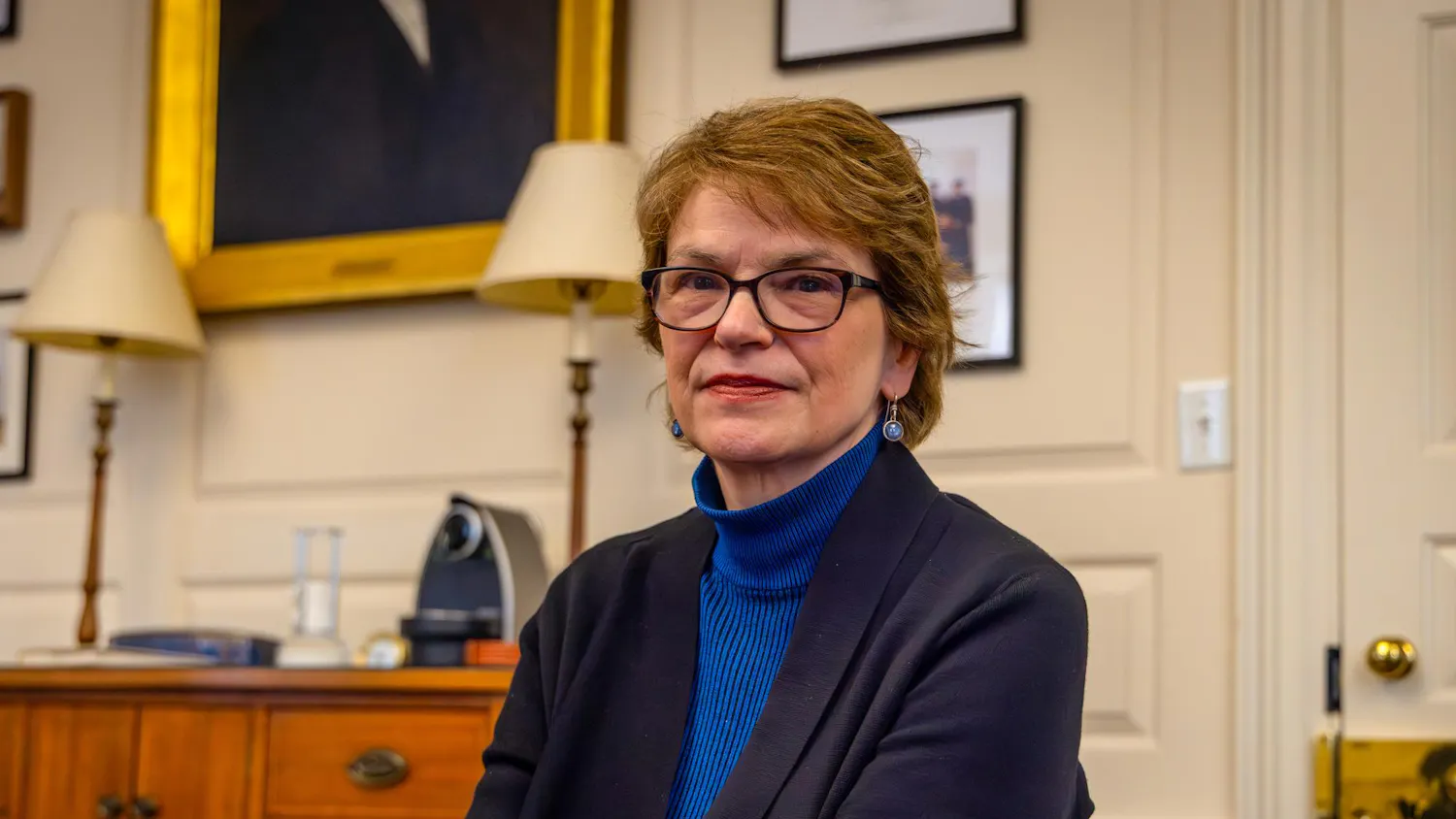
“Our record is reflective of the excellence of our students and what they are prepared to do after their time at Brown,” Associate Dean of the College for Fellowships Joel Simundich wrote in an email to The Herald. “The adaptability, intentionality and creativity of our students resonates with what Fulbright looks for in applicants.”
The Herald spoke with five of the 2025-26 Fulbright scholars about their experiences abroad and how the experience will inform their future plans.
Spreading the joy of reading: Chloe Fatsis ’25
After studying Greek all four years at Brown and spending a semester abroad in Greece, Chloe Fatsis ’25 applied to the Fulbright program as a way to return to the country after graduation.
“I had spent a summer working at a small program for high schoolers in Alaska, which really made me love working with students and everything surrounding educational environments,” she said in an interview with The Herald. While Fatsis has tutored students, she said this opportunity in Greece has provided her with “hands-on teaching experience in the classroom.”
Currently, Fatsis works with middle schoolers as an assistant English teacher, guiding them through novels she read as a child.
One moment that stuck out during her time in Greece so far was when an eighth-grader who wasn’t the “most participatory in class” approached Fatsis and told her, “Miss, this is the second book I’ve ever read that I’ve actually enjoyed reading.”
“That was really heartwarming,” Fatsis said, adding that her goal for this teaching experience abroad was to “inspire children and teens to love reading” and help them realize that “reading is not always a chore.”
Fatsis said she would “love” to spend another year in Greece after the program ends. “Even if I don’t, I think I’ll still look for education or education-adjacent roles wherever I end up next,” she added.
Connecting with family history: Naomi Gutierrez ’24
As an ethnic studies concentrator who studied her family’s history in Mexico while at Brown, Naomi Gutierrez ’24 saw the Fulbright scholarship as a chance to further connect with her culture.
As a Fulbright scholar, Gutierrez helps teach English at a university in Mexico, assisting teachers in planning activities and working with students. “I genuinely love it — I feel like I got really lucky,” Gutierrez said. “I’m definitely in a place where they know what to do with me and how to support me.”
Navigating Mexico on her own has helped Gutierrez “learn a lot” about herself, she said. “I have a better sense of who I am, and I know that I can do things on my own, and I definitely feel a lot more confident (about) what I want in the future.”
After the program, Gutierrez does not plan on “touching teaching for a while” but is interested instead in the field of history. While the Fulbright program doesn’t exactly align with her goals for the future, Gutierrez said she has gained useful skills, like communicating effectively and presenting topics to a wide variety of students.
Researching democratic institutions: Michelle Alas Molina ’25
As an immigrant from El Salvador, Michelle Alas Molina ’25 said her “deep reverence for studying Latin America” and desire to pursue opportunities in her home region led her to apply to the Fulbright scholarship.
Alas Molina’s Fulbright grant has allowed her to conduct research on democratic institutions — an extension of her senior thesis at Brown, she said. “Now, while in Brazil, I’m examining government structures and processes that make participatory institutions possible.”
At Brown, Alas Molina was involved in the Student Clinic for Immigrant Justice. She said she hopes her experience abroad in Brazil will help her better understand the “push-and-pull factors” of migration.
“I’m hoping that that informed perspective I can take back with me to the United States as I pursue a law degree and hopefully a career in immigration law,” she added.
Gaining confidence in German: Gabrielle Steinbrenner ’25
For Gabrielle Steinbrenner ’25, the Fulbright program was an opportunity to meet new people and gain experience living in another country.
“You’re basically getting paid” to get to know the people, language and culture of another country, Steinbrenner said. “I thought, that sounds amazing — why on earth wouldn’t I want that?”
Steinbrenner’s grant has allowed them to teach in Germany. While the first couple of months were “tough” for Steinbrenner, whose German was not the best, this experience abroad taught them that they “can’t be embarrassed or afraid” to make mistakes when learning a new language.
“I was never able to learn and feel confident in another language until I got here and (had) to speak it,” Steinbrenner added. “So I guess immersion is the only way to do it.”
After the program, Steinbrenner plans to enroll in a master’s program where they will be required to teach beginner German classes. Being abroad in Germany through the Fulbright scholarship is a “fantastic chance for me to really get confident enough to do that,” Steinbrenner said.
Drawing connections between American and Spanish culture: Spencer Lorin ’25
Spencer Lorin ’25 saw the Fulbright program as an opportunity to improve his Spanish before pursuing a career in medicine.
For Lorin, the ability to teach in Madrid through the grant has been “very rewarding, both professionally and personally” and has allowed him “to engage with a very different educational system.”
Currently, Lorin works with 15 groups of students throughout the week. In his classes, he teaches English and helps students draw connections between American and Spanish culture.
“Working with a student population, I’d say, has reinforced my commitment to service and reminded me of the importance of education,” he said. “Fulbright has helped to shape the kind of responsible and culturally informed, culturally sensitive professional that I hope to become.”
Lorin encourages students hoping to pursue the Fulbright program to approach it with openness and humility. “The most valuable growth, I think, that I’ve experienced here has been being forced out of my comfort zone and learning from people around me,” he added.

Ivy Huang is a University News and Science & Research editor from New York City. Concentrating in English, she has a passion for literature and American history. Her favorite authors include Marilynne Robinson, Vladimir Nabokov, and Toni Morrison. Outside of writing, she enjoys playing basketball, watching documentaries, and beating her high score on Subway Surfers.