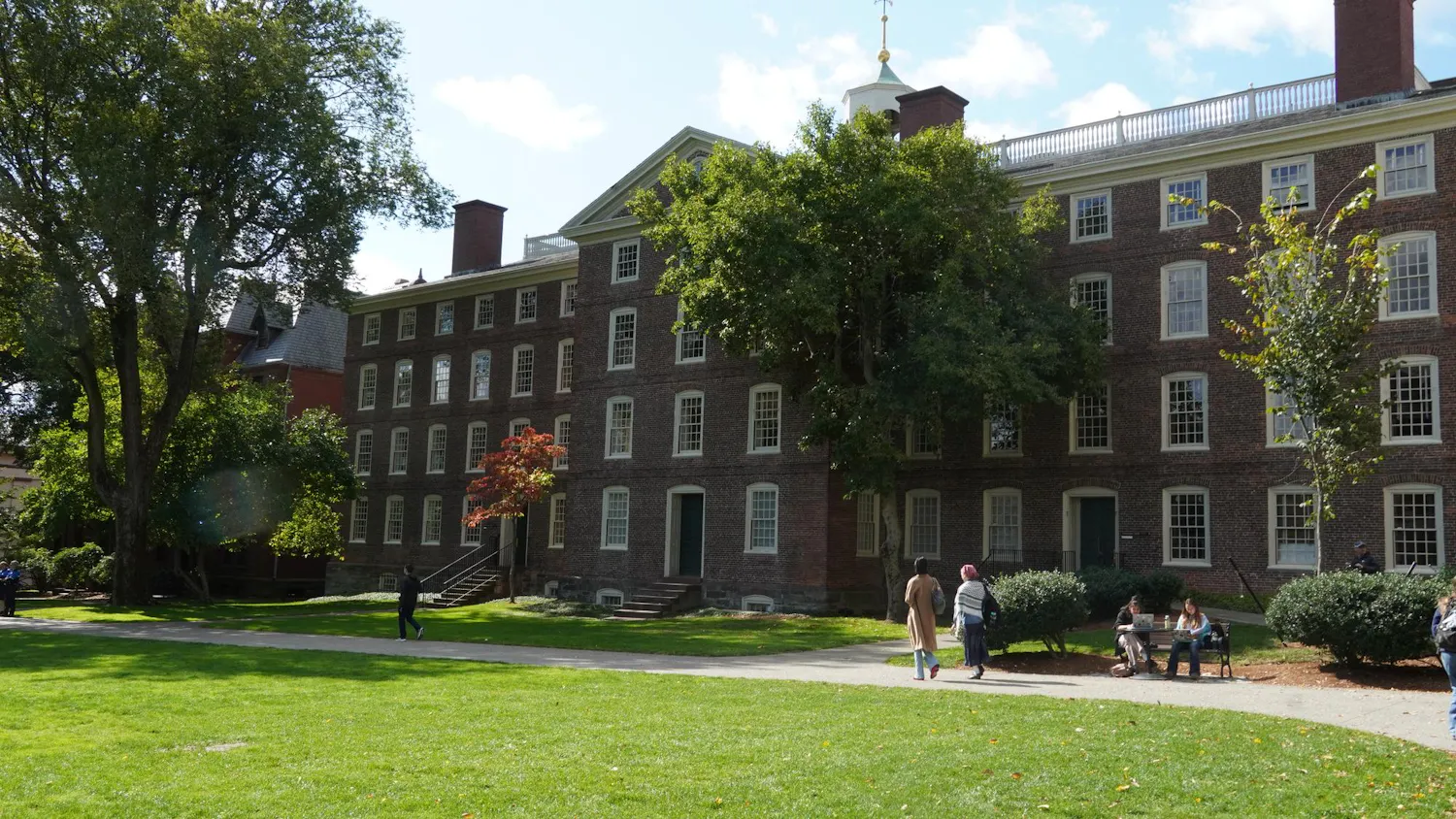
As universities grapple with how to maintain racial diversity on campuses with the end of race-based affirmative action and wholesale attacks by the Trump administration, the Black Student Union’s eighth annual Black Convocation aimed to welcome first-year students to the University.
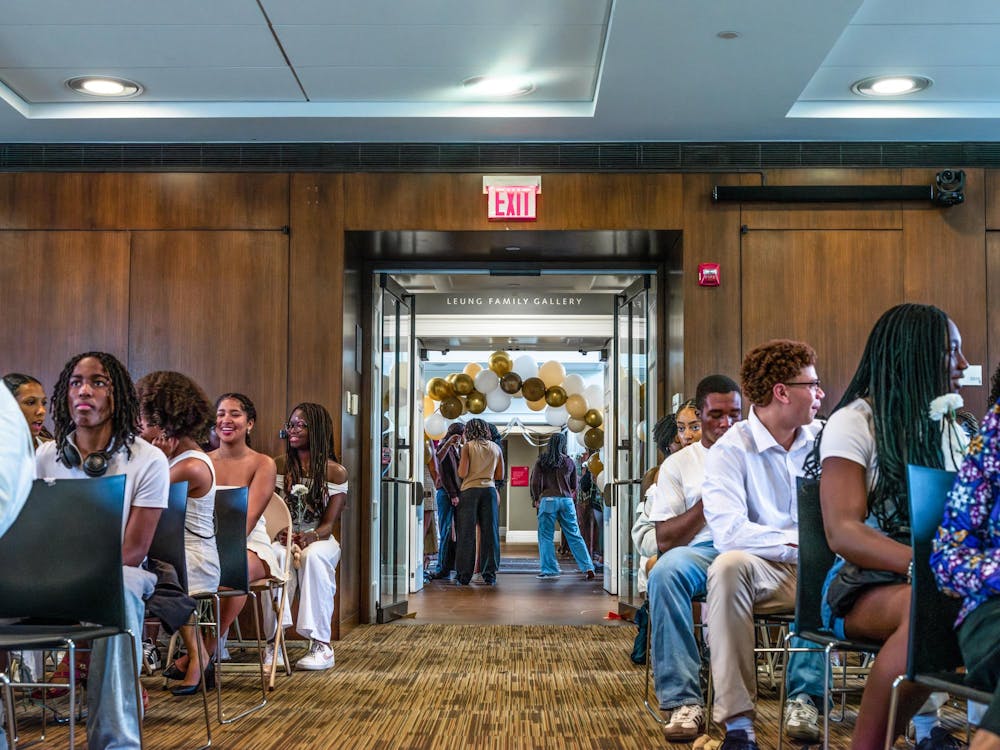
On Sunday, students gathered in the Stephen Robert ’62 Campus Center for the eighth annual iteration of the event, hearing from several speakers and connecting with each other over food, games and conversation.
Founded in 2018, Black Convocation was created to empower incoming Black students and celebrate their achievements, BSU Co-Vice President Milan Ndjiki ’27 explained.
This year’s theme, “Black Brilliance: Boundless Futures,” emphasized the talent and innovation of the Black community throughout history as well as the opportunities to come for the class of 2029 over their next four years at Brown, BSU President Olivia Baptiste ’26 said in her opening remarks.
“I want students to take away that there’s so much excellence, beauty and potential in being Black,” Ndjiki said. “If you embrace your identity and embrace (the) identity (of) those around you, you’re going to have a great time here.”
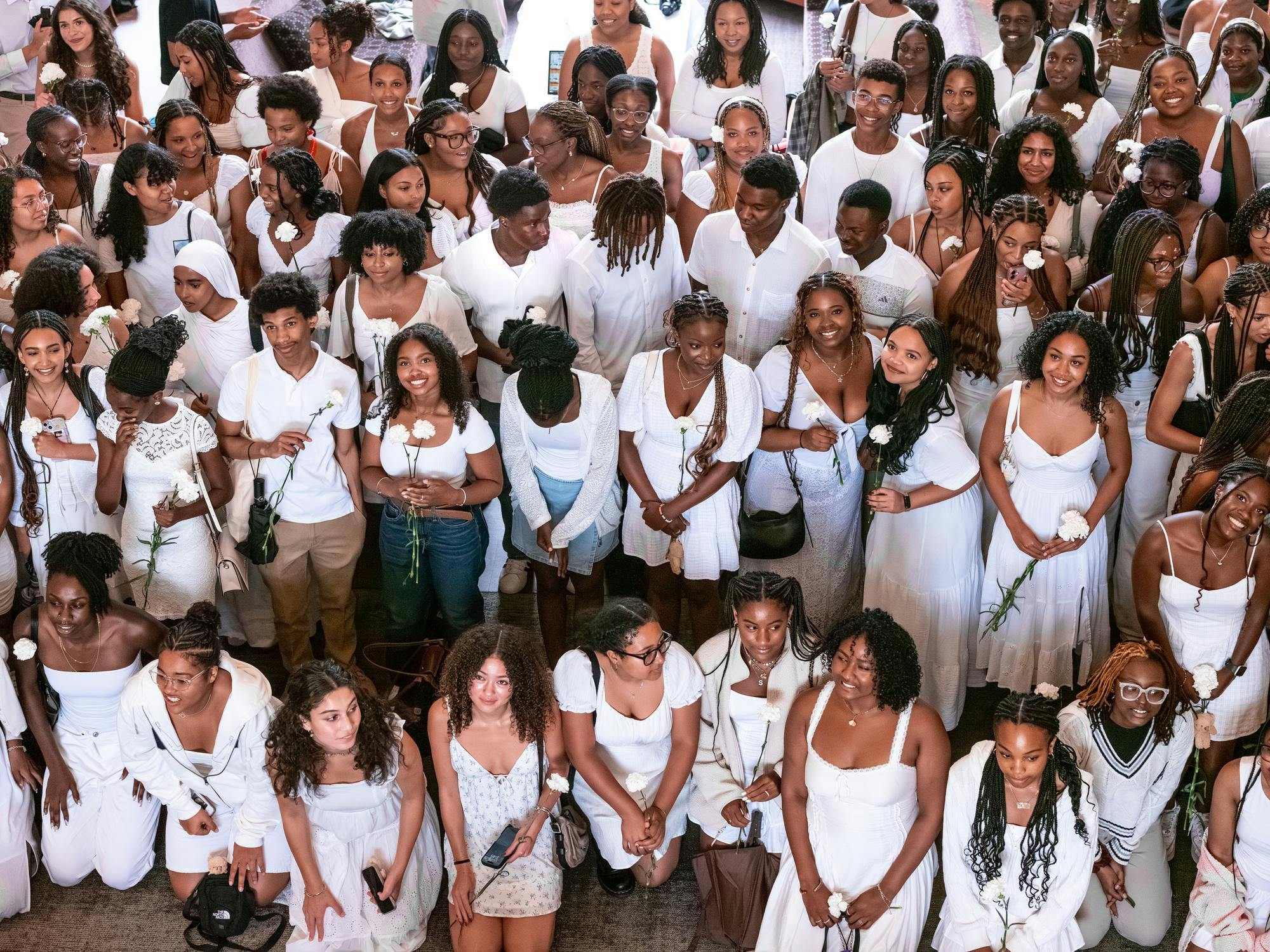
The event opened with a procession of over 150 first-year students into the Leung Family Gallery as older students handed each first-year student a white rose to match the all-white dress code.
“There’s so much family and warmth,” Ndjiki said. “This convocation helps solidify that by bringing the whole Black community together.”
Amid federal attacks on diversity initiatives at universities across the nation, attendees expressed a heightened motivation to take up space in places from which they were historically excluded.
Last year, Black enrollment for Brown’s class of 2028 dropped by 40% following the Supreme Court’s ban on race-based affirmative action, The Herald previously reported.
At last year's event, around half of the seats were empty, organizers said. This year, BSU enjoyed an uptick in attendance.
“I have this really amazing opportunity to go to this university, and I want to make the most of it,” said Kennedy Parker ’29, a first-year student who attended the event. “I want to show people that regardless of what’s happening, we’re still here, we’re still doing our thing.”
At the event, Kim Gallon, associate professor of Africana studies, referenced scientists like Katherine Johnson and writers like Octavia Butler, to show how Black innovation has always flourished, and how each first-year student has a bright future before them.
In addition to being scholars, students also have a responsibility to use education to transform, contribute and fight against injustice, Gallon said. But she stressed that this is not an endeavor to take on alone, and that each student should take advantage of the community of peers, mentors and faculty around them.
Following Gallon’s remarks, first-year students were introduced to various student organizations centered on Black identity, with poetry readings from the Black Star Journal, introductions from historically Black Greek life leaders and performances from Shades of Brown and OJA! Modern African Dance.
“It’s a way for students to see the potential clubs they could join,” Ndjiki explained. She added that OJA!’s performance at Black Convocation in past years has inspired students to try out for the group.
Following the ceremony, students moved to the Petteruti Lounge for soul food and games like Uno and Jenga. As they chatted with their peers, several first-year students who spoke to The Herald reflected on their experiences attending the event.
For Jadyn Sinclair ’29, the biggest takeaway was how vibrant the Black community is at Brown, something she said she was worried about as an incoming first-year student.
Coming from a predominantly white high school, Sinclair “saw how divided Black communities can be in spaces where there’s not that many of us,” she said. “This reminded me that there is a home for our community.”
Sunday’s Black Convocation allowed first-year students to feel welcome in that community, said Parker.
“This was a good way to connect with other Black students, because sometimes it can be hard to find each other,” Parker said. “It’s really nice to know that this is a space we can come to, get to know each other, be introduced to the school, and be introduced to the community.”
Shakira Simo ’29 added that attending Black Convocation was especially important for her to start building a community on campus.
“The people here will probably be with us for the next four years,” Simo said. “I feel like it’s so important that we have events like this where we can come together, see familiar faces and recognize that we’re not alone.”

Zarina Hamilton is a university news editor covering activism and affinity & identity. She is sophomore from near Baltimore, Maryland and is studying mechanical engineering. In her free time, you can find her reading, journaling, or doing the NYT mini crossword.