
When Darren Aronofsky’s “Black Swan” premiered in 2010, the psychological thriller felt ahead of its time. While physical self-perception, derealization and perfectionism have always been common themes in cinema, Aronofsky’s unsettling examination of these subjects created a rupture in popular culture.
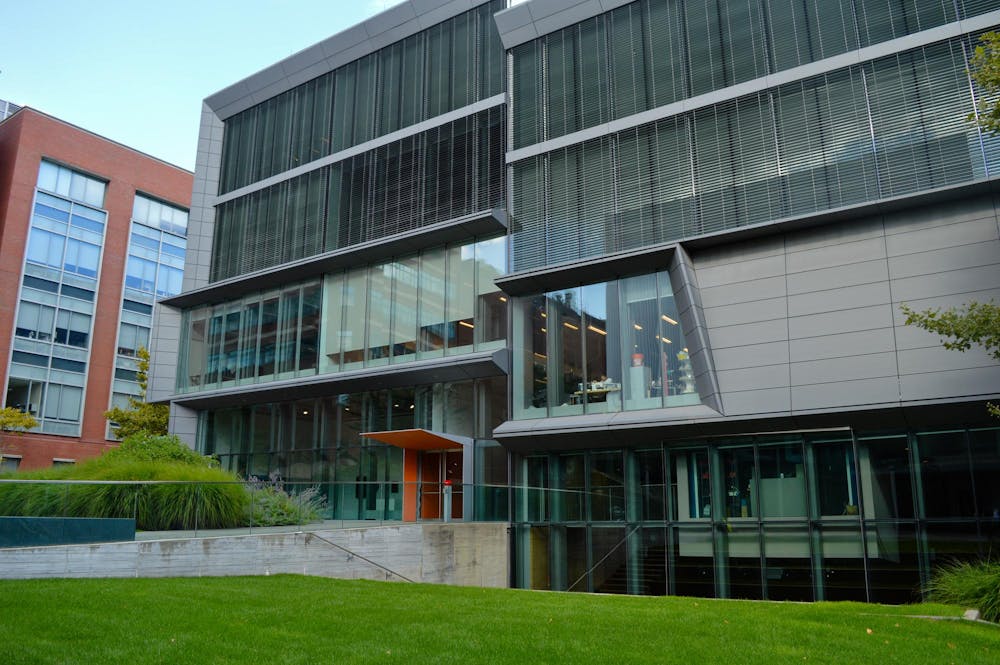
Fifteen years after its debut, “Black Swan” continues to resonate with audiences. On Wednesday, the Brown Arts Institute screened the film at the Granoff Center for the Creative Arts as part of the Trash Camp Super Queer What Even Are Human Bodies Vaguely Dancerly Sci-Fi Film Festival. The festival showcases films that address topics of surveillance, physical discomfort and perception in modern culture.
“Black Swan” follows Nina Sayers (Natalie Portman), a dancer at a New York City ballet company. As the company prepares for its annual performance of Swan Lake, Nina is determined to land the principal role of the Swan Queen. Nina’s mother (Barbara Hershey), a former ballerina, desperately wants her daughter to land the role of her deserted dreams — a second chance at stardom.
Aronofsky introduces Nina as the image of discipline and control. Her hair is always in a perfect bun, her pink leotard matches her pink tights and pointe shoes and she is never late to class — because her mother still wakes her up in the morning. But as the ballet company’s director, Thomas (Vincent Cassel), reminds her, the Swan Queen isn’t just one role, but two. Nina must move with the fragile grace of Odette, the White Swan, but she must also surrender to the seductive chaos of Odile, the Black Swan. During her audition, Nina naturally embodies the innocence of the White Swan, but her performance as Odile disappoints Thomas, leading to her dismissal.
The following day, Nina asks Thomas to reconsider his decision. He forcibly kisses Nina, prompting her to bite him and run out of his office. Still, to her shock, Nina lands the role — the start of Nina’s descent into madness as the role of the Swan Queen slowly eats her alive.
This is where “Black Swan” departs from the standard tortured-artist film. Nina does not cope via drugs, sex, alcohol or simply quitting altogether. Instead, Nina begins experiencing vivid hallucinations of turning into the Black Swan. Aronofsky masterfully blurs reality as Nina’s life grows fragmented and distorted by the day, forcing viewers to experience this disquieting reality, too. Nina becomes self-obsessed, constantly looking for her reflection in mirrors, smudged subway windows and greasy puddles.
These hallucinations take over Nina’s life and threaten to derail her upcoming performance, already jeopardized by Lily (Mila Kunis), a rival dancer in the company who embodies Odile in ways Nina can’t. Nina’s hallucinations begin to center around Lily as she destabilizes, culminating on the show’s opening night.
“Black Swan” was an immediate success when it hit theaters for these very reasons — Nina, while trying to be perfect, is anything but, a trait most viewers have experienced at some point in their lives. The film went on to be nominated for five Academy Awards, including Best Picture, and Portman was awarded Best Actress.
The film deserves much of this praise, especially for bringing previously taboo conversations to the limelight. It showcases Nina’s struggle with anorexia and purging, years before eating disorders became a mainstream topic in popular culture. It also alluded to sexual abuse scandals that would later rock the ballet world and predicted society’s growing cultural obsession with self-image.
As young people long for a past they never lived — some even turning to flip phones to escape the shallowness of digital culture — “Black Swan” feels eerily prophetic, warning us of a future where self-obsession becomes impossible to escape. Fittingly, in the film, Nina carries a flip phone, which certainly did not have the front-facing capacities of today’s phones. If she’d had a smartphone, she might have spent the film gazing at herself through a screen, too.

Sanai Rashid lives in Long Island, New York. As an English and Economics concentrator, she is passionate about storytelling and how numbers and data create narratives in ways words alone cannot. When she is not writing, you can find her trying new pizza places in Providence or buying another whale stuffed animal.


