While some stay up late refreshing their internet browsers for just-released concert tickets, merch drops, or even current affairs, the only thing enticing enough to convince me to stay up past my 10 p.m. bedtime was, of all things…a Labubu.
I first found out about the collectible plush toy while scrolling through TikTok (this is becoming a common thread in my articles). Despite at first gleefully judging the Quasimodo-reminiscent dolls with the rest of the internet, I gradually became intrigued by the phenomenon. Content creators would spend their life savings to buy entire collections (about $170 for a complete series, give or take); meanwhile, I was considering whether a dinner out on Thayer Street was too much of a splurge for the night.
Even though netizens continued to hate on the toys more passionately than Abby Lee Miller would on a 12-year-old girl, people were miraculously still willing to pay hundreds of dollars for resold boxes on eBay. Personally, I’d rather run a marathon in Crocs than pay that much for a 17-cm-tall figurine, but nonetheless, I was inspired.
For some context, Labubus—initially created by the Hong Kong illustrator Kasing Lung—originate from the Chinese company Pop Mart. If you don’t recognize the name, your wallet is most likely thanking you for it. But ever since demand for the dolls rapidly skyrocketed as they went viral, the company has begun using online raffles to release the boxes to a small subset of quick-moving fans (and bots). So, if you somehow managed to get lucky enough to snag one, your $25 figurine could potentially have a $200 resale value—assuming you were willing to part with it.
It seemed like the ideal business model for a summer cash grab. So, I logged into the Pop Mart website 10 minutes before the official drop and began fervently clicking as if I was trying to secure opening night tickets to The Eras Tour.
After a couple nights of failed attempts, I finally got my hands on one of the grimy little things…and the rush was exhilarating.
After that, I couldn’t stop myself from entering the weekly lotteries (to be fair, in my mind, I had just secured $200 from a 30-minute endeavor conducted from the comfort of my own home). Eventually, I had two Labubus from the “Big Into Energy” series (“Hope” and “Luck” for those of you who went through a similarly questionable phase) set to ship from Beijing to my hometown in Virginia.
But despite my sleepless nights and Google Calendar reminders for upcoming drops, I soon came to a jolting realization: The trend had died down, and thus, no one was willing to buy. I resorted to texting club group chats (sadly no one on Mock Trial took the bait), my roommate, and even indirect contacts and friends of friends—but the market was suddenly barren.
The Labubus (who were now in my permanent care and whom I have since accepted as my own) ultimately grew on me, and I even began bedazzling my bags with the new accessories.
I thought I was safe, that the pain of this journey was over—but I was soon proven wrong after a night out in Boston. After sitting down for dinner with one of my best friends, I quickly noticed that the terrifying (yet precious) thing had been ripped directly off my bag. I began to panic, running out of the restaurant to frantically search up and down the Boston streets in hopes of a potential rescue mission. Because rather than steal the bright red wallet out of my open bag, some robber thought it wise to reach for my Labubu instead.
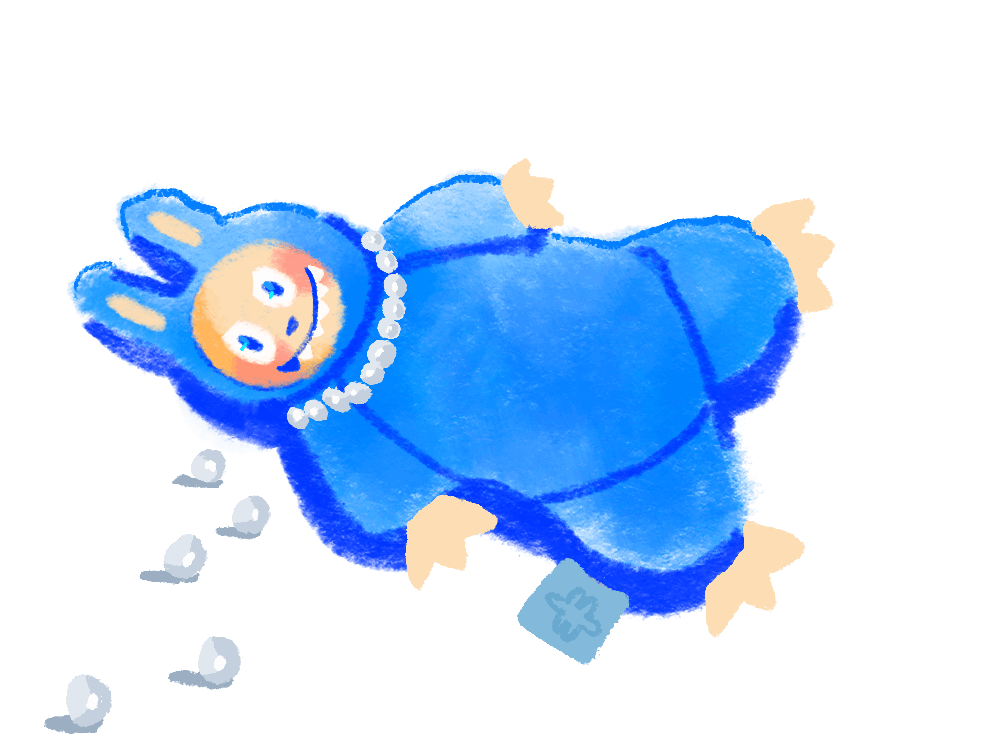
The tragedy persisted throughout the rest of dinner—that is, until some random student texted a Harvard group chat (that my friend happened to be in) saying he had wandered upon a stray Labubu outside the library—you could tell it was mine by the fake pearl necklace I had adorned it with. It’s moments like these in my life when I wonder whether Pitbull truly has “been there, done that.”
Even though the universe tried to rid me of one of them, I’m still the (proud? confused? neutral?) owner of two authentic Labubus (an admission that makes me wonder whether I should post this article anonymously).
But all in all, there is something quite alluring about the blind box experience. Like Pop Mart, a variety of toy companies will sell their products in mystery packaging, ensuring customers get one of a series of different characters, but leaving the specific one to chance. While many are often taken aback by the high prices—also a feature of other sets like Hirono, Smiski, and Peach Riot—the format offers fans an experience along with the final product.
The mere process of shaking the box in an attempt to guess what’s inside, ripping open the cardboard, and crossing your fingers in the hopes that you secure the limited edition character gives blind boxes an additional layer of allure. When I first tore open one of the boxes, I felt like a gambler discovering a deck of cards for the first time in their life.
But you’re not just buying the experience, you’re also buying pieces of handheld artwork from contemporary artists (debatable for some brands, but I’ll elaborate). One design that immediately comes to mind is the aforementioned “Hirono.” Each figurine is meticulously and thoughtfully designed, with vibrant colors, interesting shapes, endearing accessories, and underlying themes of human emotion. Some explore themes of childhood (i.e. the “Alien” or “Growing Up” figures), feelings of being trapped (“Birdcage” and “Manacle”), boredom (“Drifter” and “Guardian”), inauthenticity (“Costume” and “Puppet”), or even a sense of uncertainty regarding the future (“Unknown Journey” and “Patience”). Each one is a miniature art piece, and given both the experience of opening them coupled with the artistry of the final product, it’s no wonder people have accumulated extensive collections of them.
On the other hand, certain blind box series—like “Twinkle Twinkle” or Pop Mart’s various Disney collaborations—lack this same depth and artistry. While the “Twinkle Twinkle” design looks like I poorly tried to draw a Cartoon Network character from memory, the Disney collaborations, although cute, lack the originality of other boxes. Rather than profiting off of the same, overused Toy Story aliens again and again, other boxes feature consistent updates and original designs, setting them apart as a distinct entity of their own—one with a single artist, rather than a multi-million dollar corporation, at the center of the design.
And while some may argue over the merits of Labubus’ signature design (and whether their “ugly-cute” aesthetic actually deserves the latter half of that compound adjective), part of their appeal lies in that same exciting, anticipatory feeling that so many blind box companies have expertly cultivated.
All in all, the lion doesn’t concern himself with Labubu hate, and neither do I.

Ann Gray Golpira is a Section Editor covering Arts & Culture. She is from Norfolk, Virginia and plans on concentrating in both International and Public Affairs and Anthropology. Outside of The Herald, you can find her writing, recording and producing her original music.


