Released nationwide on Oct. 31, Yorgos Lanthimos’ newest film, “Bugonia,” poignantly critiques echo chambers and social fragmentation by making alienation literal.
“Bugonia” — a chaotic but masterful remake of the South Korean film “Save the Green Planet!” — centers on the story of Teddy Gatz (Jesse Plemons), an amateur beekeeper who believes that Andromedans, an alien race from the eponymous galaxy, control humanity. Throughout the film, bees serve as a pervasive motif, which is highlighted by the film’s title — the word “Bugonia” derives from the ancient Mediterranean belief that the insects could spontaneously generate in the carcasses of oxen.
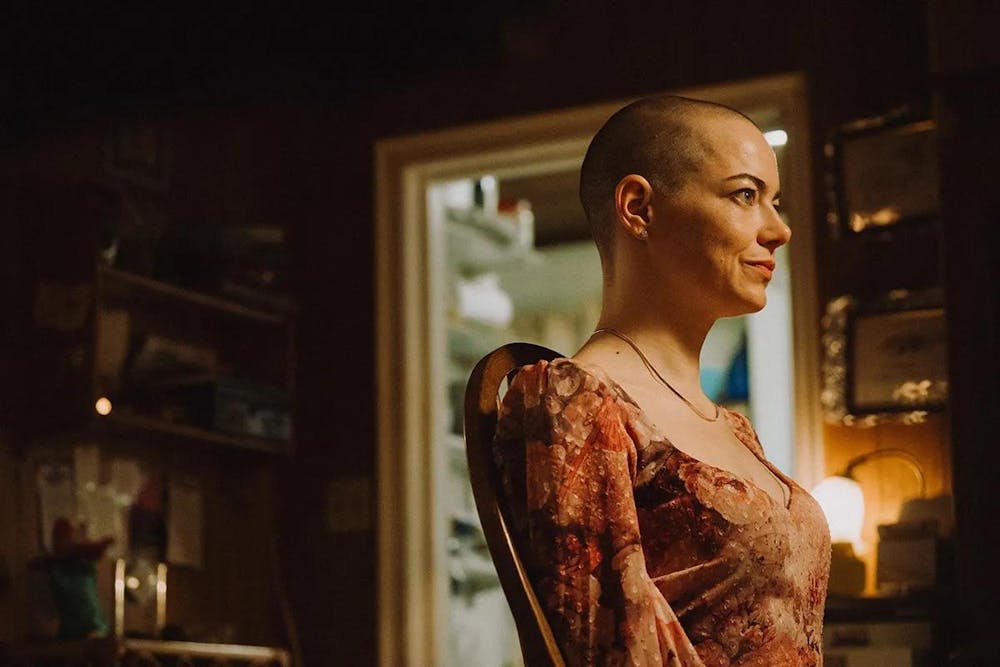
At the start of the film, Teddy sets out to contact the aliens he believes are secretly ruling the planet, recruiting his impressionable cousin Don, a young neurodivergent man played by autistic actor Aidan Delbis, to help him in the process. Together, the duo — amid Don’s constant skepticism — abducts Michelle Fuller (Emma Stone), who Teddy is convinced is an alien masquerading as the CEO of pharmaceutical and pesticide company Auxolith, where Teddy works as a warehouse employee.
The original film, “Save the Green Planet!” is a character study focused on the tragedy of protagonist Lee Byeong-gu (Shin Ha-kyun). Byeong-gu’s past is riddled with child abuse and trauma, but the movie blends these serious themes with slapstick humor and a ragtag sense of chaos.
On the other hand, Lanthimos’s version is a cold, surgical descent into fanaticism and guilt. This contrast is most evident in Stone’s portrayal of Michelle. The CEO in “Save the Green Planet!” was at times as absurd as the protagonists, but Michelle is razor sharp, continuously manipulating her captors with threats, strategic bargaining and psychological dominance.
Throughout its runtime, “Bugonia” offers an overview of a degrading human world. The film juxtaposes Teddy’s working-class life with Michelle’s insulated wealth. Their profound class difference is emphasized when Teddy encourages his co-worker, whose arm was injured by Auxolith’s machinery, to file an Occupational Safety and Health Administration complaint against the company. His co-worker is reluctant to submit a complaint, as she believes that neither the company nor OSHA care about the well-being of factory employees.
Known for his off-kilter tone and experimental style in films like “Poor Things” and “The Favourite,” Lanthimos leverages a variety of technical components to extend the unsettling nature of “Bugonia” beyond the script. The vibrant and colorful score, composed by Jerskin Fendrix, heightens the emotional intensity of the movie’s interrogations, flashbacks and violence. For example, the track “Bees” uses increasingly discordant string instruments to imitate the harsh buzzing of the insects, which appear several times during the movie.
Robbie Ryan’s cinematography complements the score during intense sequences —including Michelle’s kidnapping — while black-and-white flashbacks interrupt the polished, colorful world of the present day, thrusting viewers into the melancholic memories that have shaped Teddy’s personality. Through these flashbacks, Lanthimos subtly reveals Teddy’s underlying motives in kidnapping Auxolith’s CEO: The company’s experimental opioid medications have put his mother (Alicia Silverstone) into a comatose state.
After this revelation, the film’s tone becomes increasingly dark and gory. Despite the shift in mood, screenwriter Will Tracy balances deep philosophical conversations about Teddy’s past with absurd, grim comedy.
While the plot centers on Teddy’s fall into conspiracy, “Bugonia” refuses to be pigeonholed as a simple critique of misogyny or internet hoaxes. The film goes further: It exposes capitalist greed and demonstrates how attempting to find the cause behind human strife has led people to turn each other into so-called aliens. Literal or figurative, alienization, as depicted in “Bugonia,” has turned humanity against itself.