
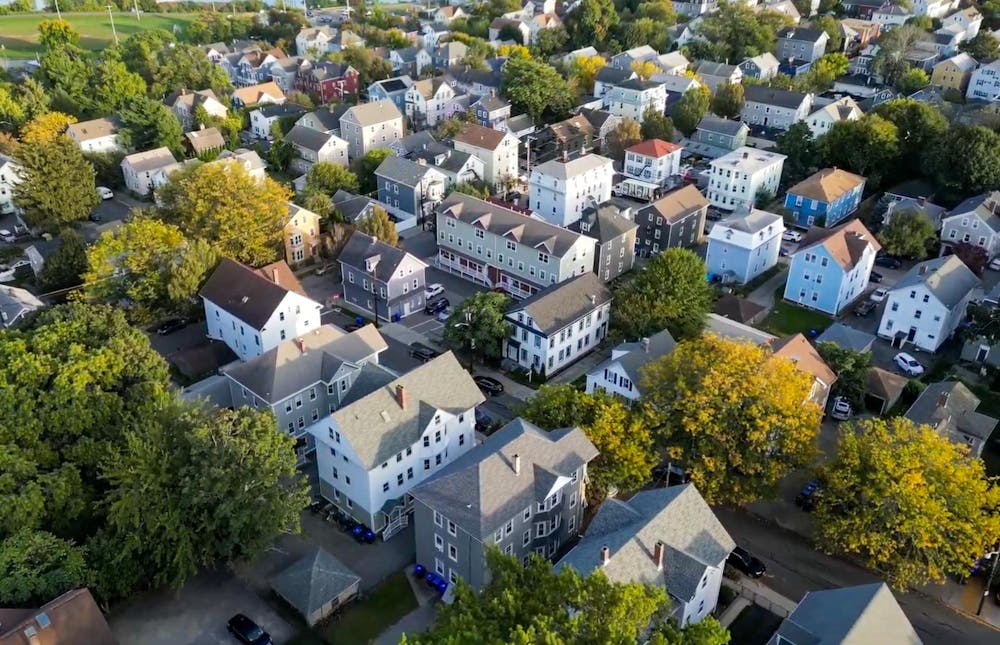
Off-campus apartments offer an attractive option for juniors and seniors looking for better housing. Some, such as 257 Thayer St. and 21 Euclid Ave., offer private bathrooms, modern kitchens and even gyms and fire pits that no residence hall could realistically compete with. But as more undergraduates choose these amenities over on-campus housing, Brown risks losing one of the most valuable parts of its undergraduate experience: the sense of community that comes from living together. If the University wants to preserve the close-knit residential culture that defines life on College Hill, it should reconsider how easily students are allowed to move off campus and take steps to keep more of them within the residential system.
Living together with other Brown students is a central part of building community. Few places replicate the playful environment of a dorm, where your peers return from class, unwind and get changed into pajamas. While amenities are appealing, the discomforts of on-campus housing are part of what brings students together. Cramped floors, communal bathrooms and thin walls become shared experiences that shape the student experience. These small, shared experiences create community and, with it, friendships that define our four years here. When students choose off-campus apartments over dorms, these organic connections fade.
Off-campus living, by contrast, introduces a divide: Some students enjoy vastly upgraded conditions while others remain in modest dorms, creating an “us versus them” dynamic. Even the nicest dorms on campus — Chen Family Hall, Danoff Hall and the Wellness Residential Experience at Sternlicht Commons — don’t compare to the luxury of newer apartment buildings. They could also drive a wedge between Brunonians and locals, as off-campus demand by Brown students has historically encouraged luxury developments that are unaffordable for most Providence residents.
Brown, as a predominantly undergraduate-focused institution, has an especially large responsibility to take residential life seriously. Unlike schools with massive graduate populations or sprawling satellite campuses, Brown’s culture depends more heavily on the density and cohesion of its undergraduates living and learning within a compact campus. The foundation of Brown’s culture is weakened when undergraduates leave campus for private apartments that lack the undergraduate-only character.
If Brown wants to preserve a sense of community, it must find ways to keep more students living together on campus. The University can’t realistically match the amenities of private apartment buildings, but it can strengthen the structures that ensure undergraduates remain part of the residential system. One way to do this could be to eliminate the off-campus lottery for rising juniors, which allows a number of juniors to bypass the on-campus requirement. This way, all juniors would live on-campus. When more juniors stay on campus, they continue to contribute to dorm culture, keeping residential life vibrant and interconnected.
Keeping students on the University’s on-campus roster will inevitably require the construction of new residence halls. In planning these projects, Brown must be intentional about creating thoughtful spaces that residents are excited to live in. Since seniors and juniors get first pick in the housing lottery, these residence halls will likely be filled first by these students, lessening the blow of a stricter requirement.
By taking steps to prioritize on-campus living — rather than unintentionally pushing students toward off-campus apartments — Brown can preserve the sense of connection that makes the undergraduate experience special. The University cannot compete with the luxury of modern apartment buildings, but it can commit to keeping students together. Strengthening the on-campus housing requirement is the clearest and most realistic path to maintaining the residential community that has always been central to life at Brown.
Daniel Cheong ’27 can be reached at daniel_cheong@brown.edu. Please send responses to this column to letters@browndailyherald.com and other columns to opinions@browndailyherald.com.


