
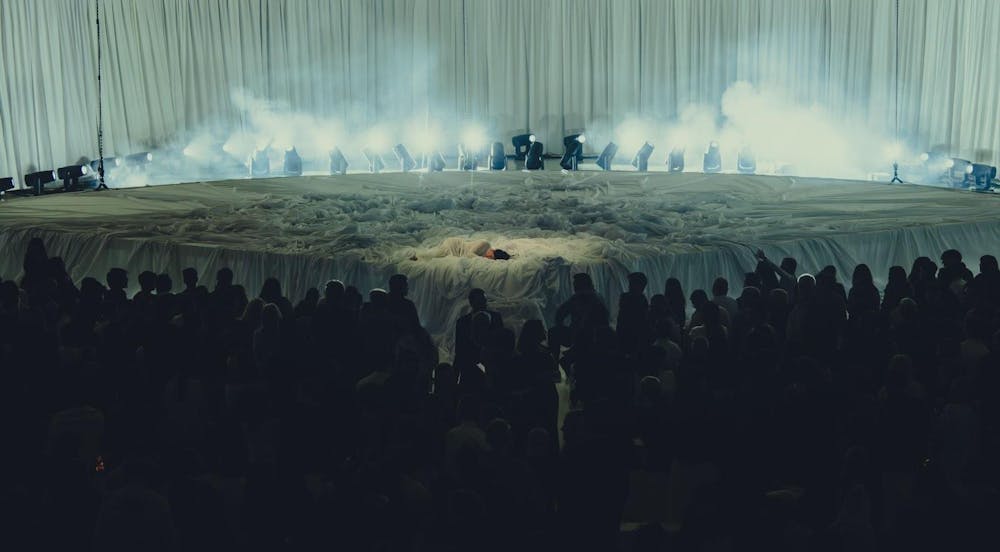
After over two years of work, Spanish singer, songwriter and record producer Rosalía released her long-awaited fourth studio album, “LUX,” on Nov. 7. Amassing over 40 million first-day streams, the record makes the artist the first to secure No. 1 debuts across five Billboard charts — “Top Latin Albums,” “Top Latin Pop Albums,” “Classical Albums,” “Classical Crossover” and “World Albums.”
But the album’s commercial success is not all that sets it apart. Rosalía, a native Spanish and Catalan speaker, worked with professional translators to write lyrics in 14 different languages — a mark of the attention to detail and ambitious music production that distinguishes “LUX” from other modern-day Billboard hits.
The album opens with “Sexo, Violencia y Llantas.” After a melodious piano introduction, Rosalía’s vocals enter alongside a simple yet haunting cello, which is quickly disrupted by a more electronic sound. The song’s effortless balance between short, buzzing synths and the classical sounds of the London Symphony Orchestra — with whom Rosalía recorded “LUX” — sets the stage for the rest of the record.
In “Divinize,” the album’s third track, Rosalía effortlessly blends elements of experimental pop, R&B and even Spanish flamenco. Her effortless vocal riffs, layered over sweeping dynamic changes and dramatic strings, lend the song a cinematic quality reminiscent of musical theater.
These theatrical instrumentals resurface in the album’s fifth track, “Mio Cristo Piange Diamanti,” which translates from Italian to “my Christ cries diamonds” in English. The song begins with limited instrumentation, leaving center stage to Rosalía’s impeccable vocal control and intelligent creative direction. Packed with the raw emotion of Rosalía’s vocals, the song transcends language barriers to resonate deeply even with listeners who don’t understand Italian.
Despite the project’s extensive range and often unpredictable musical choices, clean mixing manages to tie the record together. In “De Madrugá,” Rosalía incorporates short, percussive breaths and claps to create the song’s flamenco-pop rhythm, which is complemented by an intriguing nod to classical music in the track’s choral accompaniment and strings.
“Sauvignon Blanc” also highlights Rosalía’s impressive vocal strength. The song — backed by a more stripped-back, simple piano melody — showcases a restrained side of the singer’s vocals. The emotional cracks of Rosalía’s voice throughout the song elucidate the emotion of its lyrics as she sings of renouncing material possessions in favor of her partner’s company.
“Ya no quiero perlas ni caviar / Tu amor será mi capital,” she sings. “¿Y qué más da? Si te tengo a ti / No necesito nada más.”
In English, the lyrics translate to “I don’t want pearls or caviar anymore / Your love will be my capital / And what else matters? If I have you / I don’t need anything else.”
Rosalía concludes the record with “Magnolias,” another vocal powerhouse track. In keeping with the rest of the album, the song transitions into a dramatic flourish of choral accompaniment and orchestral embellishments before culminating in haunting, isolated vocals.
From start to finish, “LUX” transcends global boundaries, transporting listeners to an ornate concert hall centering Rosalía, accompanied by the London Symphony Orchestra and a reverberant choir. With its wide range of musical genres, languages and unique creative choices, “LUX” has something for everyone — whether you can understand all 14 languages or not.

Ann Gray Golpira is a Section Editor covering Arts & Culture. She is from Norfolk, Virginia and plans on concentrating in both International and Public Affairs and Anthropology. Outside of The Herald, you can find her writing, recording and producing her original music.


