On Dec. 13, first-year PhD student Shawn Khanna GS, a teaching assistant for PHYS 0030: “Basic Physics A” was in the midst of proctoring the course's final exam when another TA showed him a message indicating there might be an active shooter on campus.
Instantaneously, Khanna’s duties as a TA expanded past his formal academic role. He was now overseeing a room of hundreds of students on lockdown.
Khanna wasn’t the only TA who began taking on new responsibilities after the shooting. Across departments, many TAs became points of contact for students — not only about grades, but also about safety protocols and support on moving forward.
The Herald spoke to four TAs who reflected on their roles and responsibilities in the wake of the shooting.
For Khanna, his first instinct after receiving the shooting alert was that it was “likely a false alarm.” Nevertheless, Khanna decided to alert students. As students reacted to the news, “the exam went to the back of our minds,” he said.
Khanna became a liaison between students, public safety officers and the physics department, relaying information for hours as the lockdown stretched into the early hours of Sunday morning.
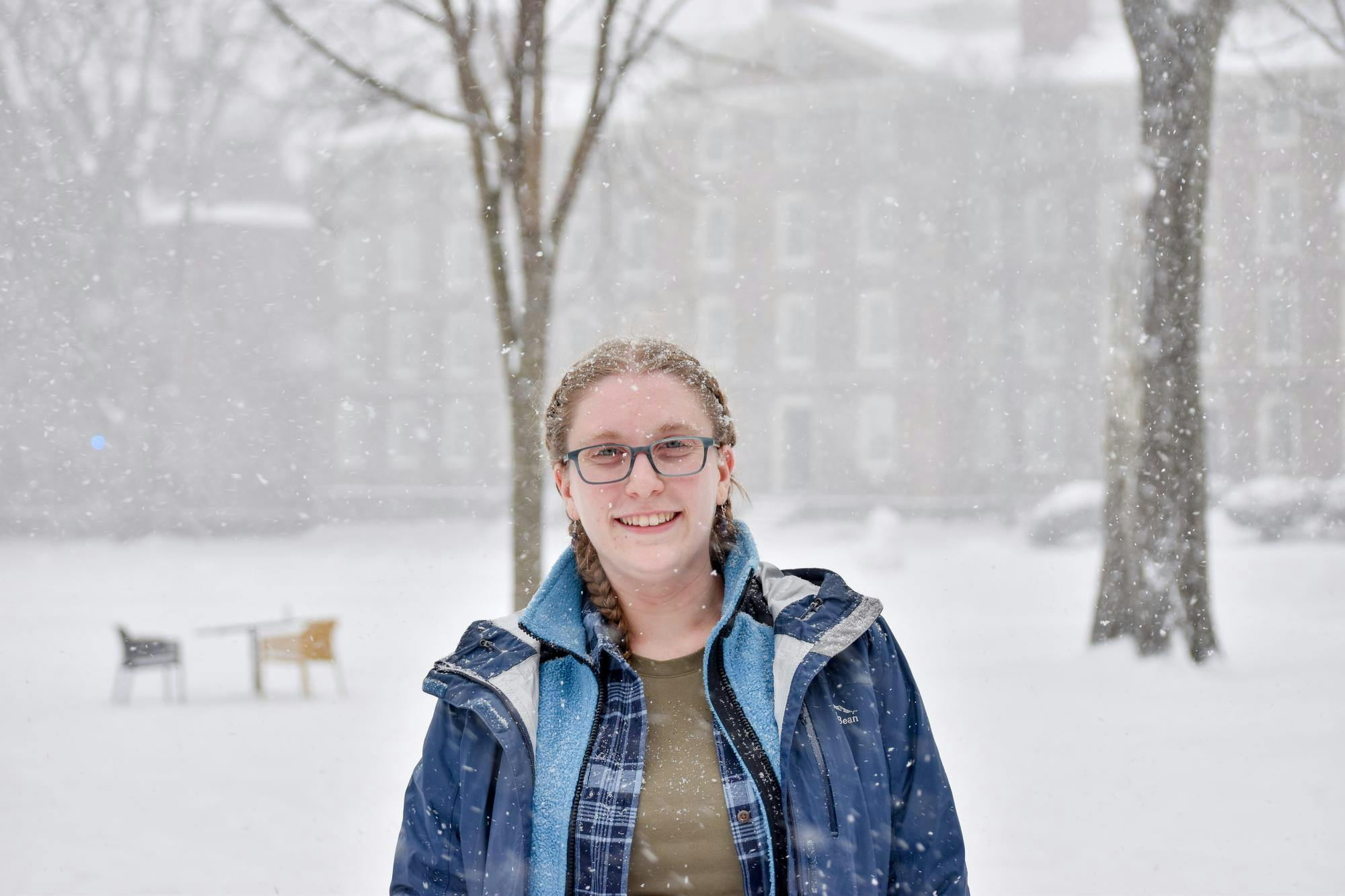
Eliana Alweis ’26, a head TA for CHEM 0330: “Equilibrium, Rate and Structure," described her role as "kind of like your older sibling at school."
“I was on the phone a lot with Brown Police,” he said. “I was kind of serving as this messenger channel between what they were telling me and what I could tell all the students.”
Afterwards, Khanna received emails from students thanking him, but he didn’t think he did anything out of the ordinary. He added that “tons of the students stepped up” during the lockdown and “knew what we should do.”
Shafiul Haque ’27, a TA for ECON 0110 — the class that's review session was the site of the shooting — said that many TAs in the course offered support to students by reaching out through Canvas the day after the shooting.
Haque said he shared his email and phone number with students for them to contact him directly.
“I was texting a few students throughout the following week since (the shooting) happened,” he said. “A lot of them were telling me they were scared.” During these conversations, Haque added that he tried to be “honest with (the) students,” talking to them as a peer rather than putting up the “TA act.”
Haque noted that the incident had “an impact on how students perceive the course.”
“For a lot of these students, it’s their first class in college,” he said. “I feel really bad for them too because this is their introduction to the college experience.”
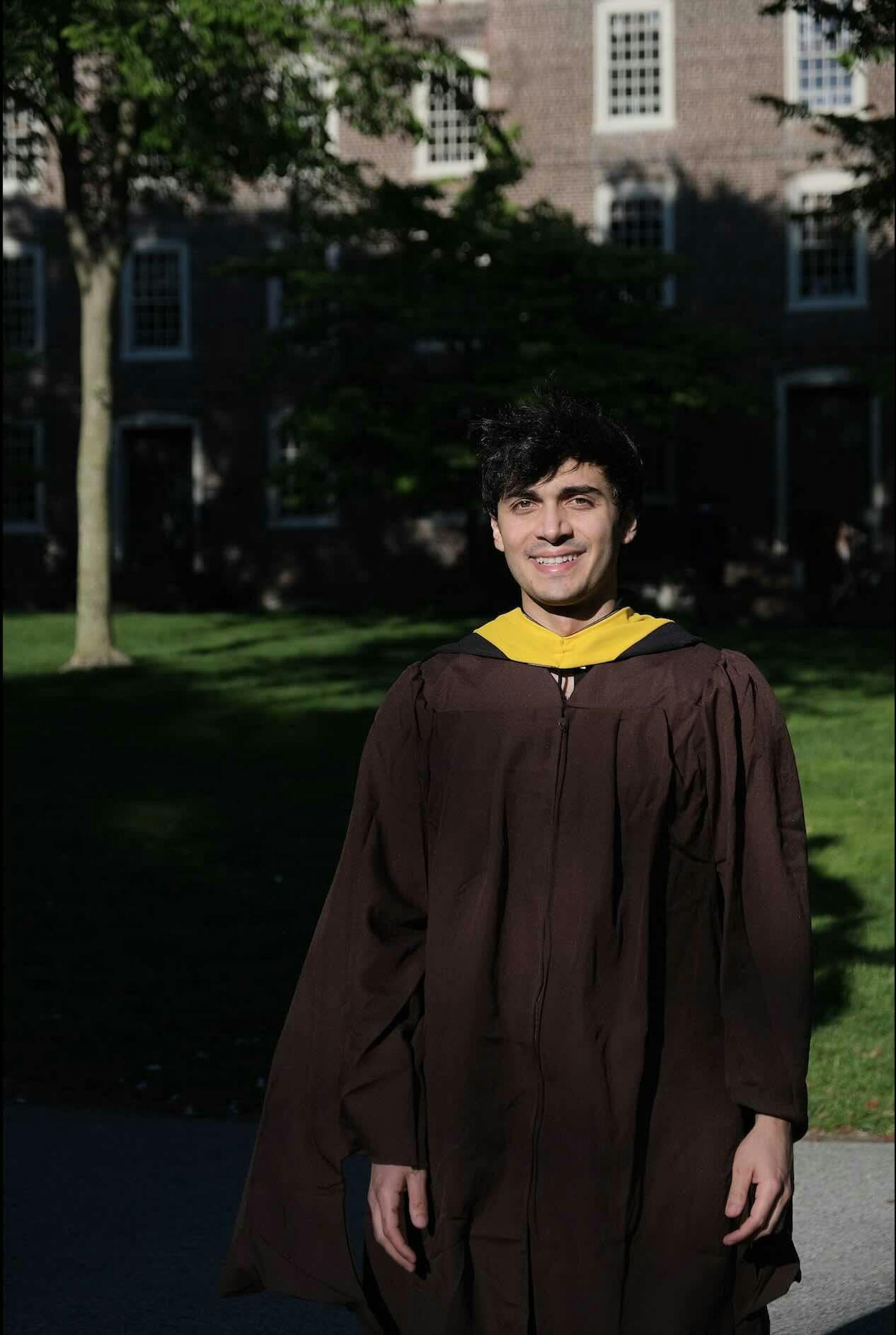
Shawn Khanna GS, a teaching assistant for PHYS 0030: “Basic Physics A” was in the midst of proctoring the course's final exam when another TA showed him a message indicating there might be an active shooter on campus.
Courtesy of Shawn Khanna
Students in CSCI 1470: “Deep Learning” had already completed their final presentation for a months-long group project two days before Dec. 13.
Following the shooting, Armaan Patankar ’26, a head TA for the course, focused on making grading calculations transparent after the University’s announcement that students could retroactively switch grade options to Satisfactory/No Credit.
“We — as a course staff — did compile students’ grades… and gave them a notification of where they were standing in the course, so they could make a more informed decision regarding where they stand in the course and how to proceed with S/NC,” he said.
Though some students reached out with concerns about grades through EdStem, Patankar reassured them that “the least of (their) concern should be grades in this class.”
While Patankar said he “spent a really long time” tracking student grades through an Excel sheet during winter break, he noted that the work felt meaningful.
“In a way, I was also (doing) it for the community,” he said. Patanker felt he could “maybe alleviate some peoples’ stress during this time and just be as communicative as possible on how our course can best support students and not be a source of stress.”
Eliana Alweis ’26, a head TA for CHEM 0330: “Equilibrium, Rate and Structure,” noted that most students posted their questions and concerns through EdStem, where the professor of the course fielded the majority of grading concerns.
Undergraduate TAs in CHEM 0330 do not grade assignments, so for Alweis the fall semester “was a lot more of being that older mentor — kind of like your older sibling at school,” she said. “Having the shooting happen further cemented that” role.
Alweis emphasized her limitations as a mentor due to her lack of experience providing mental health first aid. While it was “hard to answer some of those questions for” the students, being present for them was “what needed to happen,” she said.
Khanna noted that the experience put academic pressures into perspective.
“In the face of a tragedy, it becomes obvious that these micro, daily stresses really don’t matter in the grand scheme of things,” he said. “Your humanity and compassion for each other is much more vibrant.”
Miriam Davison is a Senior Staff Writer for University News covering Academics & Advising. She is a first-year from Los Angeles, CA and plans to study tentatively the realm of International & Public Affairs and English, though her interests span from linguistics to history to music. In her free time, she plays on one of Brown's ultimate frisbee teams and likes writing silly poems.