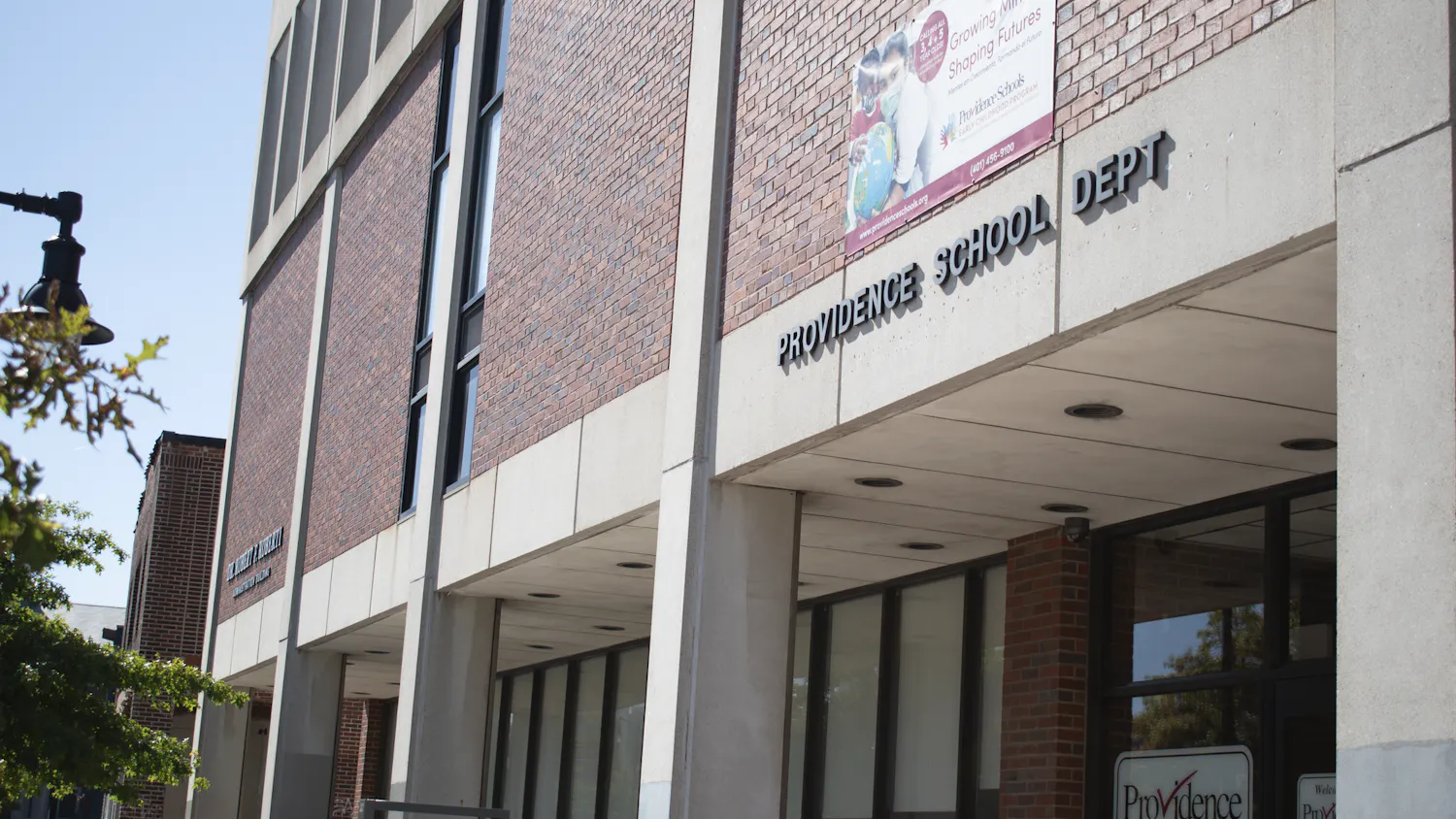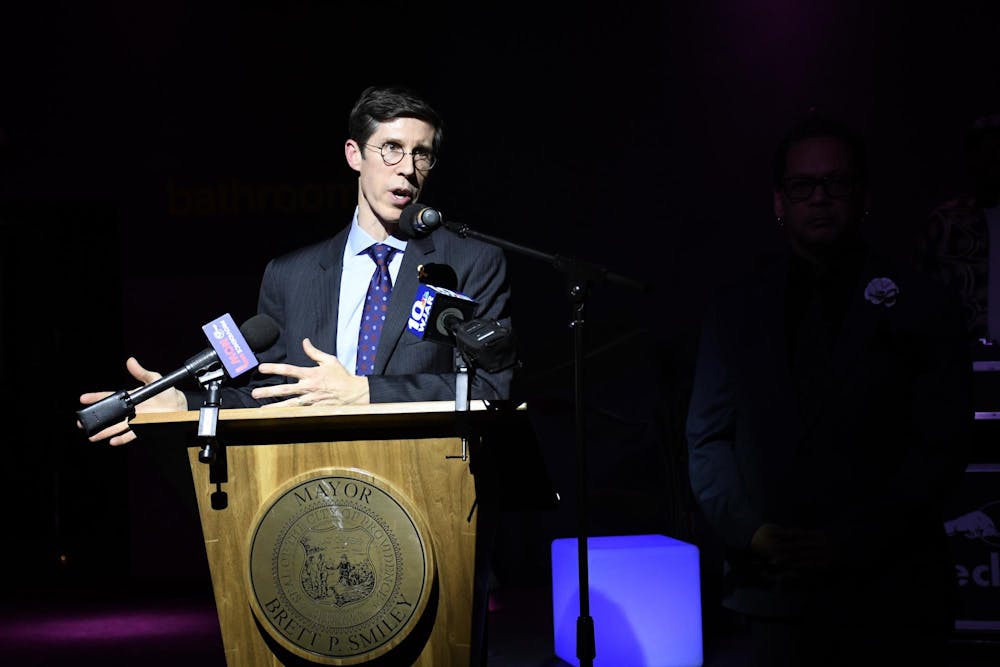
On Thursday, the Providence City Council passed a resolution in support of Mayor Brett Smiley’s Jan. 7 proposal to secure more state funding for municipalities across Rhode Island by increasing the state’s Payment in Lieu of Taxes disbursements to its cities and towns.
Providence, along with 14 other municipalities in Rhode Island, is home to properties that are exempt from paying property taxes. Under the PILOT program, established in 1986, the state partially reimburses these cities and towns for the revenue that they would have gained from taxing those properties.
If enacted, Smiley’s proposal would increase the reimbursement rate from 27% to 30%.
In Providence, tax-exempt properties — which include Brown University, other institutions of higher education and several hospitals — account for roughly 42% of the city’s real estate.
“With another challenging budget already ahead … additional state support is critical to maintaining basic services without placing further pressure on taxpayers,” Kati Stevens, the City Council’s communications director, wrote in an email to The Herald.
The resolution, which Stevens wrote passed unanimously with two councilors absent, claims that a lack of revisions to the PILOT program since its launch has necessitated “onerous (tax) increases on homeowners and businesses.”
Several members of the Rhode Island General Assembly expressed their support for Smiley’s proposal in emails to The Herald.
Sen. Jacob Bissaillon (D-Providence) wrote that he supports the proposal “because it more fairly compensates our cities and towns.”
Sen. Sam Zurier (D-Providence) also noted his support, writing that “an increase to 30% is a step in the right direction.” He believes that Rhode Island should look to a similar program in Connecticut in which the state offers a 45% reimbursement for state-owned properties and 77% reimbursement for certain nonprofit organizations “as a goal to reach over time.”
If an increase is approved, the extra payments will be allocated from within the state’s budget, according to City Spokesperson Josh Estrella.
In a statement sent to The Herald, Senate Majority Leader Frank Ciccone (D-Providence, Johnston) said that the increase should be considered “within the context of the many competing priorities in the overall state budget.” Ciccone will support the effort if it's feasible within the state budget, he added.
In fiscal year 2026, PILOT disbursements comprised roughly 2.5% of Rhode Island’s local aid expenditures. The statute also allows the state to proportionally spread the PILOT disbursements across its municipalities in the event that the state budget does not allow for full payments.
In fiscal year 2025, the state’s PILOT disbursements totaled 26.7% of foregone property tax revenue. In the 2026 fiscal year, it amounted to the full 27%.
Estrella referred The Herald to the state for questions about whether Rhode Island could afford the increased payments. Gov. Dan McKee’s office did not respond to a request for comment.
PILOT disbursements from the state comprised about 7% of Providence’s total budget in the 2026 fiscal year. Sen. Meghan Kallman (D-Pawtucket, North Providence) wrote in an email to The Herald that budget issues will remain even if the state accepts Smiley’s proposal.
“Underfunding for basic city infrastructure/social needs isn’t going to fully be addressed by modifications to the PILOT program,” Kallman wrote.
Estrella wrote that “Mayor Smiley remains committed to exploring new strategies to diversify the City’s revenue and ensure long-term fiscal sustainability.”
But more work is to be done before Smiley’s proposal may become law. Ciccone said that the decision will be made “through our budget review process over the course of the next several months,” with input from “various stakeholders and the public.”
While the “city council resolution is welcome and helps build the case for raising the reimbursement rate, it won’t determine the fate of the proposal,” Bissaillon wrote.

Lev Kotler-Berkowitz is a senior staff writer covering city and state politics. He is from the Boston area and is a junior concentrating in Political Science and Economics. In his free time, Lev can be found playing baseball or running around with his dog.