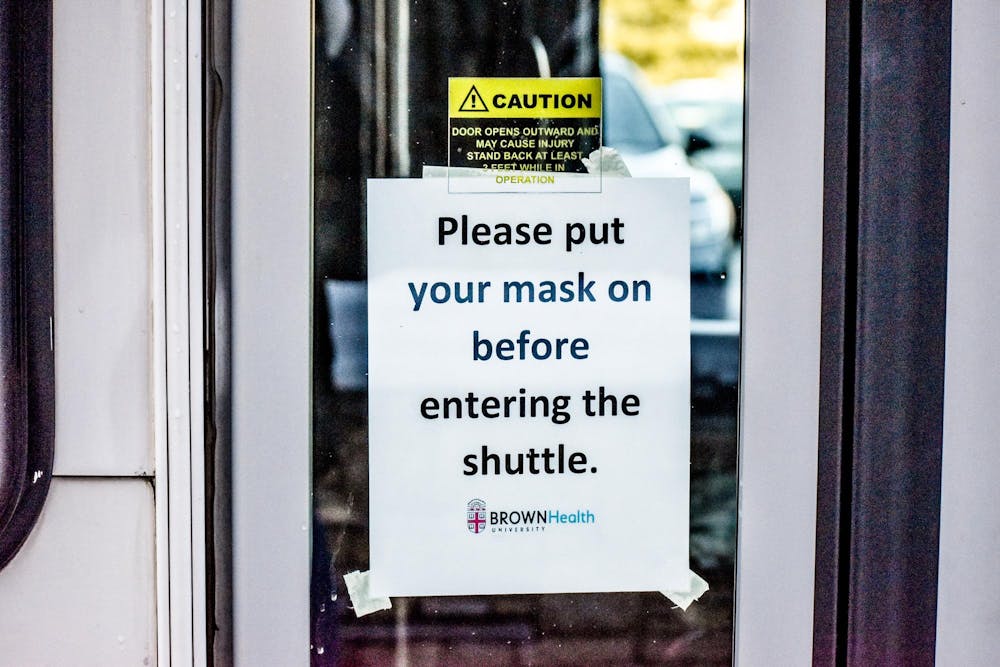
On Jan. 5, Brown University Health — the largest hospital system in Rhode Island — announced that all of their facilities would require patients, visitors and staff to wear a N95 or Level 2 surgical mask. The new guidelines, effective Jan. 6, follow increased rates of respiratory viruses in Rhode Island and Massachusetts.
As of Jan. 10, the Rhode Island Department of Health has reported 593 influenza-related hospitalizations for the 2025-26 flu season. Out of 605 specimens tested by the Rhode Island State Health Laboratory since September 2025, 94% of them were categorized as the H3N2 subtype of Influenza A, the report added.
Subclade K — a strain of the H3N2 subtype — evolved after this year’s flu vaccine had already been developed, which has allowed the strain to spread on a global scale “very quickly,” said Leonard Mermel, medical director of the department of epidemiology and infection prevention at Brown Health.
Although the vaccine “still has an effect,” its protection is “less robust,” he added.
The Centers for Disease Control and Prevention estimated that there have been at least 18 million cases and 9,300 deaths from the flu this season, according to their website. At the same time last season, the CDC reported an estimated 9.1 million cases and 4,700 deaths from the flu.
Mermel noted that “multiple variables” were taken into account when deciding to implement the mandate, including the prevalence of the illness in the community and bed occupancy levels.
Other hospital systems around the state have also implemented mask mandates.
Care New England — which operates Butler Hospital, Kent Hospital and Women & Infants Hospital — instituted a mask mandate effective Dec. 22, wrote Doreen Gavigan, a Care New England spokesperson, in an email to The Herald.
CharterCARE Health Partners began requiring masks on Jan. 6, Andrew Komensky, system director of infection prevention and control at CharterCARE, wrote in an email to The Herald.
The implementation of the mask mandate in CharterCARE’s hospitals — which includes Roger Williams Medical Center and Our Lady of Fatima Hospital — has gone “smoothly, with little to no issues,” Komensky wrote. He explained that visitors with difficulties breathing in a mask may be exempted from the mandate “on a case-by-case basis,” adding that patients will not be turned away for failing to comply.
Hospital masking policies are aimed at preventing in-hospital transmission when patients with unknown illnesses are in close quarters, said Jennifer Nuzzo, the director of the pandemic center at the School of Public Health.
While the virus remains a serious concern, Nuzzo cautioned against calling subclade K a “super flu” as it is “not categorically different from what we see in some other flu seasons.”
She added that while definitive data on this season’s vaccine effectiveness is not yet available, early studies suggest the shot “does a pretty good job of keeping you out of the hospital.”
“It’s probably not as bad as some have feared, with a giant asterisk that we still don’t know — the flu season is still ongoing,” Nuzzo added.