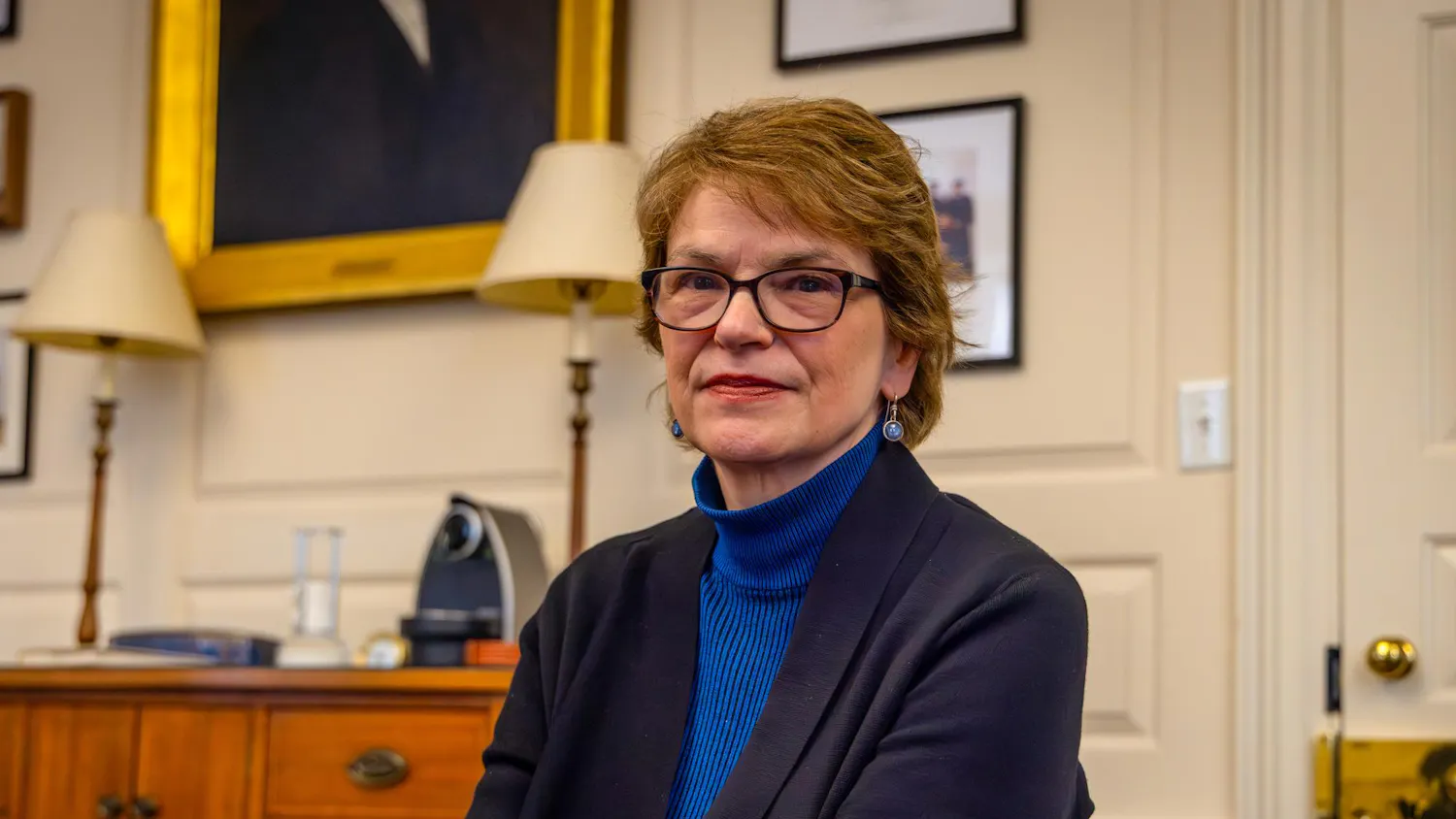
At the Providence Overdose Prevention Center — the one-year-old institution that marked the first state-regulated safe injection site in the country — Dennis Bailer, the director of Providence programs at Project Weber/RENEW, works closely with individuals struggling with substance use.
Bailer, a beloved team member who has worked closely with the harm-reduction organization since 2014, is an individual in long-term substance use recovery. He initially joined the organization — then called Project Weber and serving primarily male sex workers — out of a desire to support others.
“Substance use is a difficult thing to shake,” he said in an interview with The Herald. “I was a person who pulled my life together multiple times… it’s a struggle. But that doesn’t mean I’m a weak person or a bad person.”
With Project Weber/RENEW, Bailer was able to translate his difficult life experiences to positive change. He spent five years lobbying for the country’s first state-sanctioned OPC.
Last month, the center celebrated its one-year anniversary.
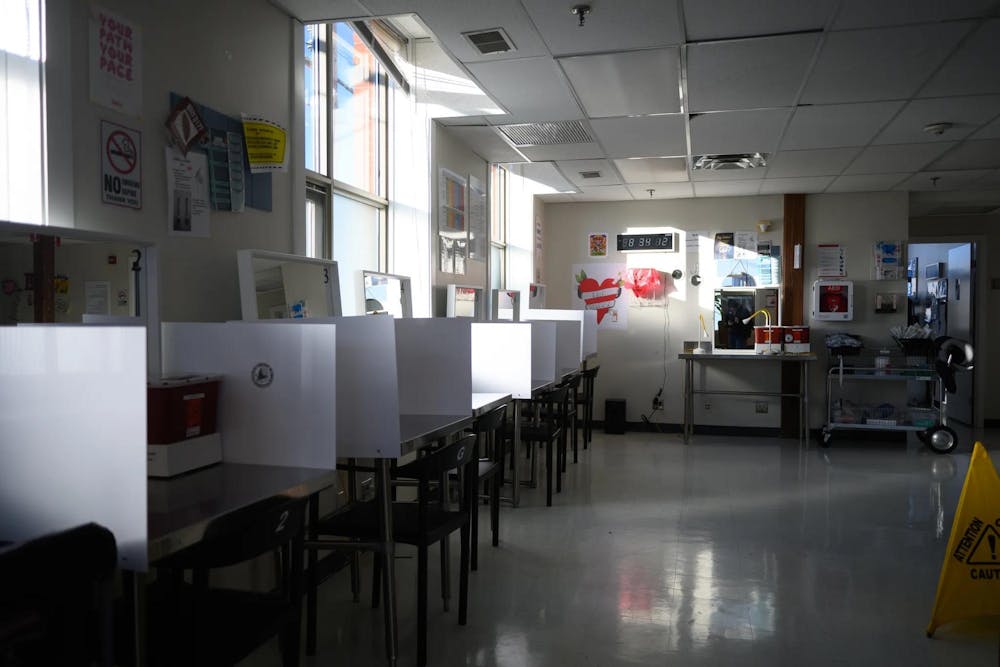
At the OPC, visitors can consume pre-obtained substances on-site while under staff supervision, said Annajane Yolken ’11, who works with the organization as the director of strategy and the OPC’s liaison. Staff are trained to medically intervene in case of an overdose or other medical incidents, she added.
OPCs, which are technically illegal at the federal level but have been recognized in the states of Rhode Island and New York, have been a contentious issue in debates over how to address addiction.
A study published last year by Brown researchers found that the majority of the community supported the opening of an OPC in their neighborhood, and in February 2024, the Providence City Council unanimously approved the center.
Since opening last year, the center has seen over 8,000 visits, helped 750 unique individuals and supported 92 individuals who overdosed while at the center, according to Yolken.
“We’ve intervened on those particular number(s) of overdoses that could have been shown as deaths,” Bailer said. “We saved lives here.”
The OPC is decked out in crayon drawings, greenery, soft lounge chairs and natural lighting. Staff keep a supply of hot chocolate mix and speakers playing music — the genre varies depending on “who’s the DJ,” Yolken said.
The center was designed with several accommodations in mind, such as a “chill out room” fitted with relaxing gravity chairs and headphones. For visitors seeking warmth and other supplies, there is a drop-in center downstairs. There are also smoking rooms for clients who use inhalation drugs.
All R.I. OPCs have to have “some type of smoking component, and that’s due to (Bailer’s) advocacy,” Yolken said. In Rhode Island, those who smoke substances are “disproportionately Black and brown” individuals who are oftentimes “disconnected from things like needle exchanges,” according to Yolken.
In Bailer’s advocacy, he also emphasized how people of color were dying at a higher rate than white non-Hispanic individuals.
Many employees at Project Weber/RENEW have life experiences connecting them closely with their work, Yolken said. Ashley Perry, the Project Weber/RENEW deputy director and OPC director, is a former sex worker in recovery from opioids. She also has experiences with incarceration.
“That is how I identify with our clients,” Perry said. “
“Our overdose crisis is going to be one of the biggest public health crises that our country has ever faced in my lifetime,” Perry added. “People who use drugs deserve health care too.”
There are two other OPCs in the country, both based in New York City. But those are privately run: Providence is the only city to have a state-authorized center.
None of the services are funded by taxpayer dollars, and some services at the center are funded by money from opioid settlements. This funding is important, Yolken said, as it holds pharmaceutical companies accountable for producing addictive substances.
“There’s been so much stigma and shame around drug use,” she continued.
“People have died because they are using substances and they are alone. Maybe they’re in a bathroom at a fast food restaurant. Maybe they’re behind a dumpster,” Yolken said. “That is just a really sad way for someone to die.”
It’s a big misconception that OPCs enable drug use, Yolken said. “Our clients, the people who are coming here, are going to be using drugs. They have been using substances for years — what we are doing is enabling people not to die.”
“Every overdose is preventable,” Yolken added.
“We believe in the individual wholeheartedly from the entire realm of needs,” Bailey said. Staff at the center know their clients well, and vice versa. During sessions, they often chat about life updates, make jokes and bring each other sweet treats from the drop-in center downstairs.
Some OPC employees were previous clients, Bailer said. In his view, the center has the possibility to change one’s life for the better.
“All we need is the desire and the support,” Bailer added. “It’s radical love.”
Megan is a contributing metro editor covering health and environment. Born and raised in Hong Kong, she spends her free time drinking coffee and wishing she was Meg Ryan in a Nora Ephron movie.