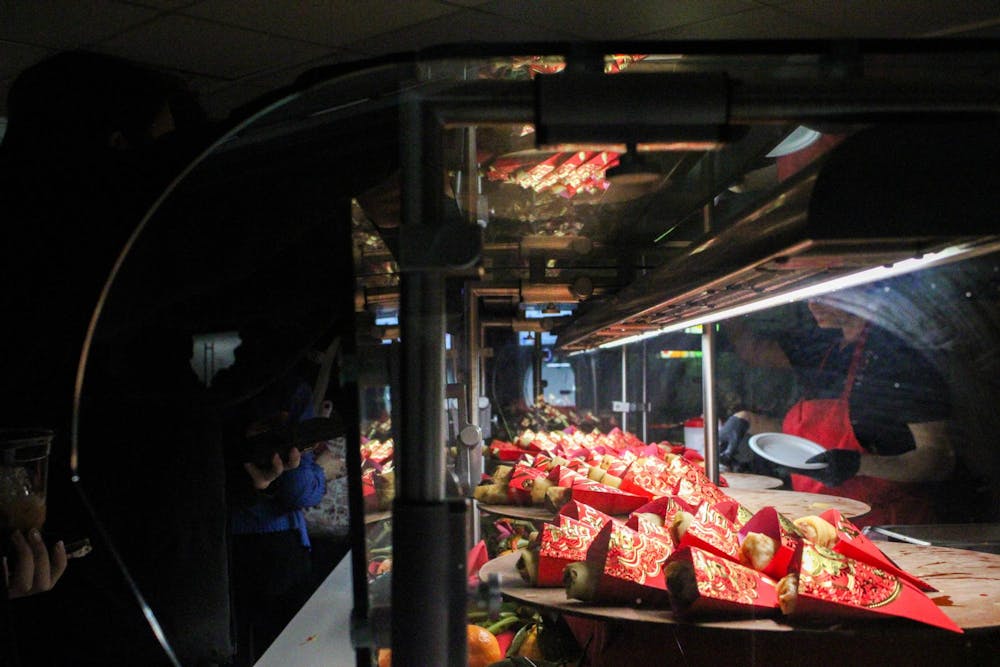
On Feb. 19, Andrews Commons had a line out the door. Surrounded by spring couplets and symbols of prosperity, students gathered to ring in the new year at the Chinese Students Association’s Lunar New Year Feast.
Student groups gathered across campus to observe the Feb. 17 new year — events included a Tết Celebration hosted by the Vietnamese Students Association and a dumpling making event by Brown-RISD Hong Kong Student’s Association.
The Herald spoke to organizers and eventgoers to learn more about the planning and cultural significance of each of these events.
Athena Deng ’27, one of the organizers of the event and vice president of CSA, estimates the Feb. 19 dinner attracted several hundred students.
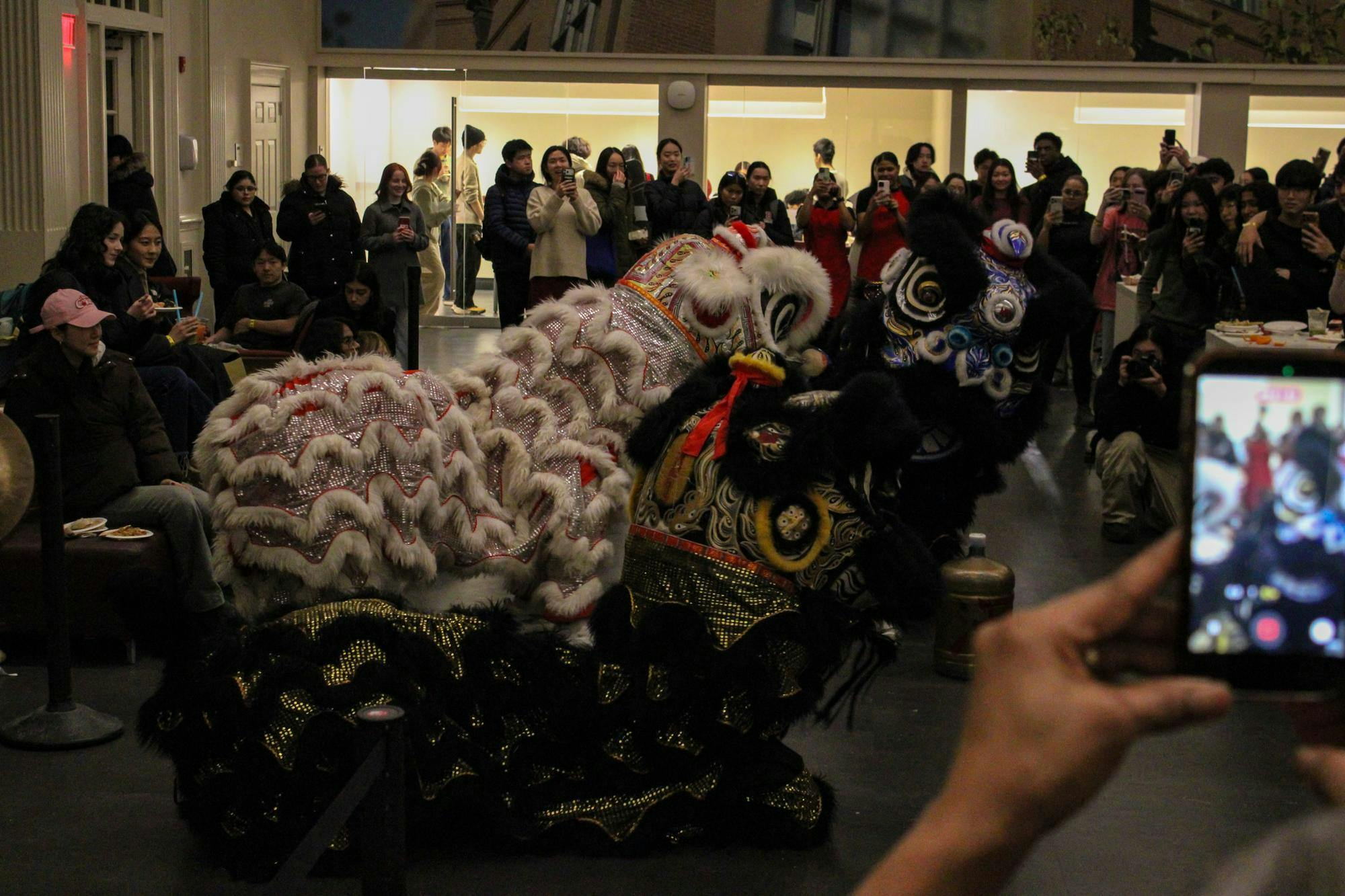
At the feast, speakers blasted Chinese-language music from a variety of time periods, ranging from modern Jay Chou music to older songs like “Yi Jian Mei” by Fei Yu-ching. Dancers from Brown Lion Dance also energized the room with a lively act, followed by the Gendo Taiko club’s booming drum performance.
Food served on small plates included bok choy, mandarin oranges and spring rolls in red envelopes. Thomas Liu ’29 said he liked “all the different types of food incorporated.”
Continuing the celebrations, the VSA hosted a Feb. 20 Lunar New Year Festival in The Underground Coffee Company on Friday. According to organizer and VSA first-year representative Helen Banh ’29, the festival is one of the group’s biggest events. At least 50 people attended, Bahn estimated.
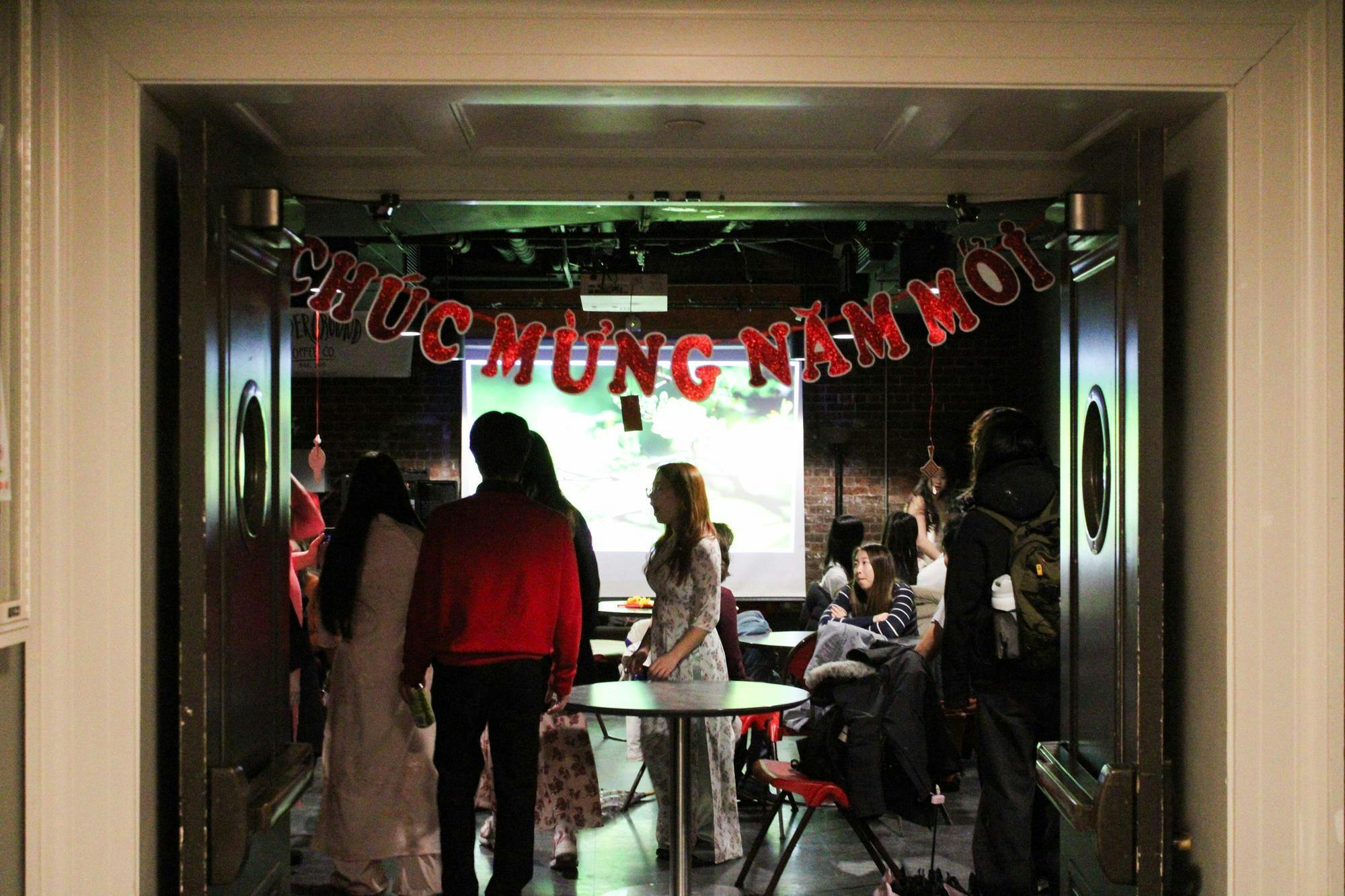
“We’ve been planning this for months, since before winter break,” Banh told The Herald. “There’s been so much planning going into it, going into food, what activities we’re doing.”
Chatting students filled the small space in the basement of the Stephen Robert ’62 Campus Center, with many in áo dài dresses. Traditional foods lined the counter — including dumplings and numerous desserts. Red decor adorned the ceiling, and red cloth hung in the corner served as a photo booth.
While the activities for the festival change each year depending on the VSA planners in charge, Brian Huynh ’26, a VSA senior advisor, notes that consistently “a lot of people from non-Vietnamese backgrounds also come to (see) how we celebrate as well.”
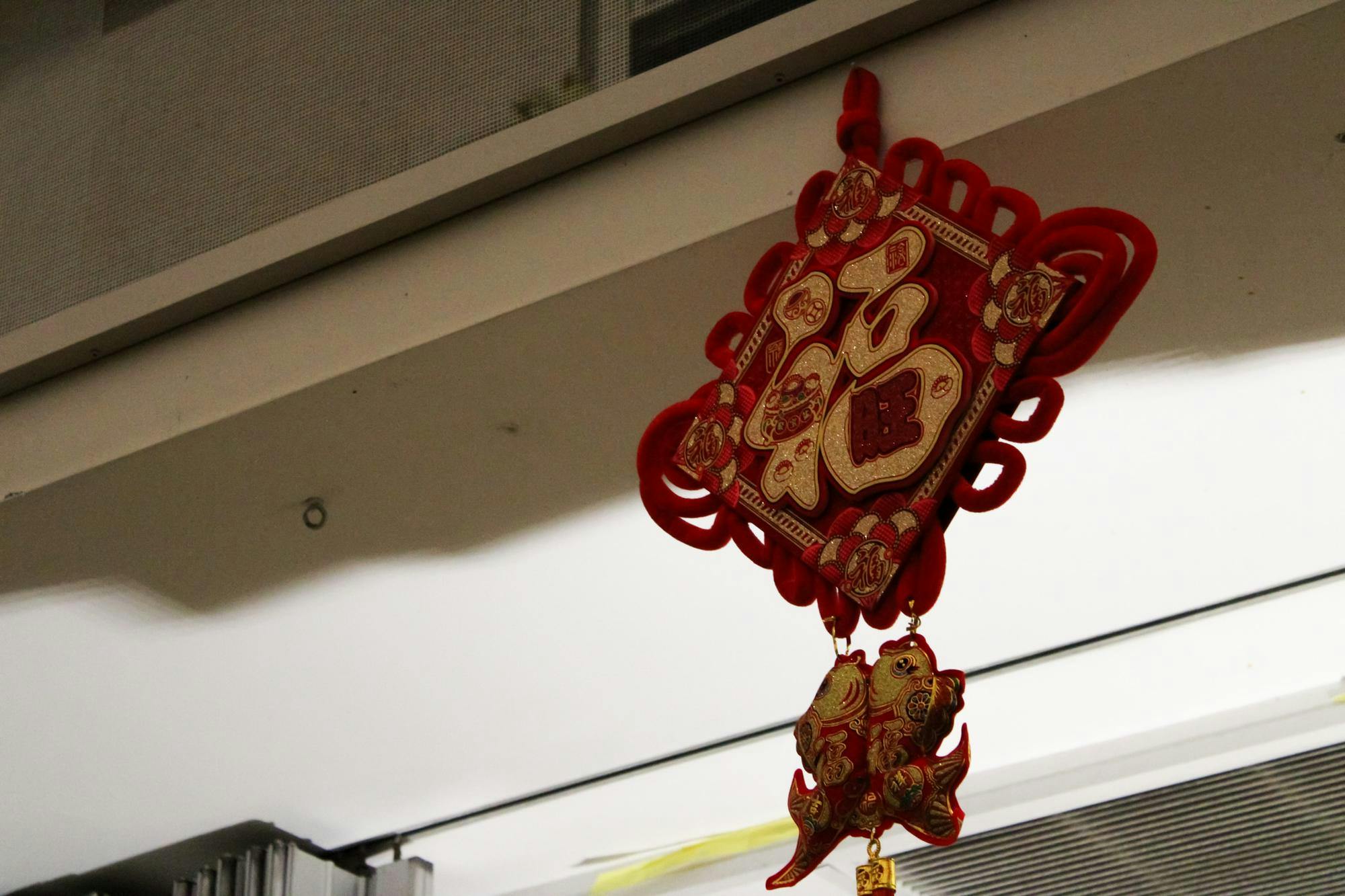
In Vietnam, Lunar New Year — or Tết — is celebrated for three days, according to Visiting Lecturer of Vietnamese Trang Tran. On the first day, students visit their father’s side, the second day, their mother’s side and, on the third day, they “usually come together to visit the old teacher,” she said.
On Feb. 18, the HKSA celebrated with a Lunar New Year dumpling making event. While the skins for the dumplings came from Good Fortune, an Asian supermarket, participants were responsible for making their own filling, according to organizer and HKSA Creative Director Alysha Lai ’28.
Lai said that in the United States, it takes more effort to celebrate the holiday than it does in Hong Kong. In Hong Kong, supermarkets are stocked with traditional foods when the Lunar New Year rolls around, while few American stores make similar offerings.
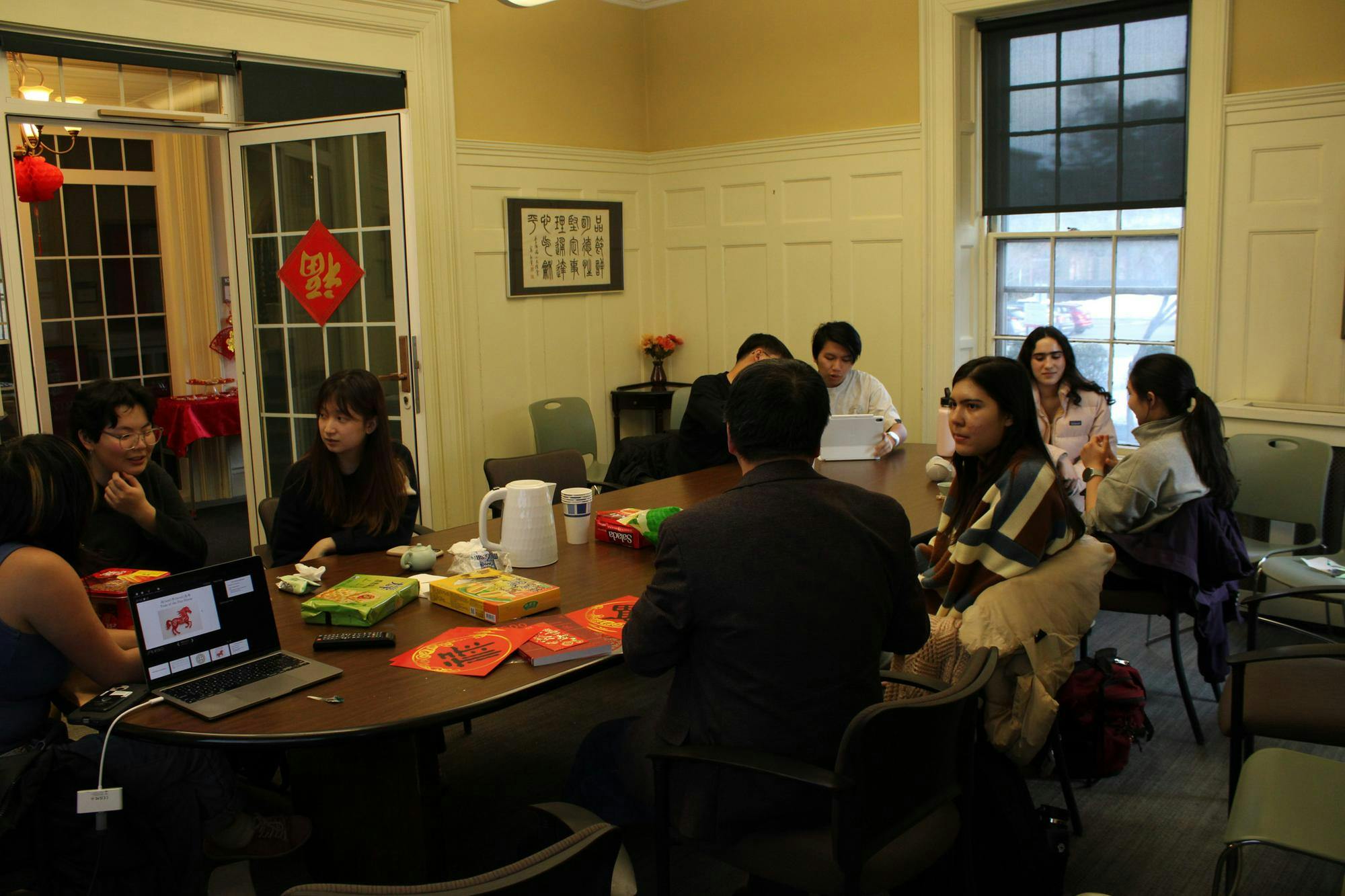
The Department of East Asian Studies also hosted events such as a Lunar New Year themed tea time during which students conversed in Chinese and ate a variety of Asian snacks like pineapple tarts.
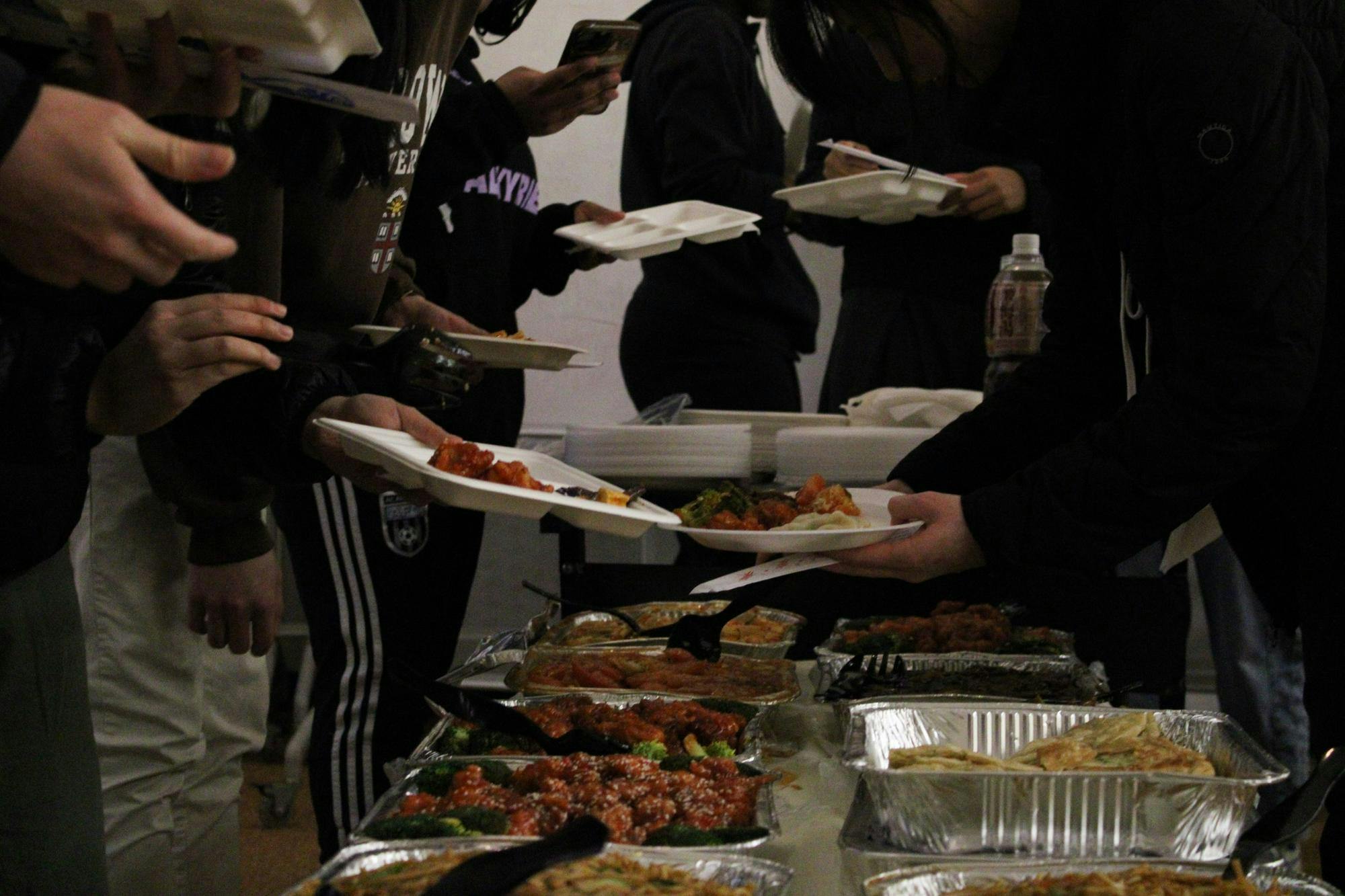
Students, teaching assistants and professors also attended an event hosted by the department, where participants feasted on a spread of foods ranging from Sichuanese cuisine’s mapo tofu to tomato egg and pork dumplings.
In the Philippines, where Alexa Theodoropoulos ’27, an op-ed contributor for The Herald, hails from, Lunar New Year is "like Christmas" in the United States. During the holiday, people “often spend the night eating a lot of traditional foods and watch(ing) parades on the streets.”
In the neighborhood where Theodoropoulos grew up, there would be “a lot of lion and dragon dances, parades, music, pop-up street vendors and special dining offers.”
Theodoropoulos and her fellow students in the Southeast Asian Studies Initiative went to Rong Chic to celebrate the Lunar New Year with a family-style dinner. Most wore red to celebrate, which brought back childhood memories of Lunar New Year in the Philippines for Theodoropoulos.
For Brian Kao ’26, senior advisor for Brown Taiwan Society, Lunar New Year in Taiwan begins with dinner on the eve. Kao’s family, who are vegetarians, have “been deviating from such a traditional dinner for a while.”
But his family still continues the night with board games, mahjong and the burning of paper money.
Associate Teaching Professor of East Asian Studies Liwei Jiao said that for a typical Lunar New Year at home, he would “of course, make dumplings.” According to Jiao, the holiday serves as a good reminder to appreciate one’s ancestry and heritage.
“It’s not only a festival to eat some good food, to also have fun, but it’s a good time to reflect (on) your tradition,” he said.