
Filmmaker Jafar Panahi has a long history with the Iranian government. In 2010, Panahi was sentenced to six years in prison and banned from creating films for 20 years for anti-government propaganda. In 2022, he spent seven months in jail and last December, he was given a one-year sentence and a travel ban in Iran. But these encounters with the Iranian government have not dissuaded Panahi from his filmmaking.
His latest project, “It Was Just an Accident,” was shot in secret without governmental approval. The film — which is nominated at the upcoming Academy Awards for Best Original Screenplay and Best International Feature Film — grapples with the far-reaching effects of the repressive Iranian regime on the everyday lives of the country’s people. Revealing the ever-present trauma weaved into the lives of its characters, the film’s pondering on morality is one that will sit with audiences for years to come.
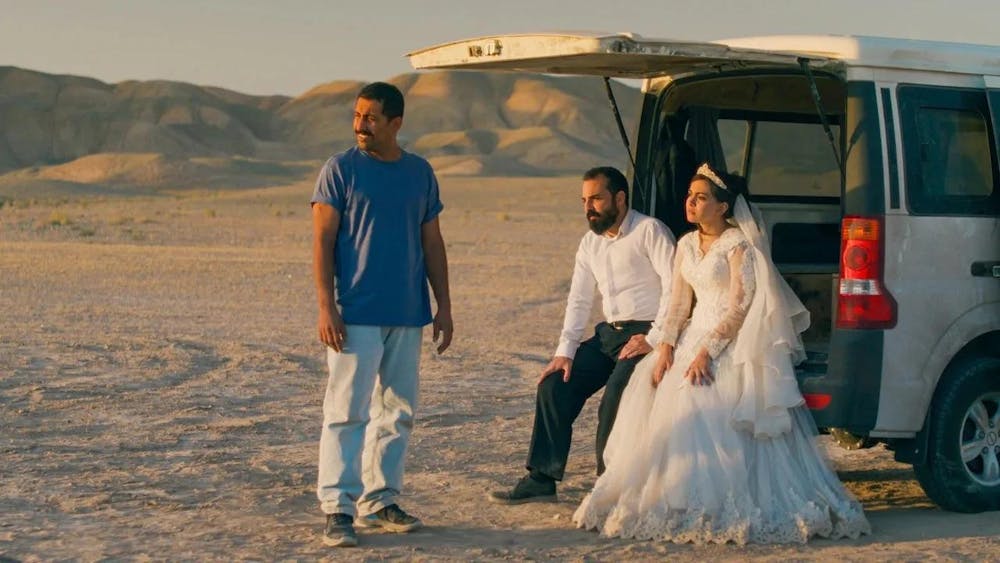
The movie follows Vahid (Vahid Mobasseri), an Azerbaijani mechanic struggling to exact revenge upon a man (Ebrahim Azizi), who asserts that he is not Vahid’s former captor, Eghbal. Vahid travels around Tehran to confirm the man’s identity, visiting Shiva (Mariam Afshari), who is taking photos for Goli (Hadis Pakbaten) and Ali (Majid Panahi), a couple preparing for their wedding.
The mere mention of Eghbal’s name unearths years of buried memories in Shiva and Goli, both of whom were imprisoned and abused. Pakbaten effortlessly portrays these complex emotions that overcome Goli and ruin her pre-wedding bliss.
Despite vivid memories of imprisonment recalled by the group, none of them are able to confirm the man’s identity — they were all blindfolded while Eghbal inflicted psychological and physical torture upon them. These conditions prop up the mystery of the film: The group cannot recognize the man by his physical identity. Instead, they are only familiar with the characteristic squeak of his prosthetic leg, which led to the prisoners giving him the nickname “peg leg.”
Although only a few members of the film’s cast are professional actors, they provide convincing portrayals of Iranian political prisoners overcome by the traumas of their past. Later in the film, Hamid (Mohamad Ali Elyasmehr), another political prisoner, gives a powerful performance of absolute rage after seeing the man.
Hamid encourages the group to kill the man for his crimes, but his revenge plan is thrown into jeopardy after the group receives a call from the man’s young daughter (Delmaz Najafi). The group is faced with an ethical dilemma: to kill the man and find closure, or to help his daughter bring her mother (Afssaneh Najmabadi) to the hospital. This is where the performances of Mobasseri and Afshari truly shine, as they navigate helping the daughter while weighing the implications of killing her father, their abuser.
In keeping the identity of the man secret until the final moments of the film, Panahi himself casts doubt on whether murder is a justifiable form of revenge in this situation. This choice, alongside Azizi’s portrayal of the emotional, pleading man — who is blindfolded and tormented by the group — makes the audience question the nature of the characters’ actions.
This group of political prisoners, permanently traumatized by the abuse they faced at the hands of the Iranian government, desperately wants to wreak vengeance on their captor. But the film begs the question: When, if ever, is it morally permissible for one to inflict their abuser with the same pain that was imposed on them?
Manav is a senior from Indiana, concentrating in International and Public Affairs. In his free time, he likes attempting the daily Connections puzzle or falling down Wikipedia rabbit holes.


