
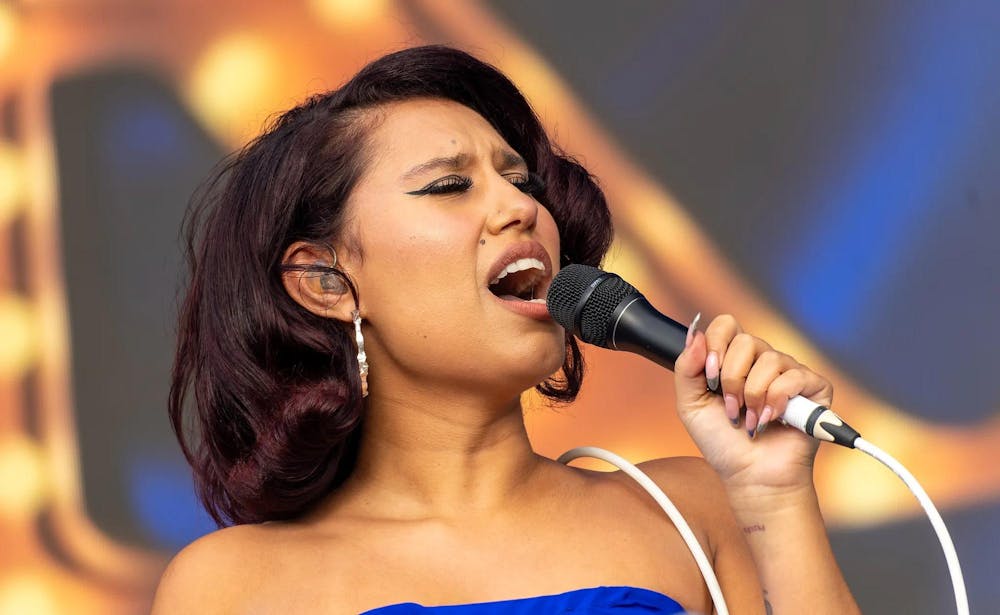
On March 27, British singer-songwriter Raye released her second studio album, “THIS MUSIC MAY CONTAIN HOPE.” Seamlessly blending jazz and alternative pop, the album tells a personal story of heartbreak, healing and hope.
The project follows Raye’s 2023 studio debut, “My 21st Century Blues,” which featured the breakout single “Escapism” and earned the title of 2024 British Album of the Year.
The album marks Raye’s artistic shift from mainstream pop toward a more diverse, experimental sound. While the singer’s earlier tracks — including hits “Escapism” and “Oscar Winning Tears.” — conform to conventional pop music, Raye’s newest record is much more ambitious. With new vocal and rhythmic ranges, she explores a nuanced delivery of resilience and strength that coexists with softness and vulnerability.
The record’s second track, “I Will Overcome.,” sets the album’s tone with attention-grabbing theatrical narration and instrumentation. The following tracks, while busy and overwhelming, build unique characters to tell a story chronologically over 73 minutes.
One of the first characters listeners meet is “the South London lover boy.” In the third track, Raye warns about his allure and mystery, singing he’s “not looking for a heart, just your pillow to rest his head.”
“The WhatsApp Shakespeare.” offers similar commentary on deception in relationships, with a dark humor that cleverly incorporates playful lyricism such as “Run, Juliet, run, Juliet, run / Silence all notifications.” These blunt, authentic lyrics allow listeners to empathize with the frustrations of modern-day heartbreak.
The album’s production is ambitious yet powerful, drawing heavily on jazz, blues and cinematic arrangements that feature instrumental solos and dramatic tonal shifts.
“Click Clack Symphony.” is a brief relief from the strong brass of the album as Raye leans into a more cinematic style with the help of Hans Zimmer, a German film composer and music producer. The song also includes orchestral-pop musical arrangements featuring the world-renowned London Symphony Orchestra.
The sound contributes to the album’s genre-bending style, which sets Raye’s work apart from other new releases in the pop genre. On first listen, the album’s chaotic nature overshadows its intimacy. But as listeners become familiar with the sound, the production feels intentional rather than overbearing.
The range of Raye’s vocal performance grounds the album’s emotion, moving between softer conversational cadences and moments of forceful narration. These shifts are accentuated by Raye’s immense technical control, allowing her to masterfully transition between jazz phrasing, theatrical delivery and pop melodies.
While the length and sound of the 17-song project can feel overwhelming, this sonic discomfort seems to be the purpose of the album. In an era when much of pop is tailored to efficiency and virality, Raye’s courage to create something messy, theatrical and personal stands out.


