Over the past month, students celebrating Ramadan have altered their daily schedules to accommodate prayer and fasting from sunrise to sunset. In order to support these students, the University has worked with the Office of the Chaplains and Religious Life, the Brown Muslim Students Association and Brown Dining Services to provide community gatherings and flexible food options.
“Many Muslim students are concerned with the effect that fasting will have on their productivity,” Associate Chaplain of the University for the Muslim Community Imam Amir Toft wrote in an email to The Herald. He noted that there is also an emphasis on nighttime worship during Ramadan, “which even many of the more nocturnal students find demanding.”
“Even though most students observe Ramadan with poise and continue to perform exceptionally well in their work, the month nevertheless disrupts the regular rhythms of the day,” he added.
Though Ramadan entails a different eating schedule and set of responsibilities, “the community at Brown is supportive and accommodating,” Sadik Aref ’28 wrote in an email to The Herald.
The BMSA has organized events to enrich students’ experience during the month, according to BMSA vice president Tanvin Araen ’28.
The BMSA organizes halaqas, or group gatherings for the discussion of Islam and the Quran, throughout the month of Ramadan, Araen said. These discussions cover tenets of Islam, like the tenet of patience, and how they connect to Ramadan.
“Ramadan fasting, that’s all about patience,” he added.
For many students, this Ramadan is the first they have spent away from their families.
“For some, being away from family during Ramadan for the first time is a lonely experience,” Toft wrote. “For others, it’s an exciting new opportunity.”
Several students have told Toft that “observing the month with an intimate group of friends was one of their best Ramadan experiences and made them appreciate and enjoy Ramadan even more when they returned home,” he wrote.
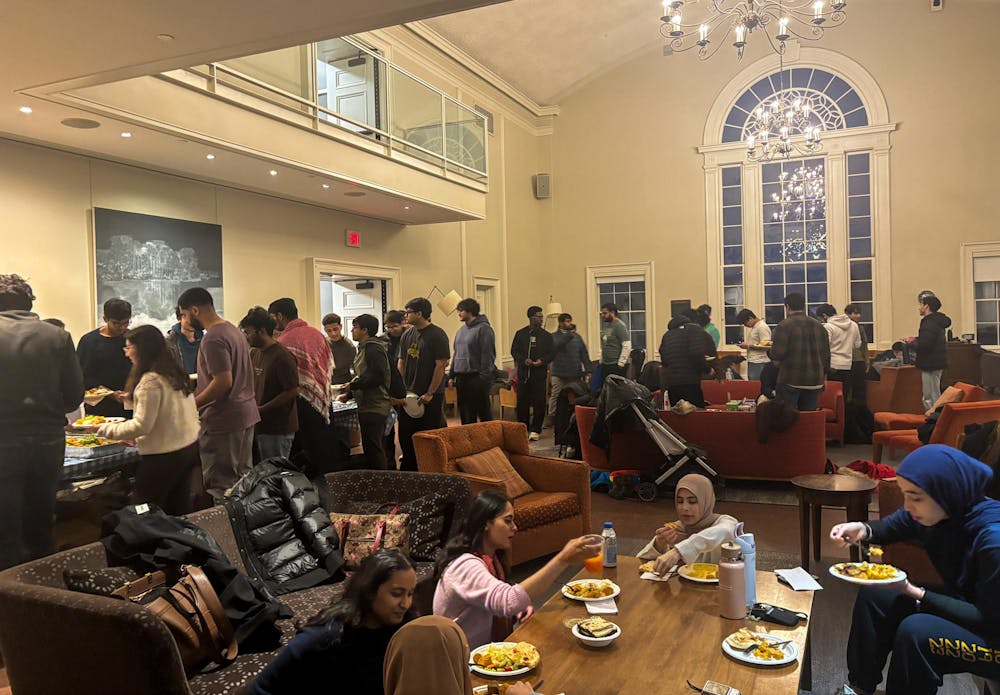
One of the ways that community is fostered is through iftars, or fast-breaking dinners after sunset. The meals, which typically draw between 60 and 120 people each night during Ramadan, are “probably the biggest undertaking” for the Chaplaincy, Toft said.
“Brown is one of few places that I know of to have iftar every night on campus,” he wrote. “It’s a big undertaking, but it’s extremely important because it brings together the community during a holy month in a way that they don’t have a chance to do at other times of the year.”
In addition to iftars, the Office of the Chaplains and Religious Life has hosted nightly prayers that include readings from the Quran. This year, a guest imam has joined Toft to lead the prayers.
During Ramadan, BMSA collaborates with several schools across Rhode Island — including Bryant University and the University of Rhode Island — to host a joint iftar each year. This year, it took place in Sayles Hall on March 15.
The joint event featured Arman Markar — a social media influencer who creates content about Islam — as a guest speaker, Araen said. He added that this event is “one of the most exciting events we have during Ramadan.”
“It was great,” Hafeey Shah ’29 wrote in a message to The Herald. “Being able to eat a couple of dates, drink some water and then pray together after is what made it a really special event.”
This year, Dining Services expanded its offerings at Josiah’s to accommodate students who are fasting. The menu has offered halal paninis, chicken wings and quesadillas, as well as a halal beef burger available three nights per week, Director of Residential Dining Steven Oswald wrote in an email to The Herald.
“These menu offerings were planned in collaboration with (Toft) to ensure we are meeting the specific needs of the community,” Oswald wrote.
Toft noted that the increased halal offerings at Josiah’s have made it “much easier for fasting students to get something to (eat) at night, when the other dining halls are closed.”
Shah noted that Dining Services’s reusable container program, which allows students to take food to go from dining halls, has provided him with a “nice system” to package food to eat later.
While fasting can disrupt students’ normal routines, “the community feels vibrant in Ramadan,” Toft wrote.
“I don’t think there is a more beautiful time to be a Muslim at Brown,” Araen said.