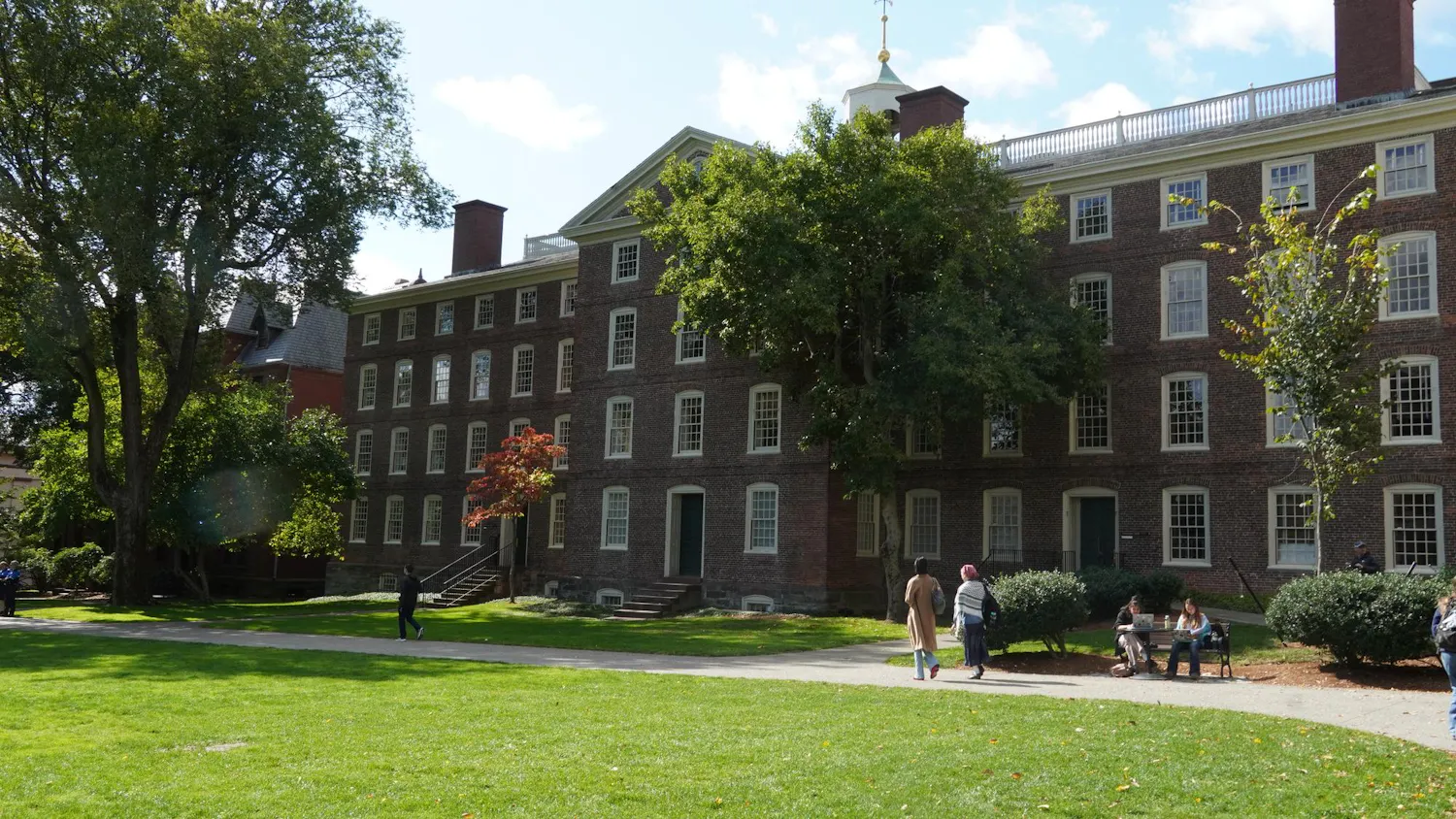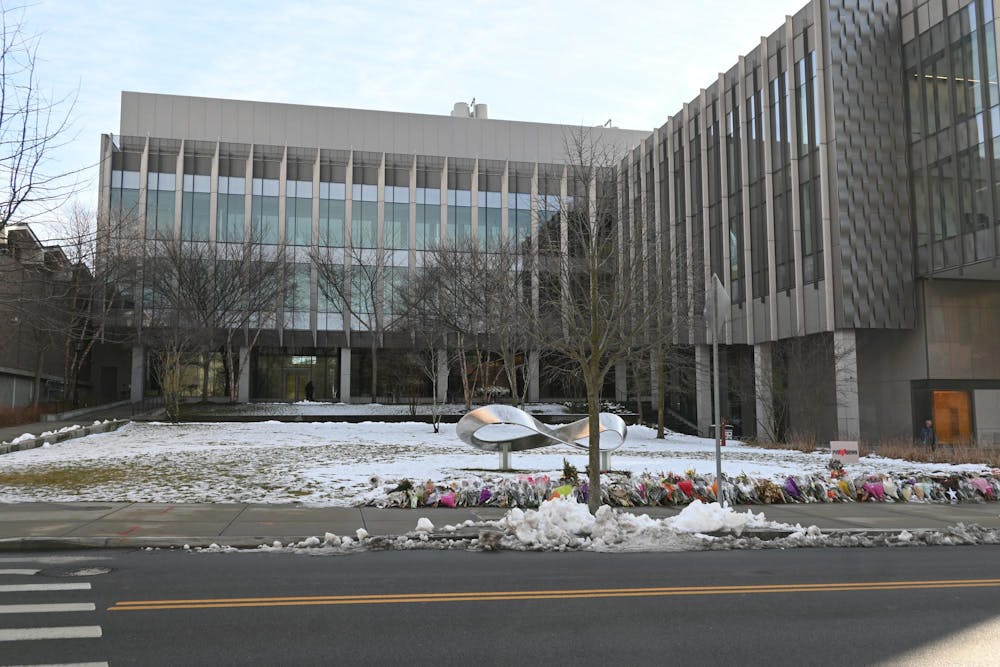
In a United States Senate Appropriations Committee hearing on Tuesday, Alabama Sen. Katie Britt attacked Brown’s security preparedness for the Dec. 13 shooting. Britt stated that Brown violated the Clery Act — which the University is currently under investigation for — which stipulates requirements for security and safety on university campuses.
Britt is a Republican senator from Alabama, the home state of Ella Cook ’28, who was killed in the shooting.
The hearing was a review of the Department of Education’s 2027 budget proposal, and senators were given turns to ask U.S. Secretary of Education Linda McMahon questions.
Britt began her time by acknowledging that the Education Department is investigating Brown after the Dec. 13 shooting and that McMahon might be limited in what she can share.
“Public reporting from local stations and student news outlets has made it clear to me that the murder of Ella Cook, her fellow classmate and the wounding of nine others were entirely preventable,” Britt said in the hearing. “They were the predictable result of more than a decade of ideological degradation and the vilification of police and law enforcement at Brown.”
“Brown did nothing,” Britt repeated throughout her statements.
University spokesperson Brian Clark wrote in a statement to The Herald that “there should be no ambiguity about Brown University’s enduring commitment to maintaining a safe and secure campus.”
“The December 13 shooting represented an unprecedented and tragic event,” he wrote. He also pointed to the two reviews Brown has hired global consulting firm Teneo to conduct — one after-action review and one comprehensive campus safety and security assessment — as part of the University’s “effort to fully assess Brown’s readiness, preparedness and response as part of our longstanding and consistent efforts to protect our campus from harm.”
In a statement shared with The Herald following the hearing, Britt’s office wrote that “Senator Britt demands that Brown University protect its students.”
“If the University had listened to the concerns of law enforcement with a fraction of the energy it paid to liberal activists over the past decade, Ella Cook, Mukhammad Aziz Umurzokov and Nuno Loureiro may be alive today,” the statement continued.
At the hearing, Britt gave a list of events that she saw as evidence of what she saw as the degradation and vilification of police at Brown, including increases in Brown’s budget for expenses related to diversity, equity and inclusion initiatives, student criticism of Brown’s camera surveillance, canceled lectures from police officers, theft on campus and votes of no confidence in campus security leadership.
Britt emphasized a 2021 incident in which students were evacuated from campus buildings after a bomb threat in which the perpetrator claimed to have an automatic firearm. The threat mirrored similar threats and other Ivy League schools at the time. She also referenced a 2023 incident where a Department of Public Safety officer raised concerns about a potential threat of a shooting at Brown.
“Michael Greco, after 18 years as a Brown police officer … was one of the ones that responded to this incident,” Britt said of the 2021 bomb threat. “He testified under oath that during the 2021 AR-15 and bomb threat, leadership explicitly ordered responders off recorded radio channels, deliberately concealing an active shooter threat from the Providence Police (Department) and the federal Clery oversight act.”
With regards to the 2021 bomb threat, Clark wrote that DPS officers “made direct contact” with the Providence Police Department “after an initial assessment of the threat.”
“Brown and other campuses across the country continue to contend with frequent swatting incidents, and Brown’s Department of Public Safety and Emergency Management takes a careful and judicious approach to each incident,” he added.
Britt raised security concerns that she saw directly leading to the shooting. In fall 2025, the Brown University Police Sergeants Union and Brown University Security Patrolperson’s Association issued votes of no confidence in DPS leadership.
In early April, then-Brown Police Chief Rodney Chatman, who was placed on leave following the shooting, was officially replaced by current Vice President for Public Safety and Emergency Management and Chief of Police Hugh Clements, who had been serving in an interim role since December.
Britt also mentioned the time gap between the first reported emergency call at 4:05 p.m. and the emergency alert sent out to students at 4:22 p.m. “Instead of activating (the) campus emergency alarm system, Brown waited 17 minutes, knowing that there was an active shooter on campus, to alert students of that threat,” she said. She also criticized a lack of active security cameras.
Previously, at a December press conference, Paxson explained that Brown’s emergency siren system was not deployed during the shooting because it is used to instruct community members to “rush into buildings,” which “could have caused people to rush into Barus and Holley” during the shooting.
“Brown University’s leadership didn’t just fail to protect its students,” Britt said. “They actively, actively dismantled every layer of protection that could have stopped this massacre and prevented the murder of an MIT professor two days later,” she said, referring to the Dec. 15 fatal shooting of Massachusetts Institute of Technology Professor Nuno Loureiro, which was found to have been committed by the same individual.
“We are committed to protecting the safety of students, faculty, staff and visitors to our campus, and Brown’s consistent actions over many years demonstrate that commitment,” Clark wrote to The Herald.
Britt finished by stating that in her view, Brown violated the Clery Act. She asked McMahon to confirm that the Education Department is investigating Brown’s compliance with the Clery Act “in a timely and thorough fashion.”
Brown is currently under federal review for compliance with the Clery Act for the events surrounding Dec. 13. The University stands to face fines and lose access to federal financial aid if the Education Department finds Brown to have violated federal campus safety regulations.
“That’s a chilling account,” McMahon said, adding that the department is “aware of a lot of these allegations” and that they are “actively” conducting the investigation.
According to Clark, Brown is fully complying with the Clery Act review and emphasized that the Clery Act “does not provide specific requirements for colleges and universities on aspects of campus safety and security such as building access controls, cameras or other physical security systems.” Clark added that it is “not uncommon” for the government to undertake program reviews after major safety incidents on college campuses.
On Thursday, lawsuits were filed for three students injured in the shooting who are suing Brown for alleged security failures, seeking over $10,000 in damages. Britt and one of the complaints both mentioned how Derek Lisi — a custodian who works in the Engineering Research Center, which is connected to Barus and Holley — said he saw the shooting suspect casing the building for weeks before. Britt and the complaint also both mentioned the suspect’s claims — which were released in transcripts of videos made before his death — that he had been planning the shooting for six semesters and had had “plenty of opportunities” during that time.
This is a developing story. Check back for more updates.
Jeremiah Farr is a senior staff writer covering university hall and higher education.