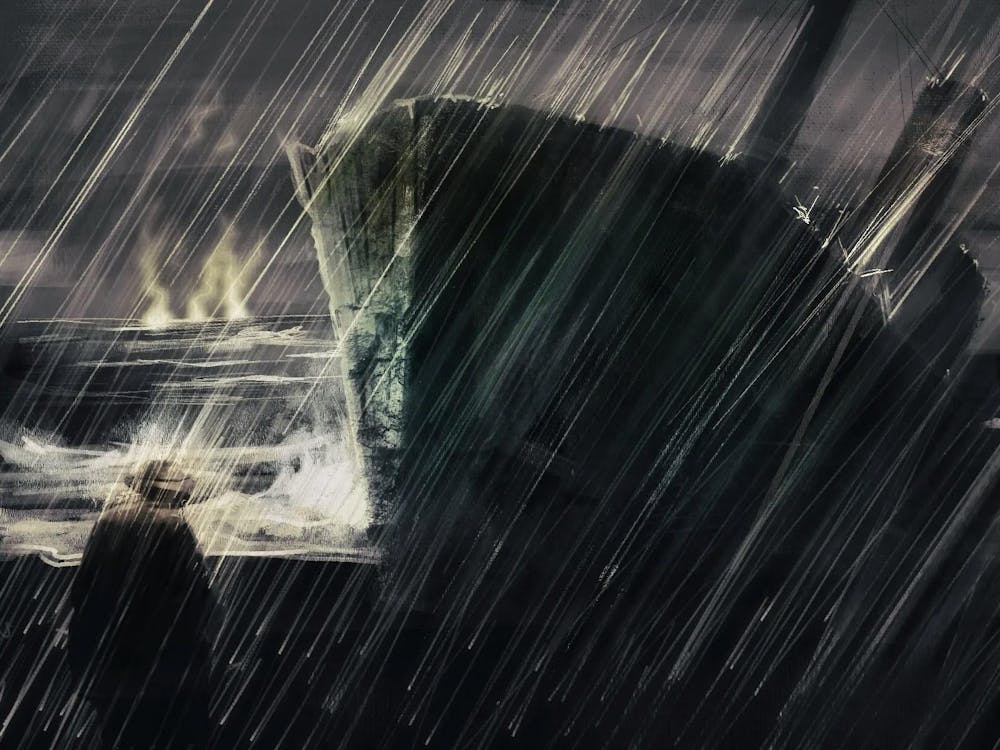
Imagine you are a 19th-century shipowner about to send one of your vessels to the New World, carrying a cargo of hopeful families seeking a better life. While your ship has historically been sturdy, she has seen many rough seas and often needs repair. Doubt begins to creep into your mind about whether your ship is truly safe. If, nonetheless, you follow through and send this ship out to sail, should disaster befall the voyage, are you morally liable for what happens to these families?
This is the thought experiment posed by the British mathematician and philosopher William Kingdon Clifford in his treatise, “The Ethics of Belief.” In it, he argues that it is wrong to believe something without sufficient proof. Once you’ve evaluated the whole of the evidence available, you should have no doubt in your conviction. In other words, it is unethical to weakly believe in anything because all our beliefs, in some way, affect others: convincing yourself the boat is safe may help assuage your conscience, but it will not protect those aboard. I am reminded of Clifford’s ship and our moral imperative to have conviction each time I sit down to write my columns at 88 Benevolent St. Writing for The Herald has taught me one of life’s most important lessons — how to believe strongly.
In college, among many other skills, we learn how to debate ideas and find facts. But it’s not enough just to believe something passively. You have to internalize it. As overachieving Brown students, many of us will end up in positions of power and influence. The decisions we make today matter, and all the more so the ones we will make in 20 years. By writing columns, I have forced myself to regularly publicly declare what I believe, no matter how controversial. But even more so, I have forced myself to probe the basis of my beliefs and back them up. Then, I must subject them to the strict scrutiny of The Herald’s editors. By the end, in about 900 or so words, I explain why my perspective is, if not correct, intentional. This process is creatively destructive — as I follow the evidence, my beliefs must too evolve and oftentimes, my published columns bear little resemblance to their first drafts.
This is why I write. In my three and a half years as a Herald columnist, editor and editorial page board member, I have contributed more than 30,000 words to this paper. I have written about our government’s abandonment of science, progressive policy failure, institutional neutrality, our desensitization to tragedy, career funnelling, affirmative action, financial aid, student government, college rankings and countless other topics. I write because I care deeply about these ideas. But more than that, I write because I am trying to convince myself of their truth. My hope, each time I publish, is that if I was able to convince myself and one highly skeptical senior editor of opinions, perhaps I may too convince you, dear reader. At the very least, I hope my work inspires you to think more deeply about the subject at hand and challenge assumptions you might hold. If I have done my job correctly, then you, too, might believe strongly, regardless of whether you agree with me or not.
Journalism is a tireless pursuit. My family often asks why I, as someone attending medical school next year, have spent countless hours, week after week, working for a newspaper. But in working at The Herald, I have learned firsthand what it means to have had a liberal education. Immanuel Kant believed that the free public use of reason “alone can bring about enlightenment.” Writing in a public forum, such as The Herald, is the embodiment of this enlightenment. At a time when institutions such as Brown and the press face constant threats, we must redouble our commitment to speaking even when it is difficult to do so. When our beliefs are strong, and rooted in truth, then we have nothing to fear except the fear of leaving things unwritten.
College is a period of unique, boundless academic discovery. These insights can flip our world upside down. This must not frighten us. If we spend our four years on College Hill unwilling to change our minds or even our core beliefs, our time will both have been wasted, and we will have been no better than the ship owner who dismissed his doubts out of hand. Only by pursuing these doubts, wherever they may lead, will you be able to sleep at night and make the impact on the world that we all have the potential to make. The Herald has given me a forum for this introspective process, and for that, I am forever grateful. As am I grateful to my countless editors for their belief in me and the readers who continue to inspire me.
Tasawwar Rahman ’26 can be reached at tasawwar_rahman@brown.edu. Please send responses to this opinion to letters@browndailyherald.com and other op-eds to opinions@browndailyherald.com.

Tas Rahman is an Opinion Editor and a member of the Editorial Page Board. He hails from Detroit, Michigan and is concentrating in Computational Biology and Judaic Studies. In his free time, you can find Tas hiking and reading the Atlantic (alongside the Herald).