Facebook groups can be pretty trivial. They tend to be either inside jokes or groups of "Family Guy" fans. So when News Feed, the oft-maligned Facebook institution, informed me that over 15 of my "friends" had joined "Brown Against Banner," a Facebook group which had over 500 members at the time, I investigated with a grain of salt.
What I found was a harsh indictment of Banner, Brown's new computer software, which - according to Brown's Banner Web site - will "integrate its student information data including admission, registration, billing and financial aid."
The anti-Banner Facebook group, which had 739 members when this column was written, focuses on Banner's effect on class registration and links to a petition with, at the moment, 169 signatures. The group page lists many problems with Banner, including its principal accusation that Banner "(threatens) to violate the very ethos of our open curriculum." "Worst of all," reads the site, "students continue to be kept in the dark."
Contrary to what "Brown Against Banner" would have you believe, Banner is a necessary and beneficial addition to the University. Not only will it improve the registration process by making it easier and more efficient, but it is also a necessary step in modernizing Brown to compete with other high-caliber universities.
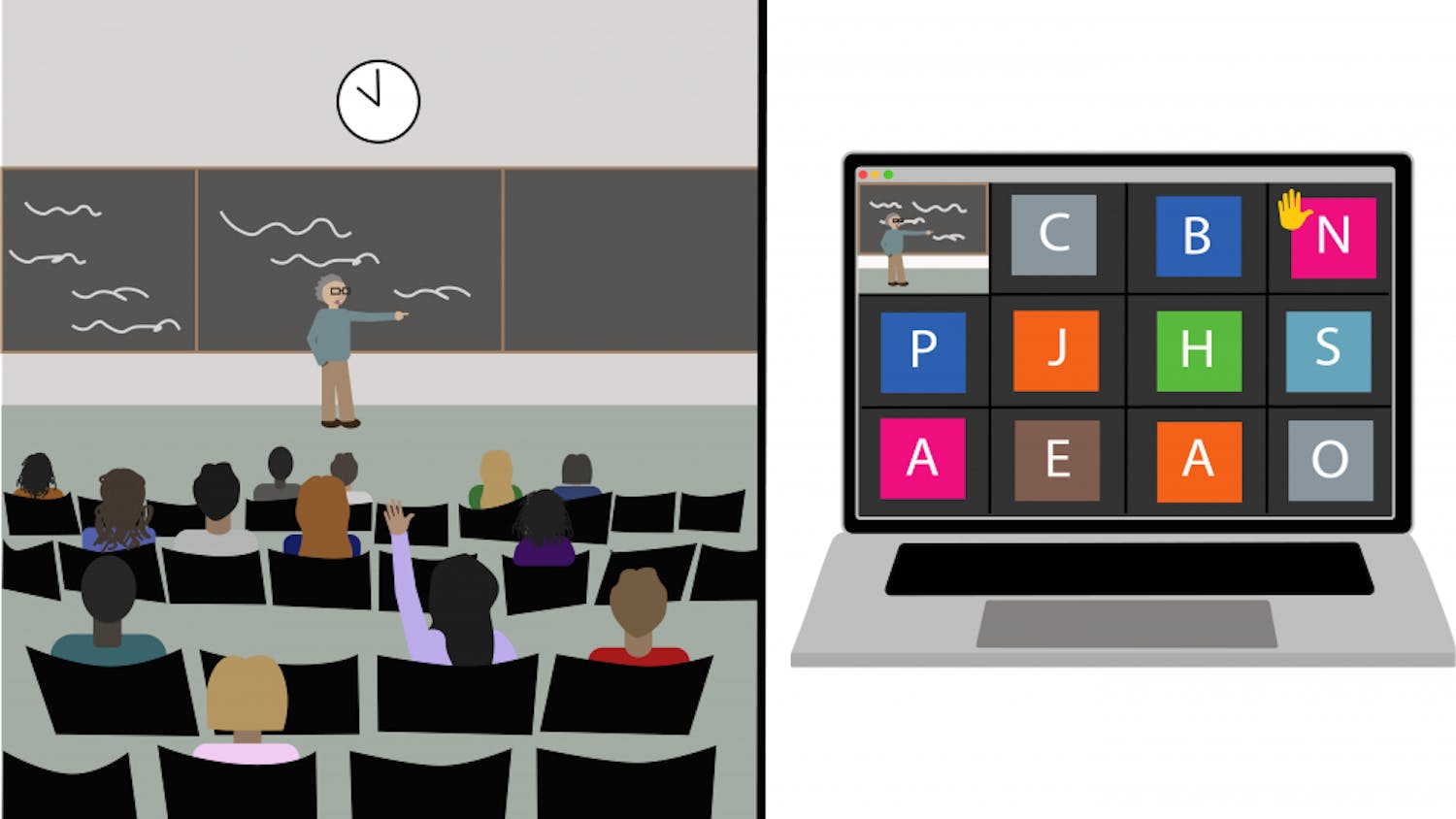
Banner, though not simply a registration program, improves registration in a few important ways. First, class registration will now be done primarily online. Instead of using add/drop forms and pre-registration cards, students will go online to choose their next semester's courses. Banner will allow students to add and drop courses online, without going to the registrar's office for most changes. This will make course selection and the shopping period significantly more efficient.
Additionally, Banner will enforce prerequisites and enrollment limits that are decided by the professor. I interviewed University Registrar Michael Pesta, who said this will decrease the number of overflowing classrooms during shopping period, making it easier for professors to finalize their class rosters and start teaching. Before you start to fret, however, keep in mind that it will still be possible to get around limitations on registration with professor permission. Because professors can override any Banner limitation on registration, the registration process changes, but the philosophy remains. Thus, the ability to experiment with different classes exists just as it did before - students just need to be more proactive in communicating with their professors.
Finally, Banner will integrate various parts of each student's college life, centralizing our information in one place. I am looking forward to having financial aid information, billing, registration and grades all under the same online account instead of communicated to me through many different messengers.
One explanation for the strong opposition to Banner is the misinformation contained on the Facebook profile for "Brown against Banner." According to the Facebook group, registration under Banner will "violate" Brown's current curricular structure because it will enforce prerequisites. A letter to The Herald ("Banner may end 'don't ask, don't tell' registration policy," Feb. 12) also raised this issue. Thankfully, this claim is simply false. The philosophy of the Brown curriculum, easily found on Brown's Web site, "rests on the conviction that students need to be active participants in their own educations." The philosophy also emphasizes "intellectual growth" and "moral character" development. Nowhere does it outlaw prerequisites.
Pesta, who heartily encourages student feedback on Banner, explained that prerequisites have always been part of the New Curriculum. When I spoke with him, he emphasized, "We're all in this together. I don't understand this 'us against them' mentality."
The registrar is absolutely correct. Administrators, who are evaluated in part on their ability to improve student life, have no incentive to make registration unpleasant for students.
Brown Against Banner's charge that students have been "kept in the dark" is wholly false. Not only is there a Banner Web site explaining the new registration process, but according to Brown's former vice president for computing and information services, Ellen Waite-Franzen, Brown has made multiple attempts to include students in the process. In an e-mail, Franzen wrote, "(There) were quite a few other options along the way for students to learn more about the system" including several open forums that only two or three students attended. At a Tuesday night Banner forum last week, fewer than 20 students showed up. If students are in the dark, it is their own fault.
Banner does have certain drawbacks. Primarily, it relies on professors to be very responsive and tech savvy in overriding Banner to let students into a class. While I don't question the dedication of Brown professors, I often question their computer literacy and their response time when it comes to e-mail. "The system for professors to do overrides is terrible," said Dan Leventhal '07, a concentrator in computer science and one of Mocha's creators. Those in charge of Banner should work especially hard to make the professor override function an easy one.
Banner will not revolutionize the way we register for classes, but it will make students' lives easier by giving them the power to change classes from their dorm rooms. It will make preregistration more important in class selection, rewarding proactive students who plan ahead. Additionally, it will help modernize our technology and integrate the different departments so that Brown can become a truly modern university.
The transition period will definitely be bumpy, but students will survive. After all, resisting Banner is not only foolish - it's futile.
Ben Bernstein '09 writes a regular column on campus issues. If there is an issue you would like to bring to his attention, email
benjamin_bernstein@brown.edu.