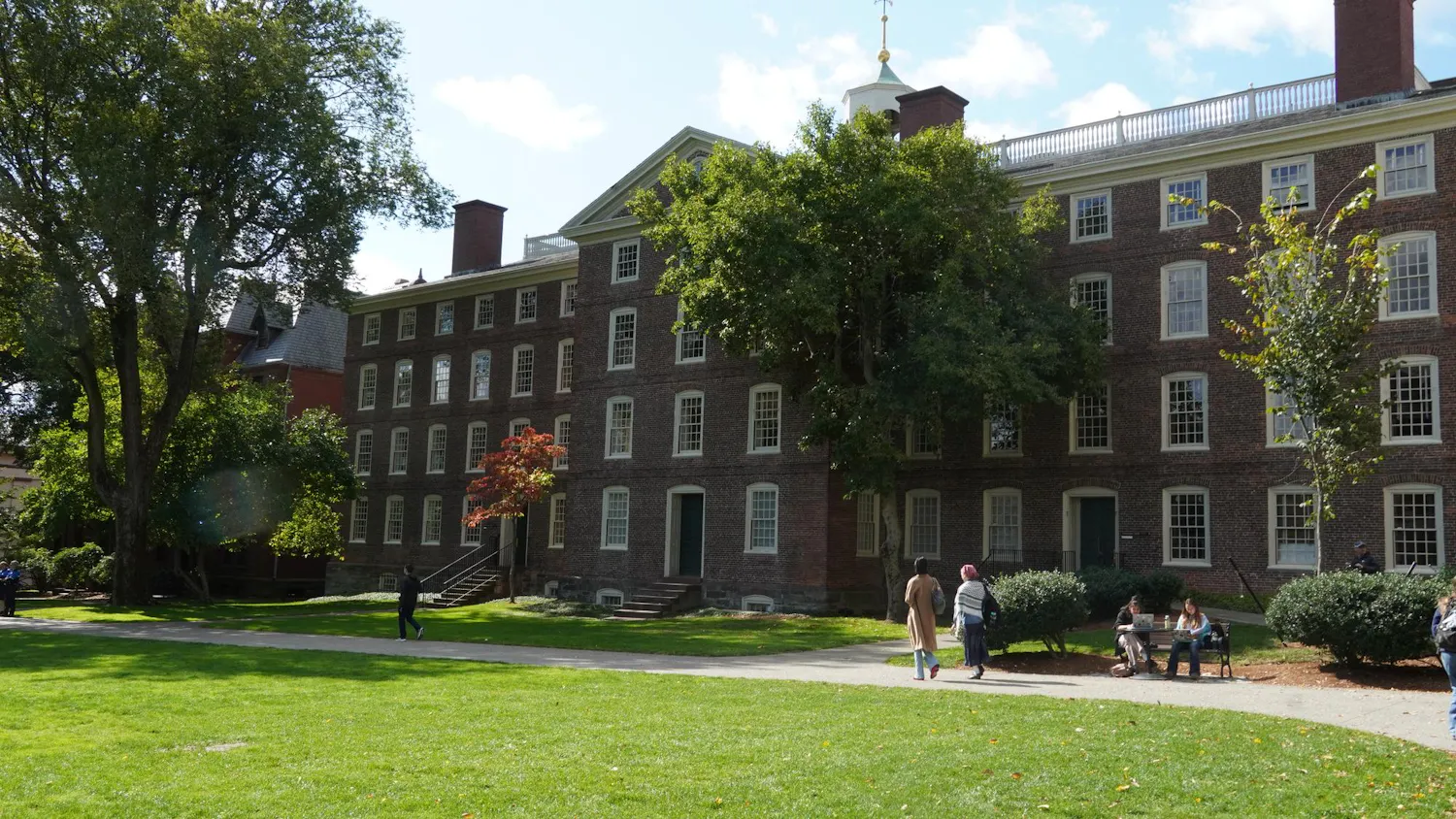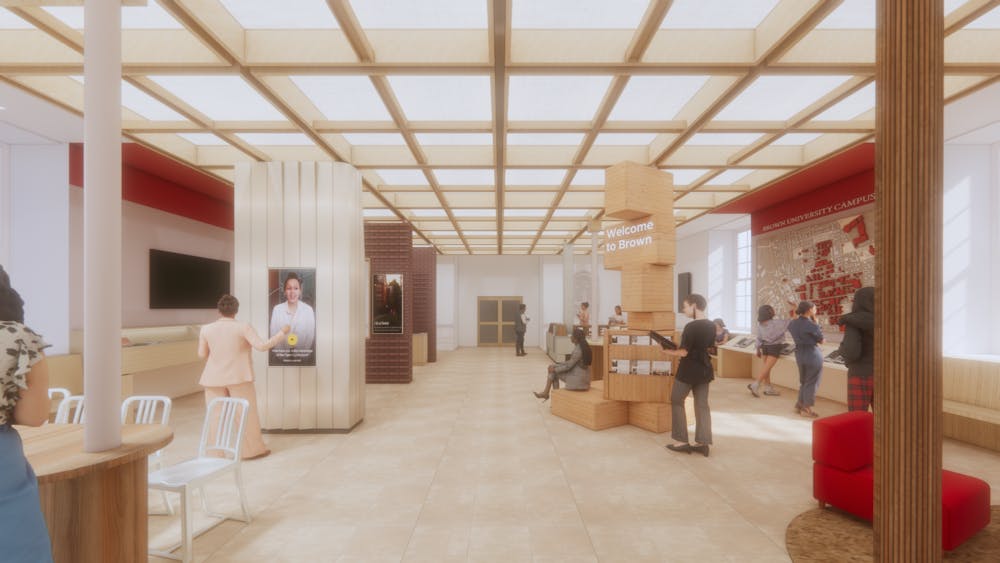
Brown plans to construct a new admissions welcome center on the first floor of Manning Hall, the University announced on May 19. Expected to be completed in October 2025, the renovated 2,400-square-foot space will serve as a starting point for campus visits and information sessions.
The first floor of Manning Hall previously housed gallery space for the Haffenreffer Museum of Anthropology, whose collections and staff have been split between Manning Hall and a research center in Bristol. Since 2023, the University has planned to relocate and centralize the entire museum to a newly renovated space in the Jewelry District, expected to open in Fall 2027.
Construction on the welcome center was projected to begin after Commencement and Reunion Weekend. The center will include graphic design elements designed by Roll Barresi and Associates, as well as interactive digital features highlighting various elements of life at Brown. Visitors will enter the space through glass doors on the west side of the building, from the Quiet Green.
“Given the tens of thousands of visitors we welcome every year, it’s really important to have a dedicated space where prospective students and families can check in, get a warm welcome to Brown and learn more in an interactive way, before stepping off for the rest of their visit,” said Logan Powell, associate provost for enrollment and dean of undergraduate admission, in a University press release.
“For some visitors, this may be the beginning of a lifelong relationship to Brown, so it’s important to have a space that reflects the warmth and belonging that are such hallmarks of the Brown experience,” Powell added.
The second floor of Manning Hall will remain home to the Office of Chaplains and Religious Life and Manning Chapel. During the summer, the chapel will be closed for renovations, but is expected to reopen for the academic year, wrote University spokesperson Amanda McGregor in an email to The Herald.
An acoustic layer will be installed between the first and second floors of the building to ensure the chapel and welcome center can be used concurrently, according to University Architect Craig Barton ’78, a professor of the practice of the history of art and architecture.
Along with the construction of the welcome center, the Office of College Admission will be relocating to the 14th floor of the Sciences Library, which is currently unoccupied. Brown intends for the former admissions office space in Providence’s Jewelry District to be leased to CV Properties for a broader redevelopment project. That project is still pending final approval and agreements, McGregor wrote.
The development of the welcome center is entirely donor-funded, McGregor wrote, adding to other donor-funding campus projects, “including the indoor turf facility under construction at Brown’s athletics complex and the renovation of the Ruth J. Simmons Quadrangle that will commence this summer.” McGregor declined to share the name of the donors funding the new center before it opens.
In a May 22 message, the University shared updates on several additional construction projects including work on Simmons Quad, Marston Boathouse and Pembroke Hall. All three projects are also entirely donor-funded.
The work on Simmons Quad includes the development of an outdoor amphitheater, with an anticipated completion date of October 2025. The construction builds on plans crafted more than a century ago by the Olmsted Brothers firm, a renowned landscape architecture group known for designing New York’s Central Park.
Construction progress on the William A. and Ami Kuan Danoff Life Sciences Laboratories in the Jewelry District will also continue this summer, according to the press release. Previously, the University said that they might pull back its investment from the lab due to federal funding cuts, which were challenged and blocked in court.
Correction: This article has been updated to reflect the accurate date of a University press release and the reasoning behind the reconsideration of construction of the William A. and Ami Kuan Danoff Life Sciences Laboratories. The Herald regrets the error.

Ciara Meyer is the managing editor of newsroom and vice president of the 136th Editorial Board. She is from Saratoga Springs, New York and plans on concentrating in Statistics and English Nonfiction. In her free time, she loves scrapbooking and building lego flowers.