On Wednesday, Bloat@Brown creator Alex Shieh ’27 will testify at a congressional hearing about alleged antitrust violations and tuition price-fixing among Ivy League institutions.
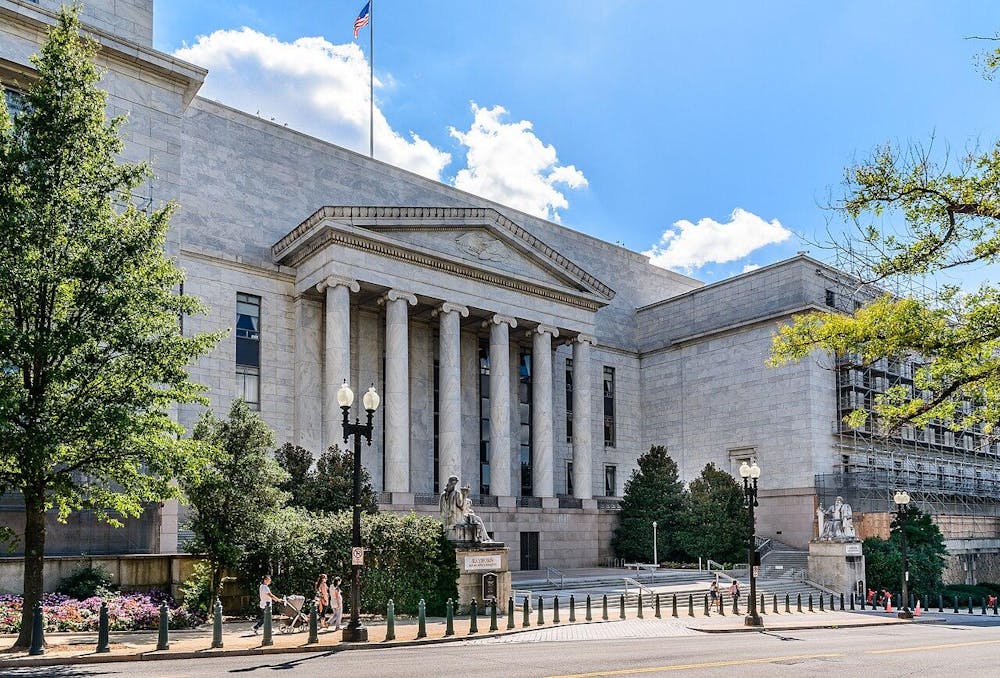
The hearing — hosted by the House Judiciary Subcommittee on the Administrative State, Regulatory Reform and Antitrust — comes amid a congressional probe accusing Ivy League colleges of collectively hiking tuition prices and limiting financial aid packages in violation of U.S. antitrust laws.
In March, Shieh launched Bloat@Brown, an online database aiming to expose “administrative bloat” at Brown. He sent emails to thousands of administrators asking them to “describe what tasks you performed in the past week” — inspired by similar emails sent to federal employees by the so-called Department of Government Efficiency.
Following this, he was placed under “preliminary review” by the University, which later determined that he was not responsible for any student conduct violations.
A congressional staffer told The Herald that Shieh was invited to provide testimony about how Ivy League schools are choosing to grow “their already bloated bureaucracies” instead of investing in “students and their quality of education.”
In April, staff from the House Judiciary Committee reached out to Shieh after hearing of Bloat@Brown, Shieh wrote in an email to The Herald. After another meeting in May, he was screened and invited to testify.
After launching Bloat@Brown, Shieh partnered with students at Columbia, Cornell and Penn to expand the project into Trialhouse, a database housing detailed information about administrators from multiple universities, he wrote in an email.
Preston Cooper, a senior fellow with a center-right think tank called the American Enterprise Institute, and Scott Martin, a partner with Hausfeld LLP, will appear alongside Shieh as witnesses at the hearing.
This is just the latest escalation from the congressional panel in its investigation into Brown and other peer institutions.
On April 8, House and Senate Republicans sent a letter to Brown launching the congressional probe by requesting that the University provide a slew of documents related to financial aid and admissions practices by April 22.
On April 30, a congressional staffer said the committee was prepared to subpoena Brown for the documents requested in the April 8 letter over allegedly not complying with the committee’s demands. In a previous statement to The Herald, University Spokesperson Brian Clark said that the University submitted an initial response on the April 22 deadline and has been continuing to provide documents on a rolling basis.
The congressional staffer did not respond to a question about whether the committee still plans on issuing subpoenas.
On May 2, Rep. Troy Nehls (R-T.X. 22) sent a letter to President Christina Paxson P’19 P’MD’20 expressing alarm about “administrative bloat” at Brown and requesting information about how the University’s endowment is spent.
Last Tuesday, Shieh sent a second round of DOGE-style emails to Brown administrators asking them to explain what tasks they completed in the past seven days. He identified himself as a reporter from the Brown Spectator — a conservative, student-run news outlet — and a witness at the upcoming hearing.
“Those unable or unwilling to describe their job will be noted as such in the Congressional Record, and their roles will be evaluated without the benefit of their input,” the email reads. As of May 31, Shieh has not received any responses from administrators, he told The Herald.
In a draft of his testimony obtained by The Herald, Shieh identifies “the ballooning number of university employees working behind-the-scenes desk jobs” as “one major culprit to the rising costs of education nationwide.”
The draft testimony highlights the “underrepresentation” of low-income students at Brown, citing a study that puts the median family income of a Brown student at over $200,000. “Brown claims to meet 100% of demonstrated need, but of course, Brown itself gets to decide what qualifies as demonstrated need,” the draft reads.
Clark wrote in an email to The Herald that “Brown’s financial aid program is among the most robust in the nation.”
“We enroll exceptionally talented students from all socioeconomic backgrounds, and we have strengthened our ability to do so over the last decade through a series of transformative new financial aid measures,” he added.
“As Brown has grown over recent decades in both the number of students we teach and the volume and impact of its research, our staff has expanded to support these important goals,” Clark wrote, emphasizing their roles in research and student support. “Brown’s staff members are vital — behind every research breakthrough and student success story, non-faculty staff are a quiet force making those accomplishments possible.”

Ciara Meyer is the managing editor of newsroom and vice president of the 136th Editorial Board. She is from Saratoga Springs, New York and plans on concentrating in Statistics and English Nonfiction. In her free time, she loves scrapbooking and building lego flowers.
Elena Jiang was a University News Editor from Shanghai, China concentrating in English Nonfiction and International & Public Affairs.