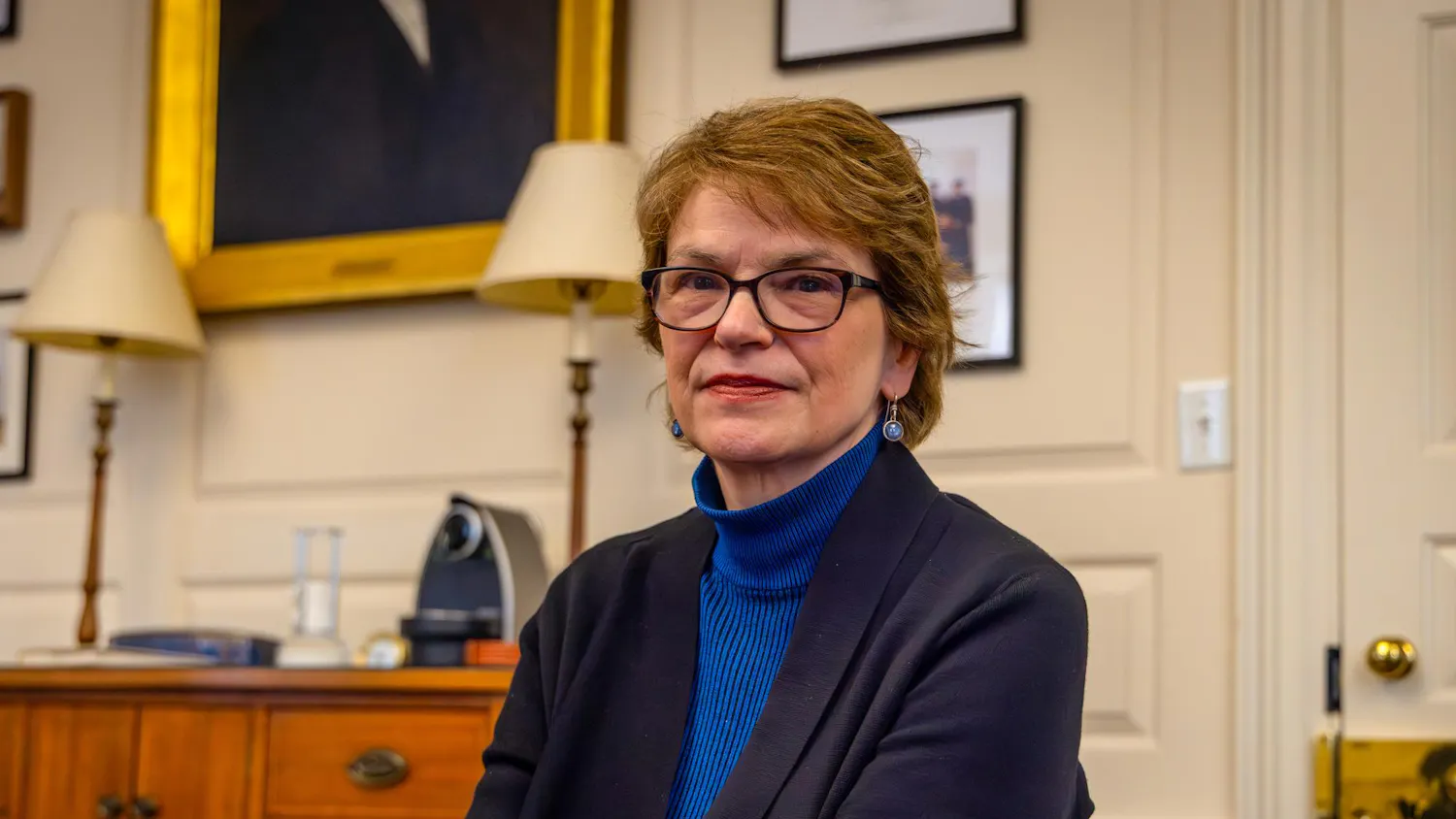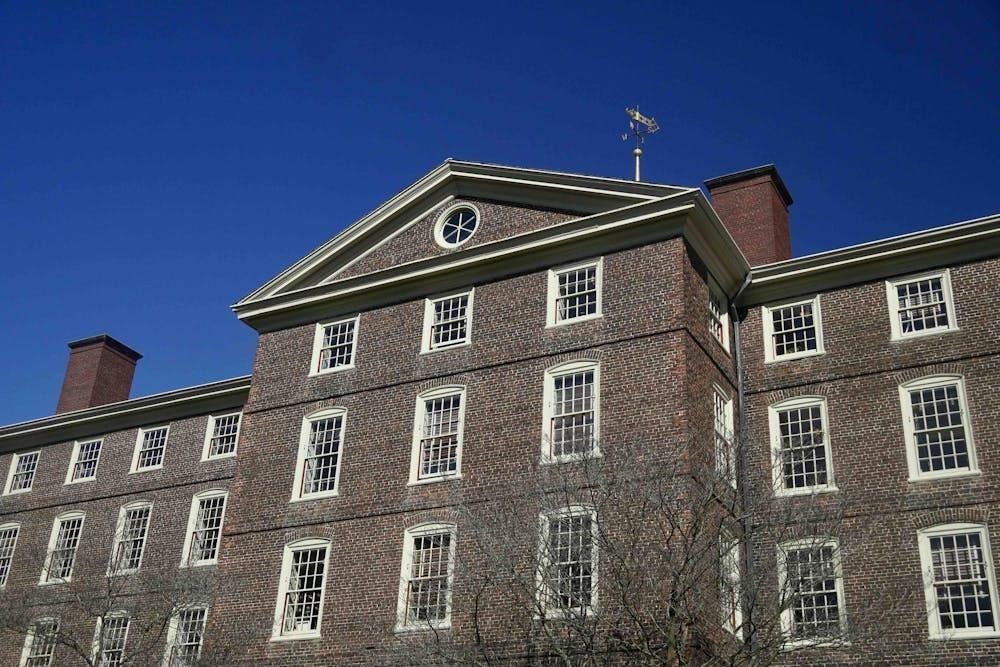
Brown has reached a deal with the federal government to restore some federal research funding and address allegations of antisemitism on campus, President Christina Paxson P’19 P’MD’20 announced in a University-wide email Wednesday.
The deal comes after the Trump administration shared plans in April to freeze $510 million in federal funding to the University. Brown is the third Ivy League university to reach a deal with the federal government this month.
The agreement does not include any form of payment to the federal government, Paxson wrote in the letter. The federal government’s arrangement with Columbia required the university to pay a settlement of $200 million.
Instead, Brown will distribute $50 million over 10 years in state workforce development grants.
“It was important to Brown that any financial aspect to the agreement reflect Brown’s priorities while also achieving outcomes that the federal government has identified as essential for higher education institutions,” Paxson wrote. According to the letter, Brown will have full control over choosing the workforce organizations and distributing the agreed-upon funds.
The University has already been battling a $46 million budget deficit, implementing a variety of cost-cutting measures during the spring semester and early summer. In June, the University announced its staff hiring freeze would be extended “at least through the end of the summer.” Officials added that additional cost-cutting measures, such as adjusting faculty hiring levels and changing graduate student admissions, would be announced later this summer. As of Aug. 1, no new measures have been shared with the Brown community.
Brown also took out a $500 million loan in July, following a $300 million loan incurred in April after the Trump administration announced its plans to freeze portions of the University’s federal funding. The loan has a 4.4% interest rate and will mature in five years with the option to pay it off before it reaches maturity.
As part of the deal, Brown has agreed to not discriminate racially in its admissions practices or University programming, and the University will also provide its admissions data to the federal government. The deal will also end reviews of the University conducted by the Department of Health and Human Services, the Department of Education and the Department of Justice.
The arrangement also binds Brown to engage an external firm to conduct a campus climate survey and social media study to collect information on the climate for students with shared Jewish ancestry, among other details. The resolution is part of the University’s broader commitments to support Brown’s Jewish community, which were codified in the agreement with the Trump administration.
The University also agreed to adhere to NCAA rules for the participation of transgender athletes in intercollegiate sports, which state that only students assigned female at birth can participate in women’s sports.
Penn faced similar terms in its deal with the federal government, which was centered around transgender swimmer Lia Thomas. In April, the Department of Education found that Penn violated Title IX by allowing Thomas to compete. The university agreed to issue a statement saying it would comply with Title IX in exchange for the restoration of $175 million in federal funding.
Brown also agreed not to provide “gender reassignment surgery or prescribe puberty blockers or hormones to any minor child for the purpose of aligning the child's appearance with an identity that differs from his or her sex,” the agreement reads. The move will not affect medical teaching or training, and will not apply to clinical services provided by Brown University Health and Care New England.
The agreement affirms “that the government does not have the authority to dictate teaching, learning and academic speech,” according to Paxson.
“We will continue to foster free inquiry, discovery and innovation,” she wrote. “We will embrace free expression and academic freedom.”
This is a developing story. Check back for more updates.

Cate Latimer is the editor-in-chief and president of The Herald's 136th editorial board. She is from Portland, OR, and studies English on the nonfiction track. She previously served as a University News editor covering faculty and University Hall and higher education. In her free time, you can find her playing ultimate frisbee or rewatching episodes of Parks and Rec.

Avani Ghosh is a contributing editor at The Herald. She previously served as a metro editor and covered city and state politics. She is a senior from Ohio studying Health and Human Biology and International and Public Affairs. She is an avid earl grey enthusiast and can be found making tea in her free time.