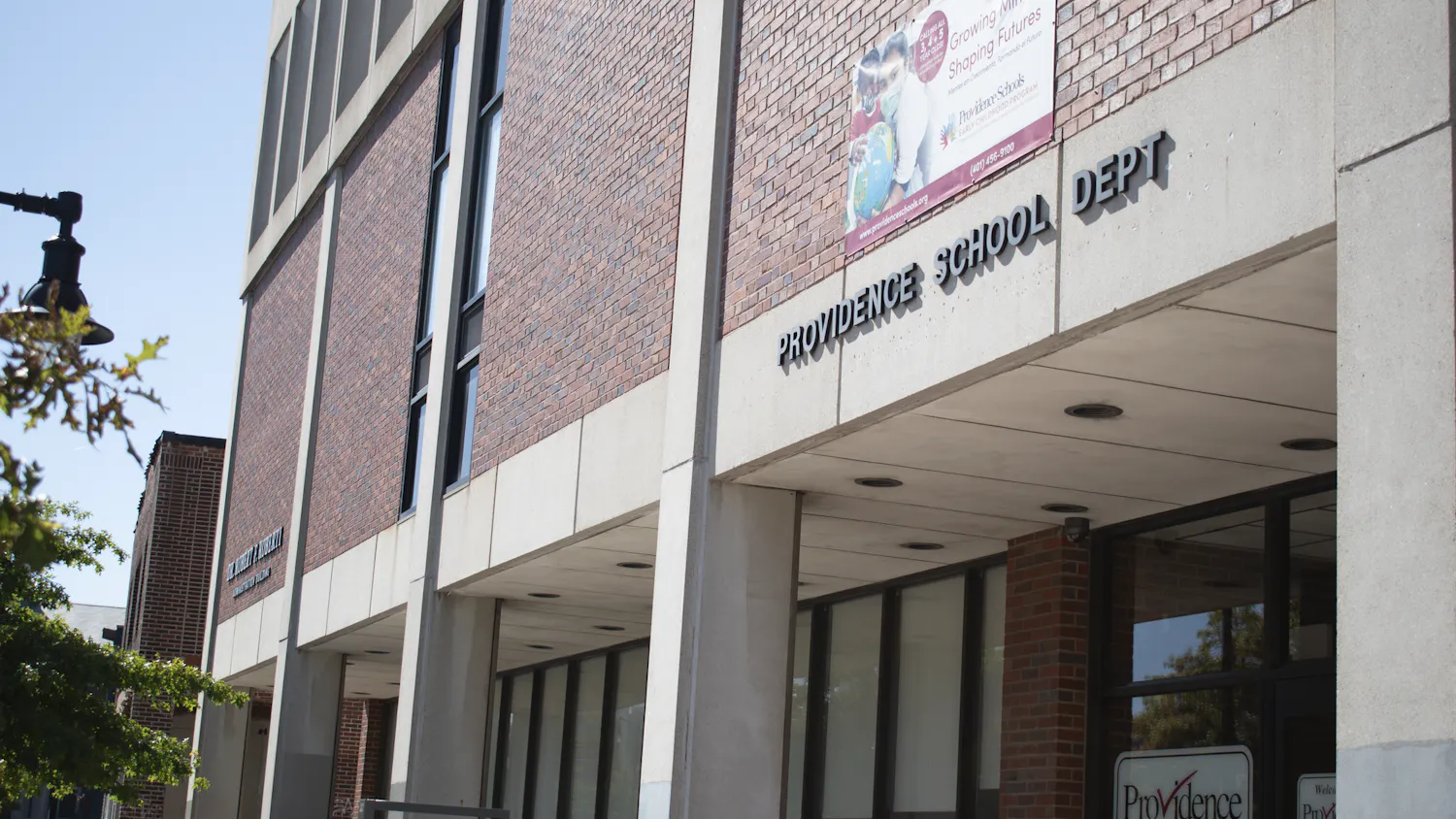
Jaylenn Rivera, a junior at the Juanita Sanchez Educational Complex in the Providence Public School District, says lunch is usually the same. Cheeseburgers. Pizza. Sandwiches. “Recently, they’re always doing, for some reason, nachos 24/7,” she added.
While Rivera doesn’t particularly love the menu, at least it’s free. “If you’re hungry, obviously, you’re gonna eat it,” they said.
While the PPSD provides universal free breakfast and lunch, efforts to bring healthy school meals to all students in the rest of the state are still underway. All other Rhode Island schools offer free or reduced lunch plans to students who qualify, but applications can create barriers for students who are not eligible but still are food insecure, according to the National Education Association of Rhode Island, a statewide educators’ union and professional group with over 12,000 members.
As of 2024, 38% of Rhode Island households are food insecure, according to the Rhode Island Community Food Bank. In October 2023, the Rhode Island Department of Education estimated that 44.9% of enrolled students across regional collaboratives and state, private and charter schools were eligible for free or reduced lunch.
Since 2019, all PPSD students have received free school lunches through the district’s federal Community Eligibility Provision program. The initiative offers schools in high-poverty areas free meals through National School Lunch and School Breakfast Programs, wrote Victor Morente, a RIDE spokesperson, in an email to The Herald.
The program allows high poverty schools and districts to serve meals at no cost to enrolled students without having to collect household applications.
School districts in Pawtucket, Woonsocket, Newport and Central Falls also qualify for the CEP. A few schools also offer all students free meals through “non-pricing plans” or Special Provision 2, which still require students to periodically submit eligibility applications.
Since lower-income and unhoused students — as well as those who rely on federal food-assistance programs — are the only children that qualify for free lunch in certain school districts, there can be stigma surrounding free lunch reliance, the NEARI site explains.
“It is an antiquated and broken system,” the website added. “We must do better for our children.”
The Healthy School Meals for All Coalition, a group of 40 community organizations, aims to establish a program that would offer all Rhode Island students nutritious meals during the school year, said co-director Karin Wetherill.
“The current situation is that we divide families in the cafeteria, unlike anywhere else in the school, based on their family’s income,” Wetherill said in an interview with The Herald.
This February, Representative Justine Caldwell (D, East Greenwich, West Greenwich) and Senator Lammis Vargas (D, Cranston, Providence) introduced the Healthy School Meals for All Act, which would provide all public school students with free breakfast and lunch regardless of family income.
“When we welcome every student, every day to the cafeteria line to get a solid, healthy breakfast and lunch, we’ll eliminate not only hunger but stigma and unwarranted shame as well as administrative burdens for schools,” Vargas said in a press release. “Investing in universal school meals will make them better for everyone, help create the supportive, healthy environment that we need in every school and make sure all kids are ready to learn.”
These bills did not pass during the most recent legislative session, which ended in June.
“It’s purely money, it’s competing priorities in this state,” Wetherill said, explaining why the bills failed. Given the uncertain future of federal funding, “there’s just a lot of unknowns, and that’s a tough environment to make decisions,” she added.
But the coalition is not giving up, Wetherill said. The group is still hoping to push for these bills or similar types of legislation in the 2026 legislative cycle.
“Having worked in advocacy for a long time, we know these campaigns can take years and years,” said Megan Tucker, the region’s senior director of field advocacy for the American Heart Association.
“It’s our job to keep pressing forward, to keep raising this issue, to come up with new and innovative approaches, and to engage as many partners across the state as we can to really elevate this issue and make it a priority,” she added.

Ava Stryker-Robbins is a sophomore and a Metro editor at The Herald.