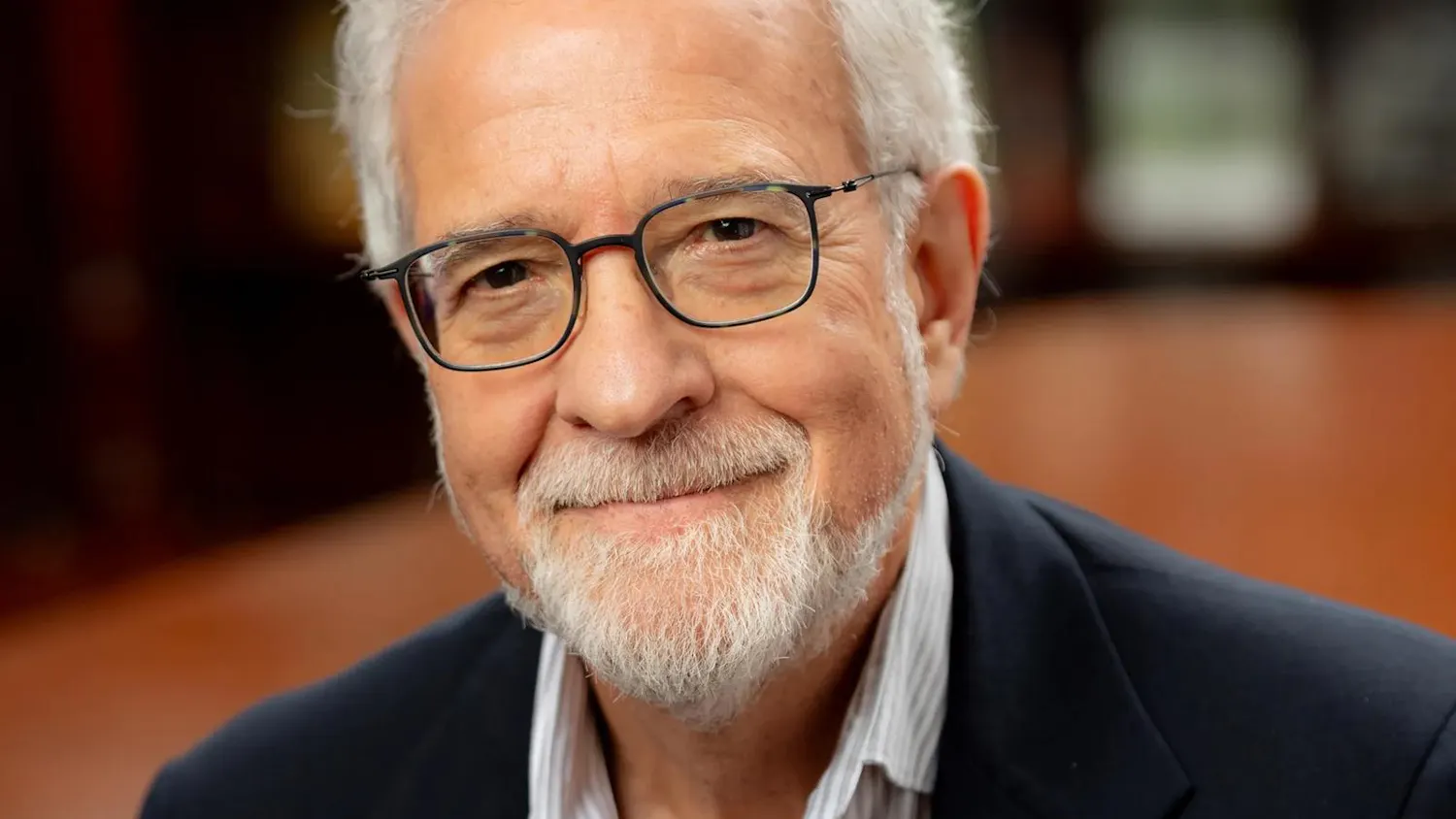
Last month, Associate Professor of Archaeology Felipe Rojas and Dartmouth postdoctoral fellow Robert Weiner ’16 MA’16 published their paper “Choreographic empathy beyond human and animal.” The paper investigates archaeological evidence of four ancient performances where humans danced with non-human partners, such as trees, clouds, rocks and water.
In the paper, Rojas and Weiner re-interpreted archaeological evidence and found that interacting with nature through dance allowed people from different times and places to “connect to rhythms of the world that are not human,” whether those rhythms are seasonal, agricultural or geological, Rojas said.
The paper challenges long-standing ideas in the fields of dance studies and archaeology about “what counts as archaeological evidence,” according to Weiner. The two researchers hoped to expand this definition beyond “what we commonly think of” as evidence, like “pottery and architecture,” he said.
“People who have studied ancient dance have traditionally complained about the fact that archaeological traces are not usually good to study performance,” Rojas said. “I disagree.”
Two of the performances they studied are from the eastern Mediterranean region during the Hellenistic and Roman periods, between the third century B.C. and the second century A.D. The other two are from the Chaco Canyon in the U.S. Southwest, spanning from 850 to 1150 A.D.
As opposed to “purely extractive” modes of interacting with the natural world, such as mining, “there have been people who have also wanted to dance with (rocks) or walk vigorously through geological landscapes,” Rojas said.
For him, this research builds on his past scholarship exploring “different ways in which people imagine or access their past.” While one may typically imagine that this happens “primarily through text,” Rojas’s work with communities that did not have written records inspired him to investigate performance as “a way to connect to the past, and to temporal rhythms that are not human,” he said.
In his research, Rojas studied Bronze Age ruins that were “revisited by the Romans” more than a millennium after their construction. People from the Roman period would engage with these ruins by dancing or conducting athletic contests around them, Rojas explained. “In thinking about Roman interaction with ruins, I realized people often dance to charge ruins with meaning.”
In his first year as a student at Brown, Weiner took one of Rojas’s classes. Since then, Rojas has been a “really dear mentor and friend,” Weiner said.
Later in his archaeology career, Weiner developed an interest in roads and ritualized movement. With Rojas studying dance, the two realized that it was “the perfect, perfect time to collaborate on something,” Weiner said.
Weiner’s work on roads helped expose him to the “worldview of Pueblo and Navajo people today” — many of whom are descendants of Chacoans. His research taught him “that the land isn’t just seen as sort of something as a backdrop, but really as something alive, something with which humans must be in (a) relationship.”
Weiner’s research for the paper involved walking along the roads created by the Chacoans in New Mexico, reading ethnographies, re-examining previous research and talking to descendants of Chacoans, he said.
The paper also examined steep staircases in the Chaco Canyon through the lens of the Pueblo and Navajo cultures. Staircases, Weiner said, aren’t simply meant for moving up and down levels. Instead, they’re also associated with “emergence and traversing between the upper world and the lower world.”
“These kinds of dialogues are what we need more of,” said Professor of Social Science and Anthropology Stephen Houston. “We need more comparisons of this sort to enlarge ideas about the nature of humans and their interactions with other seemingly sentient beings.”
According to Weiner, this research is important to challenge notions of nature as separate from humans, a model that has led to the “desecration of the planet and its resources.”
“These examples we show offer a … different perspective to our status as human beings relative to these other elements of the environment,” Weiner said.

Ivy Huang is a University News and Science & Research editor from New York City. Concentrating in English, she has a passion for literature and American history. Her favorite authors include Marilynne Robinson, Vladimir Nabokov, and Toni Morrison. Outside of writing, she enjoys playing basketball, watching documentaries, and beating her high score on Subway Surfers.