This past September, Rhode Island School of Design interior architecture students competed to redesign the Marketplace, a food bank in Woonsocket facing a lack of space. The food bank now plans to incorporate the teams’ designs into a future renovation.
Operated by Connecting for Children and Families — a member agency under the Rhode Island Community Food Bank — the Marketplace offers a variety of services for over 250 families per week.
But at the Marketplace, the CCF has faced a lack of space and storage. Much of the food bank’s current space is allocated for confidential meetings with families and other support services, according to CCF Executive Director Erin Spaulding. With any changes, the organization hoped to maintain “a warm, welcoming space for families,” Spaulding said.
Throughout the competition, RISD students hoped to support that goal by creating designs that addressed the space shortage while maintaining a lively environment for families.
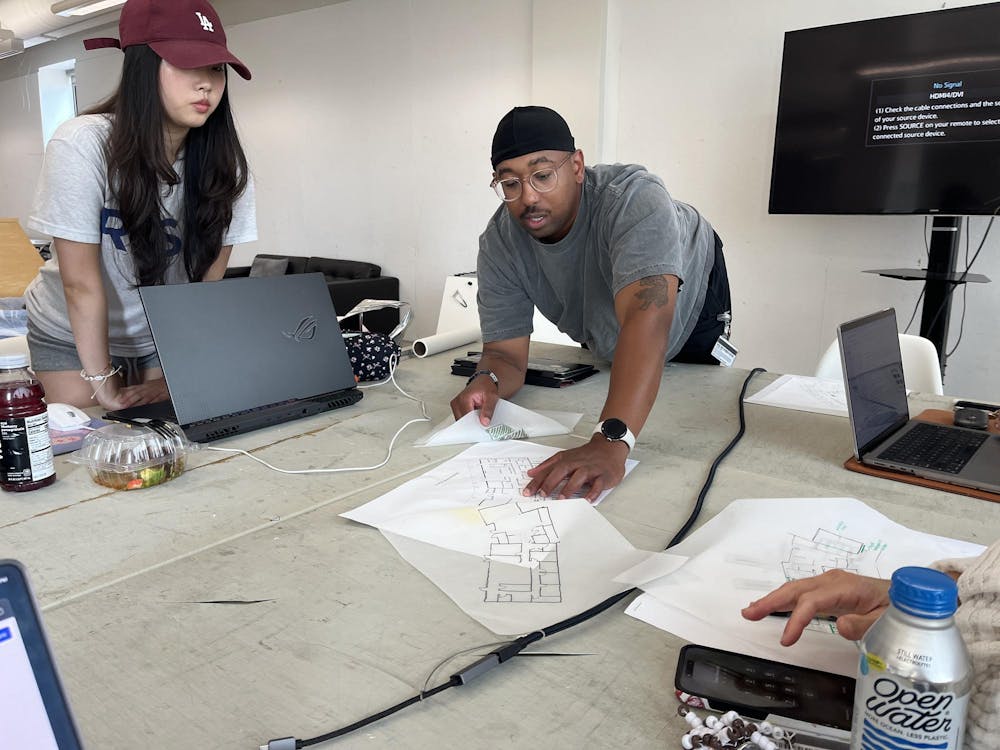
The redesign project took place as part of the Interior Architecture Department’s Charette, a competition in which teams of undergraduate and graduate students compete to redesign a particular space.
This year’s Charette focused on the Marketplace in hopes of increasing student involvement in community work, according to Elizabeth Debs, an interior architecture critic at RISD.
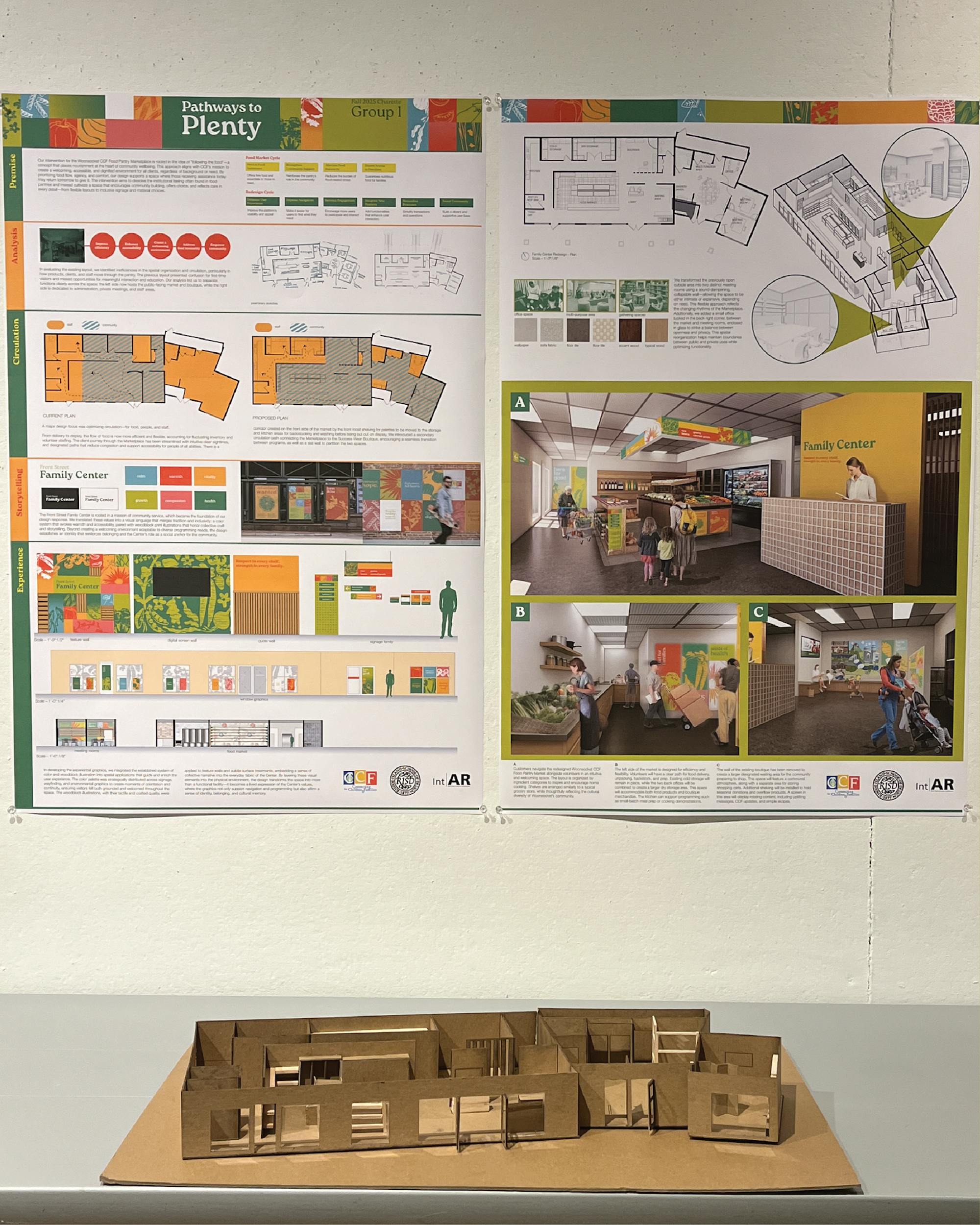
The next steps for the Marketplace involve raising funds for project implementation and drawing up the final plan in January 2026.
Courtesy of Gerald Sastra
“Design work can really support another organization’s impact,” Debs said. “Designers can play an important role in the world, and maybe in some unexpected areas.”
Jen Tomassini, chief operating officer of the Rhode Island Community Food Bank, emphasized the renovation’s focus on maintaining the dignity of families who use the food pantry.
The CCF is “not just a place to hand out food to ‘needy’ people,” she said. The organization “understands at a very basic level that it’s one community.”
The winning design “focused on maximizing every space available,” said Gerald Sastra, a first-year graduate student at RISD who was on the winning team. “We also tried to add to the function of the space” by designing areas like “community kitchens.”
The process of coming up with the design spanned an intense few days.
“We had four days basically to not only figure out our solution, but to materialize it and find the best way to display it visually,” said Keren Dial ’27, a Brown-RISD Dual Degree student on the winning team. “We had a really big ideation phase where we were just bouncing ideas off of each other, and then at a certain point, we were like, ‘Alright, we’re going to commit to this. This feels good.’”
The project’s team-based format fostered a diverse, collaborative environment. “There’s this lovely hish-hosh of people,” Dial said. “I think everybody adds a really unique perspective.”
The Marketplace will now raise funds for project implementation and finalize design plans in January 2026, Spaulding said. The final design would incorporate the different ideas suggested by all the competing teams.
“It was really nice to see the community organizers’ reactions to our solutions” and “see how much joy it brought them and the potential impact there could be because of this thing we did in four days,” Dial said.