While most professors plan classes that are held on College Hill, a select few opt to take their courses out of the classroom — and even out of the country. Each year, faculty members can apply for a Global Experiential Learning and Teaching grant, which funds courses with an international travel component at no additional cost to students.
ENGL 1760E: “Who’s Afraid of Virginia Woolf?” is one GELT course that will be offered next semester. Over spring break, students in the course will travel to London, where they will explore the city’s Bloomsbury area in which Woolf worked with other modernist writers. The trip will also include visits to museums and to locations mentioned in the author’s works.
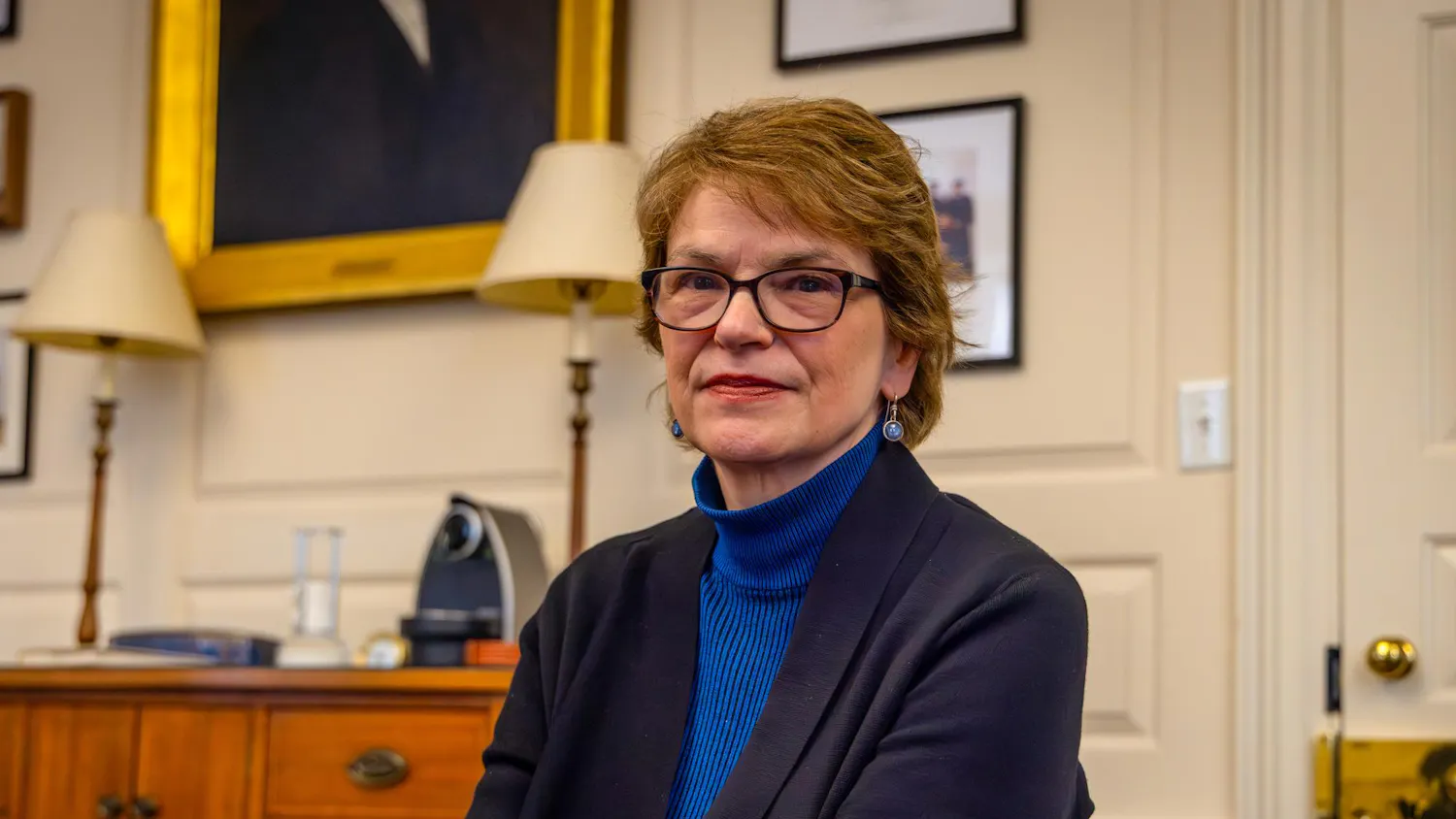
“It will create a different kind of classroom community,” said Associate Professor of English Ravit Reichman, who will be teaching the course. “I love the idea of spending that kind of quality time with students and just seeing them discover things for themselves.”
According to Kelly Watts, assistant dean of the College for experiential learning, the College typically receives five GELT proposals each year and can support one course per semester.
For Reichman, applying for the GELT grant was a “pretty involved process.”
“I had to develop an itinerary where we fit a lot in, but not so much that it becomes impossible to do everything,” she said, noting that she also had to consider the trip’s budget.
Reichman — who has previously taught the class without a travel element — said she did not change the reading list ahead of next semester.
Because Woolf’s novels pay “careful attention to surroundings,” Reichman said it “makes a big difference to have that sense of place in mind.”
But Reichman’s students aren’t the only Brunonians who will travel abroad as part of a course in the coming year. Tricia Kelly, an assistant teaching professor of education, and Patricia Sobral PhD’97, teaching professor of Portuguese and Brazilian studies, will be co-teaching EDUC 0500A: “Habla Conmigo: Cross-Cultural Language Learning and Teaching” during the upcoming winter term.
EDUC 0500A includes a trip to Mérida, Mexico, where students will visit the nearby ancient Mayan city of Uxmal and participate in a cacao workshop, among other cultural activities.
The course will “give students who might not have another opportunity to go abroad” a chance to learn in an international setting, Kelly said.
But planning the course was not without its challenges, Sobral said.
The GELT application process was “a lot of work,” and of the 68 students who applied for the course, they could only admit 12, according to Sobral.
“It’s a small group, but they’re going to have many opportunities to work collaboratively,” Kelly said.
Faculty members who planned GELT courses offered in previous semesters shared similar sentiments.
“Planning the course was quite complex, far more so than my typical course-planning,” wrote Suzanne Stewart-Steinberg, professor of European history as well as comparative literature and Italian studies, in an email to The Herald. Stewart-Steinberg taught ITAL 1400Y: “Representations of Italian Fascism” in winter 2024.
“There were three components to the course: in-person teaching in Providence, on-site in Rome and Zoom teaching,” Stewart-Steinberg wrote. “Juggling all that could at times get complicated.”
Last winter, Associate Vice President for Campus Life Vanessa Britto ScM’96 taught UNIV 1981: “Diasporic Healthcare and the Creolization of Health and Medicine: Cabo Verde and the United States.”
Britto said that while UNIV 1981 was eventually selected for the GELT grant, she initially received feedback that her course was “too ambitious.”
It was “almost harder to pull stuff out and decide what was core, what should stay and what needed to go” than it was to create the course plan itself, she said.
Ultimately, the course’s travel component was what made the class a transformative experience for her students, Britto said.
“Everything that had been abstract was now concrete,” she added. “This absolutely brought out the best in the students that were chosen.”
As Reichman prepares to bring students abroad in the spring, she told The Herald that she loves “being part of a university that makes these experiences possible.”
“It connects the work we’re doing here with a wider world,” she added.
Nate Barkow is a senior staff writer for the Youth and Education beat and a co-chief of The Herald's social media team. He is from New York City and plans on concentrating in International and Public Affairs and Education Studies. In his free time, he loves trying new restaurants and watching Survivor.